
Taking pictures at nightt
Discussion


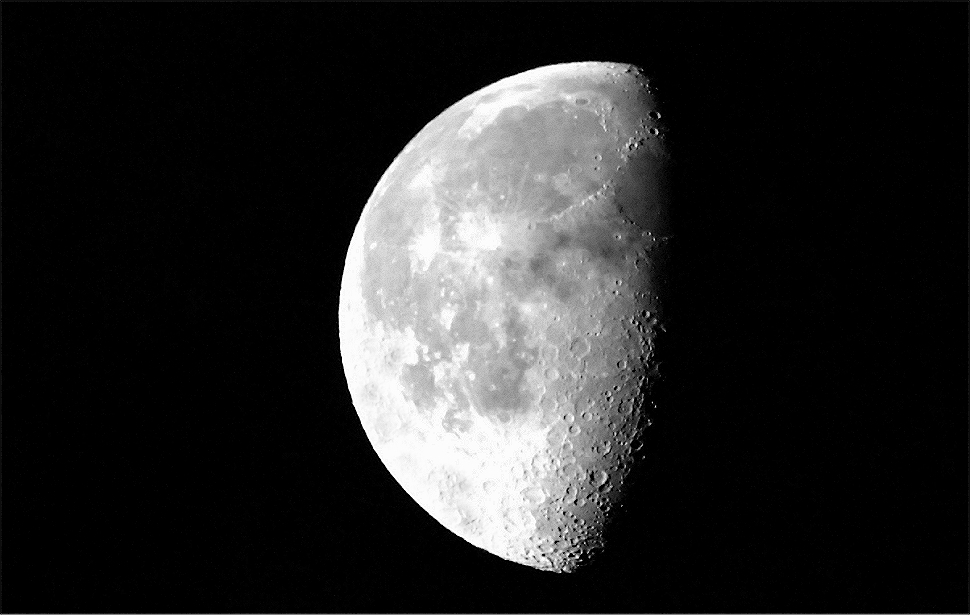
So I have been taking pictures of the moon, and I'm broadly happy with the results I'm struggling to get a picture where the moon is not the main content but is still clear.
I know it is because the moon is a big bright thing and the rest of the sky is not but wondered if there was away, without taking two pictures and shopping them of correctly exposing for both the moon and the foreground.
This is the sort of thing that I want to correct.

Any hints etc would be really great.
Cheers
D
I know it is because the moon is a big bright thing and the rest of the sky is not but wondered if there was away, without taking two pictures and shopping them of correctly exposing for both the moon and the foreground.
This is the sort of thing that I want to correct.
Any hints etc would be really great.
Cheers
D
SamHH said:
If you don't want to take multiple exposures, you can use a graduated neutral density filter which will darken the bright moon but leave the foreground bright. Is that any good?
Thats it, although I have no filters! Maybe it is time I progressed a bit, I'll read up on them, thankyou.Any other suggestions anyone?
Cheers
D
SamHH said:
I presume you're already using a tripod or some other method to keep the camera steady? If so, taking multiple exposures is the easiest way of doing it in my experience and saves the cost of buying filters. Have you tried doing it and did you find it problematic?
I am and no I have not, I just wondered if there was an easy way to do it properly in camera.Cheers
D
GetCarter said:
To take a pic of a bright thing on a dark background, choose 'spot meter' on your camera. This will expose the shot for a very small area and will ignore the rest of the landscape.
Thanks, I can correctly set the exposure for the moon if thats all thats there!Imagine....It is a bright night, the moon is full (sounds like the start of a horror story, which it may well turn out to be!) I want my composition to have a white house in the foreground lit by moonlight with some definition to the moon...
Do I spot meter on the moon? As if I do I think the house will be dark?
There is a great picture I want to take next time the conditions are right... I just don't know how to do it without photoshop..
Thanks
D

As said in a single un filtered image the moon is usualy way too bright to fit into the same exposure you want for anything else.
So either take 2 shots and clone the moon in or use a strong graduated filter,
I have seen a spectacular shot (this wil be a bit technical) where the photog made a long exposure shot including the moon.
He opened the shutter and shot the moon with a 100-400 at 400mm, then covered up the lens/camera, removed the lens, put on a 17-40 and shot a long exposure of the cliffs/beach.
Turned out spectacularly well but he had been planning it for ages.
So either take 2 shots and clone the moon in or use a strong graduated filter,
I have seen a spectacular shot (this wil be a bit technical) where the photog made a long exposure shot including the moon.
He opened the shutter and shot the moon with a 100-400 at 400mm, then covered up the lens/camera, removed the lens, put on a 17-40 and shot a long exposure of the cliffs/beach.
Turned out spectacularly well but he had been planning it for ages.
The other issue is that the moon moves - focal length depending, a 5 second exposure would be long enough to show this motion so whilst you might get away with a moon with blown highlights, when it starts getting misshaped that's when things really go awry. There are few situations at night where you'll be using less than a 5 second exposure so therein lies your problem.
The issue you'll have with filters on long exposure is that of glare, flare and reflections. Your hit rate for images that don't feature the inverted writing from around your front element will probably be quite low.
Your options are compositing two or more images or introducing some light yourself - the foreground in my image below had a helping hand from some torchlight.

Harvest Moon by AndWhyNot, on Flickr
The issue you'll have with filters on long exposure is that of glare, flare and reflections. Your hit rate for images that don't feature the inverted writing from around your front element will probably be quite low.
Your options are compositing two or more images or introducing some light yourself - the foreground in my image below had a helping hand from some torchlight.
Harvest Moon by AndWhyNot, on Flickr
davidd said:
GetCarter said:
To take a pic of a bright thing on a dark background, choose 'spot meter' on your camera. This will expose the shot for a very small area and will ignore the rest of the landscape.
Thanks, I can correctly set the exposure for the moon if thats all thats there!Imagine....It is a bright night, the moon is full (sounds like the start of a horror story, which it may well turn out to be!) I want my composition to have a white house in the foreground lit by moonlight with some definition to the moon...
Do I spot meter on the moon? As if I do I think the house will be dark?
You can't do it in a single exposure. The dynamic range in the scene is beyond the limits of what your camera is capable of recording. The easiest, and least expensive way of doing it, is to make two exposures; one for the moon and one for the rest of the scene, and then combine both in post.


Gassing Station | Photography & Video | Top of Page | What's New | My Stuff