
Diy damp course
Discussion


It looks as though i've got rising damp on the front wall of my mid-terrace house, i'll be taking the plaster off the offending wall and part way down both internal walls and then either re-doing with vapor resistant plasterboard or traditional plaster. My question is, is applying a resin type damp course something an experienced diyer can tackle? I've never been one to use trades people as i enjoy the work and always seem to get a good result, it takes me a lot longer but i love the sense of acheivement once a job is complete.
I've had the house about 5 years and there is an existing damp-course on the wall, it's about 150mm above the outside ground level and is on the same course as the air-bricks (Traditonal 9" solid walls, no cavity), where it meets the airbricks it moves to the course above.
So, is this something i can tackle or one to leave to the pro's? If it's a pro job could someone give me an idea on price for the damp-course treatment? House is about 5 metres wide.
I've had the house about 5 years and there is an existing damp-course on the wall, it's about 150mm above the outside ground level and is on the same course as the air-bricks (Traditonal 9" solid walls, no cavity), where it meets the airbricks it moves to the course above.
So, is this something i can tackle or one to leave to the pro's? If it's a pro job could someone give me an idea on price for the damp-course treatment? House is about 5 metres wide.
Very DIYable.
http://www.dryzone.eu/en/
The replastering part is equally as important as the injection though for a relaiable solution.
I usually sand and cement render with Sika followed (once completely dry) by a couple of coats of multifinish.
I also notice you say your walls are 9" solid.
Might be worth investing in a cheap damp meter just to check the entire wall. It could well be penetrating damp. Rising damp usually only goes about 1m up.
A quick way to eliminate condensation is to tape a piece of kitchen foil to the wall and leave it overnight. If there is moisture on the side not touching the wall, the issue is condensation.
http://www.dryzone.eu/en/
The replastering part is equally as important as the injection though for a relaiable solution.
I usually sand and cement render with Sika followed (once completely dry) by a couple of coats of multifinish.
I also notice you say your walls are 9" solid.
Might be worth investing in a cheap damp meter just to check the entire wall. It could well be penetrating damp. Rising damp usually only goes about 1m up.
A quick way to eliminate condensation is to tape a piece of kitchen foil to the wall and leave it overnight. If there is moisture on the side not touching the wall, the issue is condensation.
Edited by B17NNS on Monday 29th March 17:33
B17NNS said:
Very DIYable.
http://www.dryzone.eu/en/
The replastering part is equally as important as the injection though for a relaiable solution.
I usually sand and cement render with Sika followed (once completely dry) by a couple of coats of multifinish.
I also notice you say your walls are 9" solid.
Might be worth investing in a cheap damp meter just to check the entire wall. It could well be penetrating damp. Rising damp usually only goes about 1m up.
A quick way to eliminate condensation is to tape a piece of kitchen foil to the wall and leave it overnight. If there is moisture on the side not touching the wall, the issue is condensation.
Thanks for the advice guys, to be honest i'm not 100% certain it's rising damp, needs a bit more investigation first but a few people i've spoke to reckon it is rising damp (Mates etc) If it is rising damp after the treatment i do intend to sand and cement render sand Sika. http://www.dryzone.eu/en/
The replastering part is equally as important as the injection though for a relaiable solution.
I usually sand and cement render with Sika followed (once completely dry) by a couple of coats of multifinish.
I also notice you say your walls are 9" solid.
Might be worth investing in a cheap damp meter just to check the entire wall. It could well be penetrating damp. Rising damp usually only goes about 1m up.
A quick way to eliminate condensation is to tape a piece of kitchen foil to the wall and leave it overnight. If there is moisture on the side not touching the wall, the issue is condensation.
Edited by B17NNS on Monday 29th March 17:33
At the moment it's only gone about 600mm above the outside ground level but i'm intending to attack it before it gets to bad. How will i be able to determine whether its penetrating or rising? I'm fairly certain its not condensation but will give the tin foil trick a try.
Penetrating damp could be anywhere on the external 9" wall (above 1m).
As an additional treatment it might be worth giving the entire outside wall a couple of coats of Thompson's Water Seal.
As has already been said beware 'surveyors' wielding damp meters. They want to sell you a damp course whether that is the problem or not.
Have used Dryzone on a few occasions. Shop around for it though, price varies a lot. Can be had reasonably cheap of e-bay, just make sure it is in date.
Followed by correct rendering and plastering it has always worked fine for me.
As an additional treatment it might be worth giving the entire outside wall a couple of coats of Thompson's Water Seal.
As has already been said beware 'surveyors' wielding damp meters. They want to sell you a damp course whether that is the problem or not.
Have used Dryzone on a few occasions. Shop around for it though, price varies a lot. Can be had reasonably cheap of e-bay, just make sure it is in date.
Followed by correct rendering and plastering it has always worked fine for me.
Thanks for the info, from what you've said and what others have said i'm fairly sure its rising damp as it's starting from the top of the skirting and at the moment about 500-600mm high. i've had a look at the cost for the stuff you suggested and it comes in at £360 for 10 tubes plus the gun and render, how much do you reckon i need for a 5M long wall? Is the render a lot more expensive than traditional plaster and finish?
ps, currently got a length of tin foil taped to the offending wall!
ps, currently got a length of tin foil taped to the offending wall!
For a 9" wall you can do it all from one side if you like. Drill 190mm deep 12mm holes in the mortar coarse at 120mm centres (2 holes per brick roughly). An SDS drill makes dead light work of it.
Dryzone say coverage for a 9" wall of 3 tubes per 10m run. I've always found this a bit conservative though so I'd say you want 2 maybe 3 tubes to be safe for your 5m run
For the render I just use a regular sand and cement mix (use plastering sand). Mix the Sika 1 with your water. I go for a 3:1 mix sand/cement as the Sika works better with a higher cement content.
Apply the render in two coats to build up the thickness. Scratch first coat and allow to set. Apply second coat, rule off, rub up and scratch.
You need to allow the render to dry completely. Once it has, PVA as normal and apply a couple of coats of multi finish.
Also don't allow your render or plaster to breach the new injected course.
Any questions feel free to give me a shout. Good luck!
Dryzone say coverage for a 9" wall of 3 tubes per 10m run. I've always found this a bit conservative though so I'd say you want 2 maybe 3 tubes to be safe for your 5m run
For the render I just use a regular sand and cement mix (use plastering sand). Mix the Sika 1 with your water. I go for a 3:1 mix sand/cement as the Sika works better with a higher cement content.
Apply the render in two coats to build up the thickness. Scratch first coat and allow to set. Apply second coat, rule off, rub up and scratch.
You need to allow the render to dry completely. Once it has, PVA as normal and apply a couple of coats of multi finish.
Also don't allow your render or plaster to breach the new injected course.
Any questions feel free to give me a shout. Good luck!
Thanks for the help, really useful. I'll have a look for a supplier tommorrow. I've watched the vid's on the link you gave me and it looks fairly straightforward, i've got an SDS and a couple of long 12mm bits so no probs there, think i might bite the bullet and do it this weekend.
Looks like it's going to be a lot cheaper than i first thought, do you think it's worth speaking to the neighbours and seeing if they have a problem?
Looks like it's going to be a lot cheaper than i first thought, do you think it's worth speaking to the neighbours and seeing if they have a problem?
I wouldn't necessarily bother your neighbours over it but it might be worth finding out if they have had similar problems.
I'd check all your solid ground floor walls while you are at it personally. If your DPC has failed on one wall, chances are it might have failed elsewhere.
You can pick up a cheap and cheerful damp meter off e-bay.
http://cgi.ebay.co.uk/DIGITAL-MOISTURE-DAMP-METER-...
I'd check all your solid ground floor walls while you are at it personally. If your DPC has failed on one wall, chances are it might have failed elsewhere.
You can pick up a cheap and cheerful damp meter off e-bay.
http://cgi.ebay.co.uk/DIGITAL-MOISTURE-DAMP-METER-...
Cheers, don't think my neighbours would even understand the concept of a damp course! i'm going to check the other walls as well though before i buy the stuff, i'll see if i can borrow a damp meter before i buy one but thanks for the link. Bit of a relief though to be honest, had visions of it costing me thousands!
What do you think i should do about the exsiting damp course, i presume i should re-do it in the course above the current damp course?
What do you think i should do about the exsiting damp course, i presume i should re-do it in the course above the current damp course?
Yep, I'd go one course above. Depending on the age I'd guess the original DPC is slate or bitumen. Bitumen degrades over time and a slight bit of movement can cause a slate course to fail. The installation of double glazing and central heating doesn't help either. Good old draughty houses with plenty of airflow suffered less.
B17NNS said:
You can pick up a cheap and cheerful damp meter off e-bay.
http://cgi.ebay.co.uk/DIGITAL-MOISTURE-DAMP-METER-...
These are all generally calibrated for timber, when used on brickwork they will give an artificially high reading.http://cgi.ebay.co.uk/DIGITAL-MOISTURE-DAMP-METER-...
RICS Building Surveyors do not want to sell you damp proofing! Weras the so called damp proofing specialist (salesmen) will! Rising damp is actually quite a rare phenomenon and suspected cases nearly always turn out to be penetrating damp or a leak. If you are unsure get a proper surveyor to come and have a look, just because mates say its rising damp doesn’t mean it is (unless they are qualified).
What type of property is it, what type of dpc have you got, are all you gutters in good order, do you have a cavity wall? Lots of things need to be checked before a proper diagnosis is made!
What type of property is it, what type of dpc have you got, are all you gutters in good order, do you have a cavity wall? Lots of things need to be checked before a proper diagnosis is made!
MonkeyMatt said:
RICS Building Surveyors do not want to sell you damp proofing! Weras the so called damp proofing specialist (salesmen) will! Rising damp is actually quite a rare phenomenon and suspected cases nearly always turn out to be penetrating damp or a leak. If you are unsure get a proper surveyor to come and have a look, just because mates say its rising damp doesn’t mean it is (unless they are qualified).
What type of property is it, what type of dpc have you got, are all you gutters in good order, do you have a cavity wall? Lots of things need to be checked before a proper diagnosis is made!
As per my pervious posts, walls are solid 9" no cavity, damp course is resin type drilled into mortar line, house is mid terraced, aside from this, guttering is less than a year old and was replaced by me, no leaks and no issues on the front wall of the house apart from the first 700mm ish at the bottom. What type of property is it, what type of dpc have you got, are all you gutters in good order, do you have a cavity wall? Lots of things need to be checked before a proper diagnosis is made!
I do intend to get a few professionals to come and have a look beforehand, there's a local place who have a good reputation who've been around for years.
ChrisRS said:
MonkeyMatt said:
RICS Building Surveyors do not want to sell you damp proofing! Weras the so called damp proofing specialist (salesmen) will! Rising damp is actually quite a rare phenomenon and suspected cases nearly always turn out to be penetrating damp or a leak. If you are unsure get a proper surveyor to come and have a look, just because mates say its rising damp doesn’t mean it is (unless they are qualified).
What type of property is it, what type of dpc have you got, are all you gutters in good order, do you have a cavity wall? Lots of things need to be checked before a proper diagnosis is made!
As per my pervious posts, walls are solid 9" no cavity, damp course is resin type drilled into mortar line, house is mid terraced, aside from this, guttering is less than a year old and was replaced by me, no leaks and no issues on the front wall of the house apart from the first 700mm ish at the bottom. What type of property is it, what type of dpc have you got, are all you gutters in good order, do you have a cavity wall? Lots of things need to be checked before a proper diagnosis is made!
I do intend to get a few professionals to come and have a look beforehand, there's a local place who have a good reputation who've been around for years.
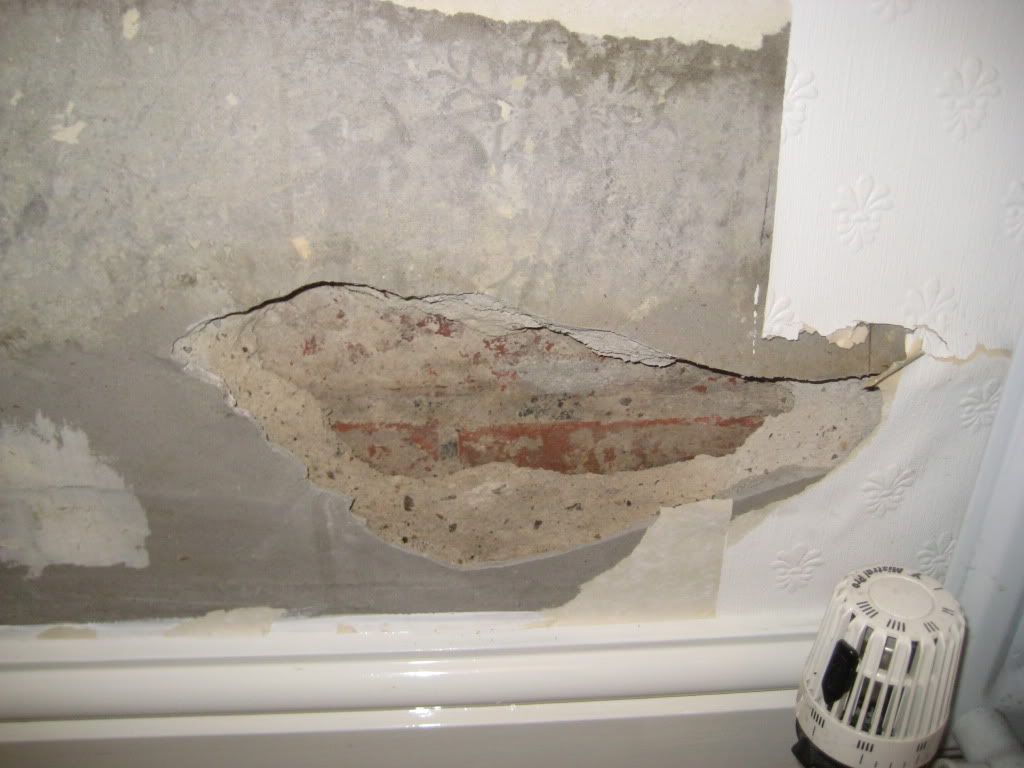
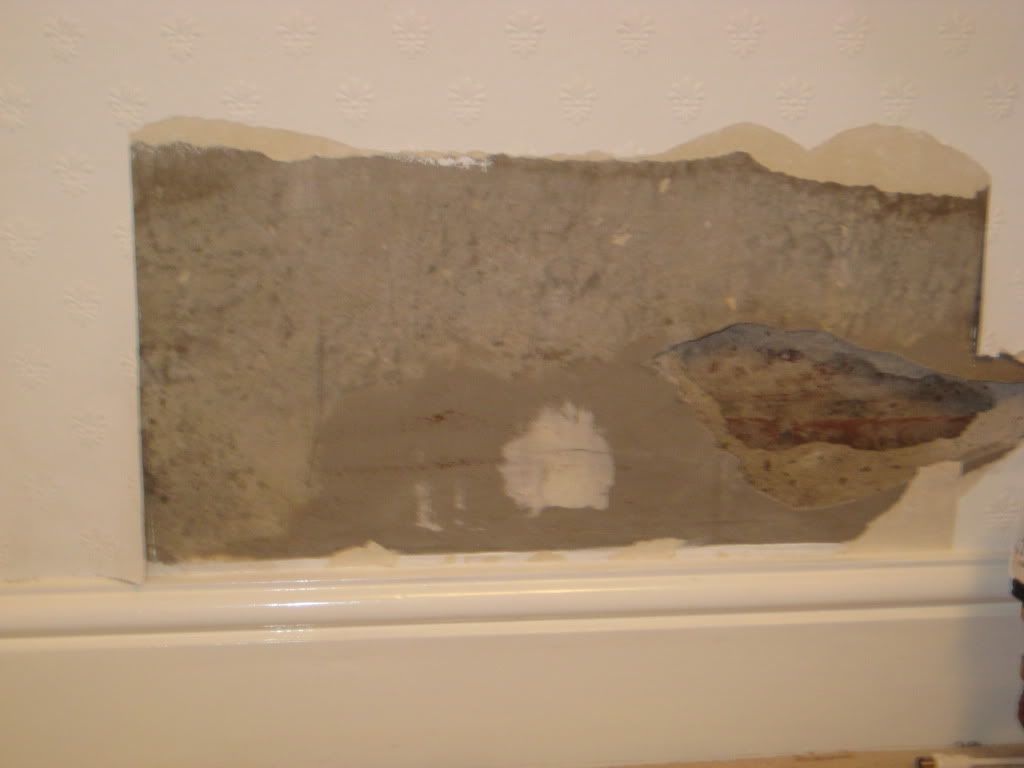
I'll take some photos tommorow, bit wet around here at the moment! At the moment i still have the plaster and the wallpaper on inside but the plaster has blown throught the paper all accross the wall, would i be better taking the plaster off before i get a surveyor type to have a look?
ChrisRS said:
I'll take some photos tommorow, bit wet around here at the moment! At the moment i still have the plaster and the wallpaper on inside but the plaster has blown throught the paper all accross the wall, would i be better taking the plaster off before i get a surveyor type to have a look?
Leave the plater on so the Surveyor can see what has happened and tell them they can have a good poke around and pull the plaster off if they need too!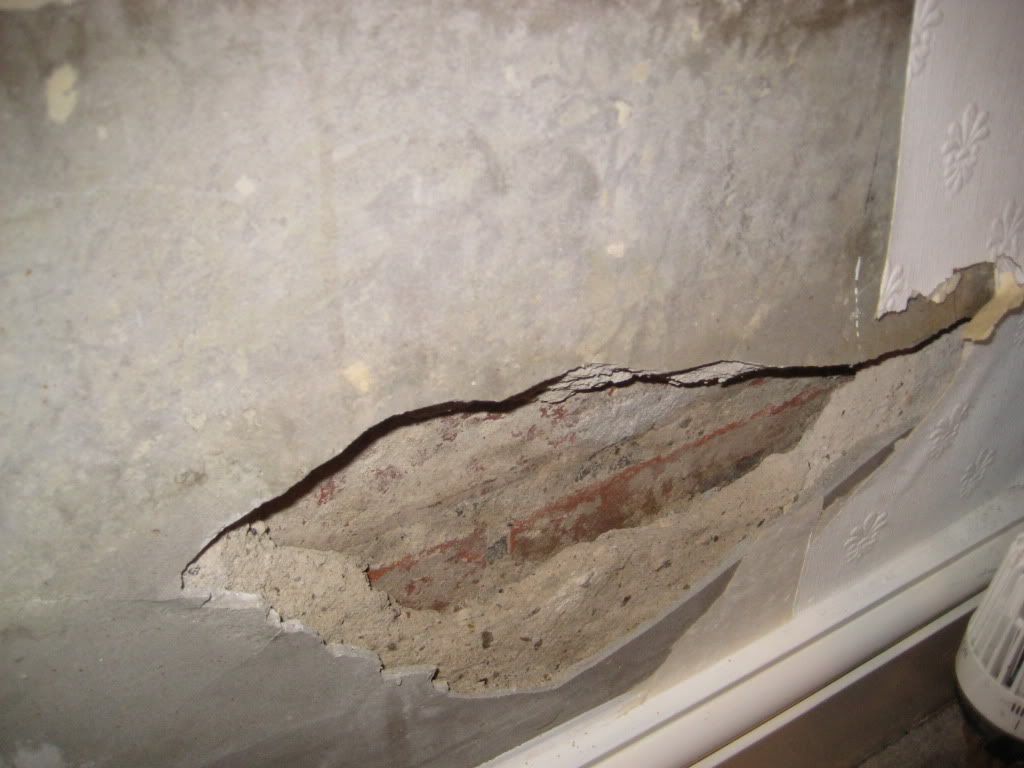
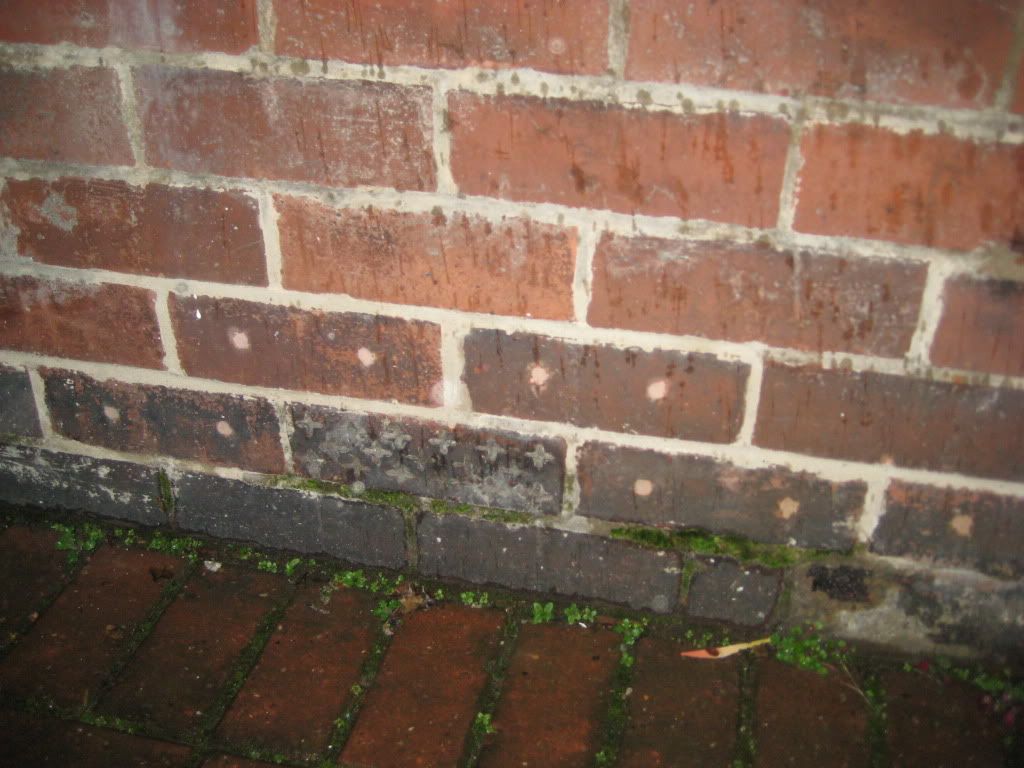
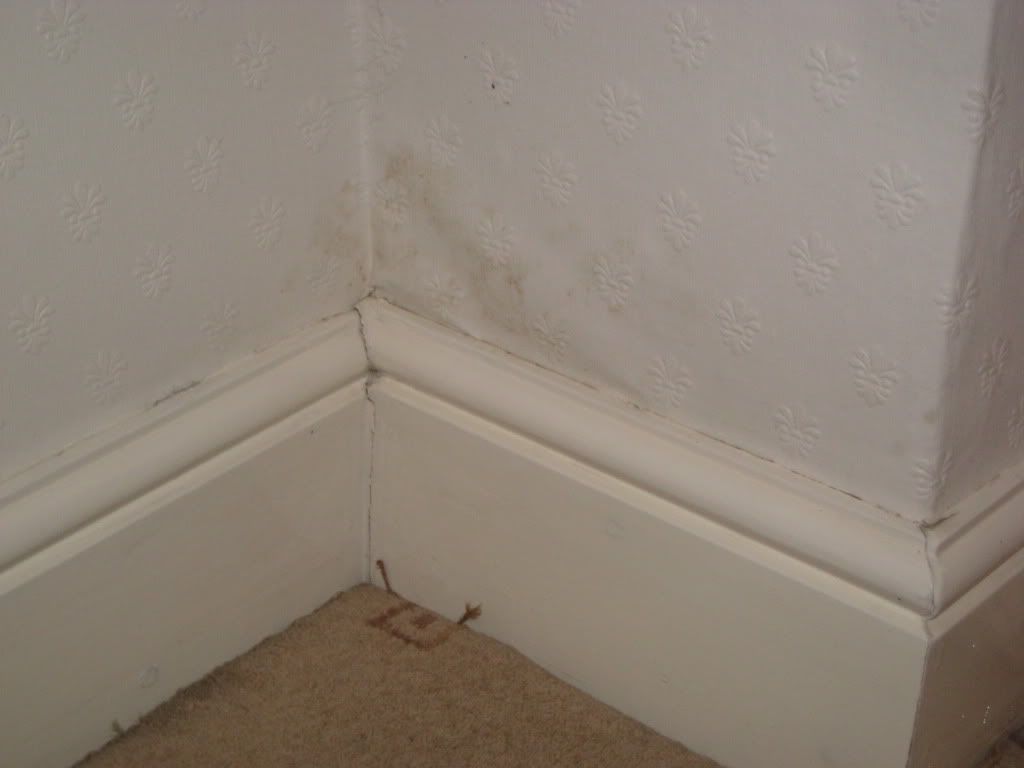
Your external wall is laid stretcher bond which almost certainly indicates a cavity wall. Solid walls are normally laid in a bond such as English or Flemish.
If you have a chance could you take some more pictures, maybe some showing windows and doors, a close up of airbricks, and a shot showing the full elevation?
PH ‘housing defects’ matter!
If you have a chance could you take some more pictures, maybe some showing windows and doors, a close up of airbricks, and a shot showing the full elevation?
PH ‘housing defects’ matter!
Gassing Station | Homes, Gardens and DIY | Top of Page | What's New | My Stuff