
Exposure - noob help and criticism
Discussion


I am trying to learn about exposure and would appreciate comments. It appears to be hard work to get right.
For example when lighter areas are exposed well, dark areas are grey and grainy (which could be the camera). On the other hand when exposing the dark areas better, you get a horrible effect with overexposed areas being bright white and losing a lot of detail. Sometimes the exposure seems okay.. but it's still a crap photo.
Anyway... the pictures, best I could manage, so what would you have done?
Waterside

This was sort of an accident and overexposed - but it came out better than the intentional photo (below)???


Underexposed?

Acceptable?

Acceptable?

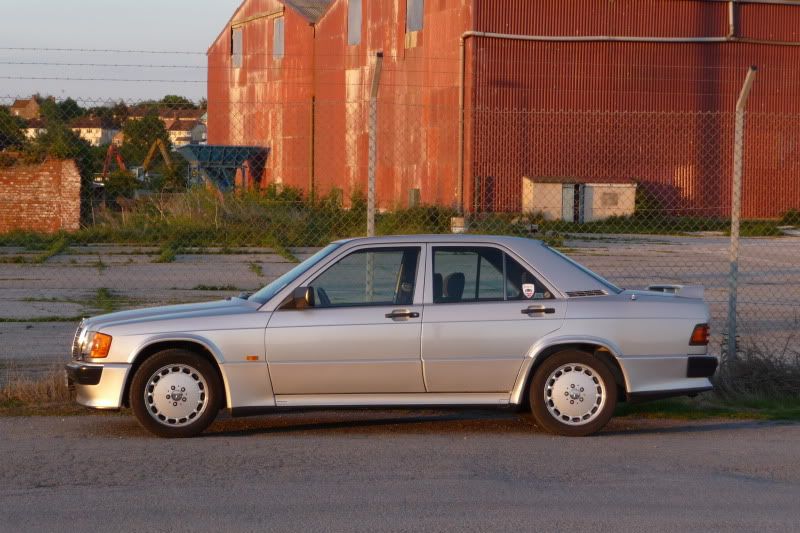
Under? (but look at that bright spot on the door - a potential problem?)
I love this but the colour could be richer

I think the problem here is I'm shooting into the light? Is there any way around this?
Oh, this is a private road and I wasn't on the keep clear zone for long!

Again... into the light?

This was a struggle to get anything useable, not sure why.

Under?
They are only taken with a compact Lumix so some excuses maybe for the camera...
It seems like you are quite restricted if you only shoot with the light at the perfect angle.
I am using spot metering and metering at about 80% max brightness on my subject.
Also welcome comments on other aspects of my photos, I realise they're not amazing but I'm unsure what to do sometimes.
For example when lighter areas are exposed well, dark areas are grey and grainy (which could be the camera). On the other hand when exposing the dark areas better, you get a horrible effect with overexposed areas being bright white and losing a lot of detail. Sometimes the exposure seems okay.. but it's still a crap photo.
Anyway... the pictures, best I could manage, so what would you have done?
Waterside
This was sort of an accident and overexposed - but it came out better than the intentional photo (below)???
Underexposed?
Acceptable?
Acceptable?
Under? (but look at that bright spot on the door - a potential problem?)
I love this but the colour could be richer
I think the problem here is I'm shooting into the light? Is there any way around this?
Oh, this is a private road and I wasn't on the keep clear zone for long!
Again... into the light?
This was a struggle to get anything useable, not sure why.
Under?
They are only taken with a compact Lumix so some excuses maybe for the camera...
It seems like you are quite restricted if you only shoot with the light at the perfect angle.
I am using spot metering and metering at about 80% max brightness on my subject.
Also welcome comments on other aspects of my photos, I realise they're not amazing but I'm unsure what to do sometimes.
Edited by Pentoman on Tuesday 2nd June 19:04
You're spot metering with a compact Lumix?  Do they have spot metering? I very rarely use spot metering, only for something like a small light object against a very dark background where it's important to get the small light object correctly exposed. In all other cases the evaluative metering (this is on a Canon 30D) is very clever and usually gets it right or near enough. In my experience most compacts have decent evaluative metering too.
I think your assessments on each are correct. The lighting in most looks to me to be quite tricky and I'm not surprised you're having difficulty getting them how you want them. Some, like the last one, you can improve with some post-processing to lighten the shadow areas:

I don't see anything wrong with the one with the bright spot on the Merc's door.
Do they have spot metering? I very rarely use spot metering, only for something like a small light object against a very dark background where it's important to get the small light object correctly exposed. In all other cases the evaluative metering (this is on a Canon 30D) is very clever and usually gets it right or near enough. In my experience most compacts have decent evaluative metering too.I think your assessments on each are correct. The lighting in most looks to me to be quite tricky and I'm not surprised you're having difficulty getting them how you want them. Some, like the last one, you can improve with some post-processing to lighten the shadow areas:

I don't see anything wrong with the one with the bright spot on the Merc's door.
Edited by horacethefrog on Tuesday 2nd June 20:06
Someone shoot me if I'm wrong, but in general its best to expose for the highlights. That means the parts of the picture where its very bright, you meter to get the exposure right on those parts. The other parts will be dark but you can postprocess them to a greater extent than the highlight areas.
I;m not sure if this will help, but you can sort of create a virtual ND filter effect with Photoshop since you're using a compact...
I;m not sure if this will help, but you can sort of create a virtual ND filter effect with Photoshop since you're using a compact...
Edited by kman on Tuesday 2nd June 22:27
kman said:
Someone shoot me if I'm wrong, but in general its best to expose for the highlights. That means the parts of the picture where its very bright, you meter to get the exposure right on those parts. The other parts will be dark but you can postprocess them to a greater extent than the highlight areas.
You're right and in many circumstances it will work ('levels and curves'), but where the dynamic range is very high, the shadows will be very dark and lightening them shows up noise - especially with the microscopic pixels of a compact.Holst said:
you can use exposure bracketing to take three shots and pick the best one.
Yes, but only if neither the subject nor camera move. But we're talking contrast here, where one exposure is unable to capture the full range. But you could bracket exposures and then blend them in PS - which brings us on to...Holst said:
You can also shoot RAW and then play with it in software.
This is what I do - and for high contrast subjects I double process (once for highlights, once for shadows) and composite them in PS. It's a bit like exposure bracketing but using the same image, so movement isn't a problem. It's much more work but some shots demand it.Gassing Station | Photography & Video | Top of Page | What's New | My Stuff