
Lunar Module Ascent Engine Trivia
Discussion


Just been watching Moon Machines on Discovery, subject kind of says it all it's about NASA and the lunar missions etc.
A fact that stood out was that the ascent engines in the LEM, due to the type of fuel used, were never test fired as to do so would basically destroy the engine.
So, you're sat on the Moon, and the one thing that has to work first time hasn't been tested until you push the button.
A fact that stood out was that the ascent engines in the LEM, due to the type of fuel used, were never test fired as to do so would basically destroy the engine.
So, you're sat on the Moon, and the one thing that has to work first time hasn't been tested until you push the button.
paddyhasneeds said:
Just been watching Moon Machines on Discovery, subject kind of says it all it's about NASA and the lunar missions etc.
A fact that stood out was that the ascent engines in the LEM, due to the type of fuel used, were never test fired as to do so would basically destroy the engine.
So, you're sat on the Moon, and the one thing that has to work first time hasn't been tested until you push the button.
Eeeek - brave men.A fact that stood out was that the ascent engines in the LEM, due to the type of fuel used, were never test fired as to do so would basically destroy the engine.
So, you're sat on the Moon, and the one thing that has to work first time hasn't been tested until you push the button.
That's always been a startling fact of the apollo missions.
The launch from earth required the huge Saturn V First stage to reach orbit (ie before 2nd stage helped them on the way to the moon ) - and yet the launch from the moon to orbit (ie to the orbiter) required a couple of strap on aerosols and a pray.
I know the gravity is only one sixth and the only requirement was to launch a couple of blokes and their life support - still seems amazing.
PS before this gets jumped on - yes I do believe men have walked on the moon.
The launch from earth required the huge Saturn V First stage to reach orbit (ie before 2nd stage helped them on the way to the moon ) - and yet the launch from the moon to orbit (ie to the orbiter) required a couple of strap on aerosols and a pray.
I know the gravity is only one sixth and the only requirement was to launch a couple of blokes and their life support - still seems amazing.
PS before this gets jumped on - yes I do believe men have walked on the moon.

El Guapo said:
The real question is how they got the remote camera to track the lunar module as it took off.
They had to trigger it to look upwards before the module took off because the signal came from the mission control on Earth. So, it was almost entirely down to skilled timing with a small element of good luck.tonyvid said:
So, you're sat on the Moon, and the one thing that has to work first time hasn't been tested until you push the button...Eeeek - brave men.
Yes indeed. But theye were taken from test pilot stock so there were probably no librarians, vegetarians or socialists among them.bigmac146 said:
I once read that the LEM only had something like 15 seconds fuel and it took 13 seconds to get to where they were going, so they only ever had one chance to make back to the moons orbit
You're a bit confused there. On the final approach the primitve computer was overloaded and Neil Armstrong had to take over and fly it manually - he used more fuel to get past a boulder field but had maybe 1 minute's fuel left.As for the take off and return to lunar prbit, that was a differnt section with a different fuel supply - the base part stayed on the moon.
The worrying thing about all this is that perhaps in a few hundred years the lunar missions will be forgotten and relegated to folklore, like yetis and UFOs... already it is being destroyed by pointless conspriacy 'theories' and eventually the passing of those who were there.
Edited by Simpo Two on Saturday 25th October 21:21
I heard another interesting fact about the LEM. If you climbed the ladder to enter the LEM on Earth, you would break the ladder, as it was only designed for the weight of the astronauts on the moon. All helps with the weight saving, I guess.
So with Apollo 13, what engine did they use ? I presume they used the ascent engine twice for the trajectory burns ?
So with Apollo 13, what engine did they use ? I presume they used the ascent engine twice for the trajectory burns ?
Mars said:
El Guapo said:
The real question is how they got the remote camera to track the lunar module as it took off.
They had to trigger it to look upwards before the module took off because the signal came from the mission control on Earth. So, it was almost entirely down to skilled timing with a small element of good luck.I've seen an archive video where the camera suddenly pans upwards before the LEM has left the ground. The co-pilot was a little trigger happy on the button!
John_S4x4 said:
I heard another interesting fact about the LEM. If you climbed the ladder to enter the LEM on Earth, you would break the ladder, as it was only designed for the weight of the astronauts on the moon. All helps with the weight saving, I guess.
So with Apollo 13, what engine did they use ? I presume they used the ascent engine twice for the trajectory burns ?
Descent engine wasn't it? Had more thrust than the ascent as well. Plus it was on the powered LEM.So with Apollo 13, what engine did they use ? I presume they used the ascent engine twice for the trajectory burns ?
This'll keep you busy for a bit: http://en.wikipedia.org/wiki/Lunar_module
This is what might have been: http://en.wikipedia.org/wiki/Lunar_base
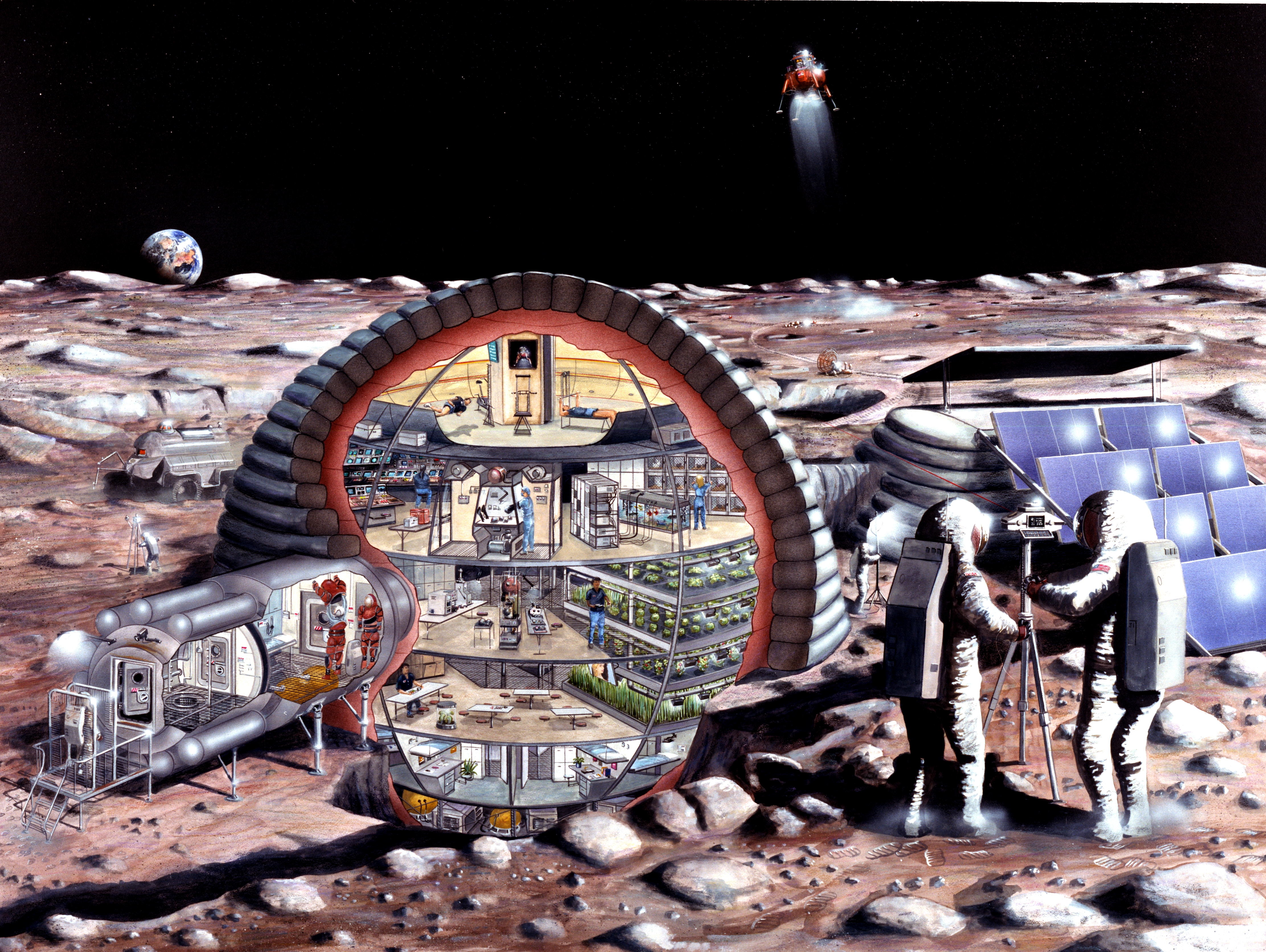
- but we lost the plot so China is taking over.
This is what might have been: http://en.wikipedia.org/wiki/Lunar_base
- but we lost the plot so China is taking over.
Edited by Simpo Two on Saturday 25th October 22:34
Simpo Two said:
You're a bit confused there. On the final approach the primitve computer was overloaded and Neil Armstrong had to take over and fly it manually - he used more fuel to get past a boulder field but had maybe 1 minute's fuel left.
I stand corrected, thanks for the information Simpo Two
This is rather good: http://uk.youtube.com/watch?v=2BvbD-1qZtc
At 8:41 "thirty seconds". That was the amount of fuel remaining on the descent engine.
The DisKey did report errors when the landing radar was selected, but it was well engineered, and it terminated functions (what we might call processes) that were of a lower priority.
It wasn't possible to test that specific engine, beyond pressure tests / x-rays etc. The original engine design had all sorts of fancy elements to it, but in the search for reliability and lightness, they went for the hypergolic system, which is very simple indeed. Not much beyond 2 bottles and a shower head. They had extensively tested engines of the same design previously, just not that specific one. The same engine design had been used on the previous Apollo missions, at least one of which performed everything but the landing itself. They got within 10 miles of the moon's surface.
At 8:41 "thirty seconds". That was the amount of fuel remaining on the descent engine.
The DisKey did report errors when the landing radar was selected, but it was well engineered, and it terminated functions (what we might call processes) that were of a lower priority.
It wasn't possible to test that specific engine, beyond pressure tests / x-rays etc. The original engine design had all sorts of fancy elements to it, but in the search for reliability and lightness, they went for the hypergolic system, which is very simple indeed. Not much beyond 2 bottles and a shower head. They had extensively tested engines of the same design previously, just not that specific one. The same engine design had been used on the previous Apollo missions, at least one of which performed everything but the landing itself. They got within 10 miles of the moon's surface.
As a back up..in-case of emergency type thing, they should have reeled out a cable from earth, attached to the LEM. Then when it was time to leave the moon..reel them back in.
Now i realize it would take a v e r y long cable, but it's do-able.
Hey, it's late and i can't sleep.
Actually, the Discovery channels 'NASA's greatest missions' has been rather enjoyable.
Now i realize it would take a v e r y long cable, but it's do-able.
Hey, it's late and i can't sleep.
Actually, the Discovery channels 'NASA's greatest missions' has been rather enjoyable.
Edited by Waynester on Sunday 26th October 02:15
From about 1966 on, NASA stopped referring to the Lunar Module as the LEM but switched to LM (although it was still pronounced "Lem"). They decided that the term "Excursion" in the LEM title sounded a bit frivolous.
It is interesting that NASA are planning on using an upgrraded version of these Lunar Module descent engines on their new generation Lunar Lander. They have even taken some unused engines out of storage and have been test firing them using all manner of different propellants. One engine had been wrapped in cellophane and sealed for almost 40 years and fired up first time.
It is interesting that NASA are planning on using an upgrraded version of these Lunar Module descent engines on their new generation Lunar Lander. They have even taken some unused engines out of storage and have been test firing them using all manner of different propellants. One engine had been wrapped in cellophane and sealed for almost 40 years and fired up first time.
Gassing Station | The Pie & Piston Archive | Top of Page | What's New | My Stuff