
Car Washing Restrictions
Discussion


A few months back a guy from Brussels drove his Porsche 993 over to have its creaking windscreen fixed. When he arrived, the car was mint not only because it was a well looked after car but it looked it had just been detailed. He told me he wanted to have it washed after the drive here and couldn't believe how many hand car washes he saw.
He explained that in Belgium you're not allowed to wash your car at home; washing your car on public streets in Belgium is generally prohibited because soapy water and run-off can enter the storm drains and pollute the environment. Speaking to people I know in Holland, similar restrictions exist there too, and from a recent trip to Berlin, washing your car at home on private property or public streets is largely restricted - or even illegal across most of Germany - under the national Water Resources Act ( 'Wasserhaushaltsgesetz' ).
To wash you car you have to go to a proper car wash place, or, exemptions apply to places or residences if the property has a special drainage system connected to the wastewater network equipped with an oil and grease separator. Some municipalities allow rinsing with plain water only, though many ban even that.
Meanwhile, here:
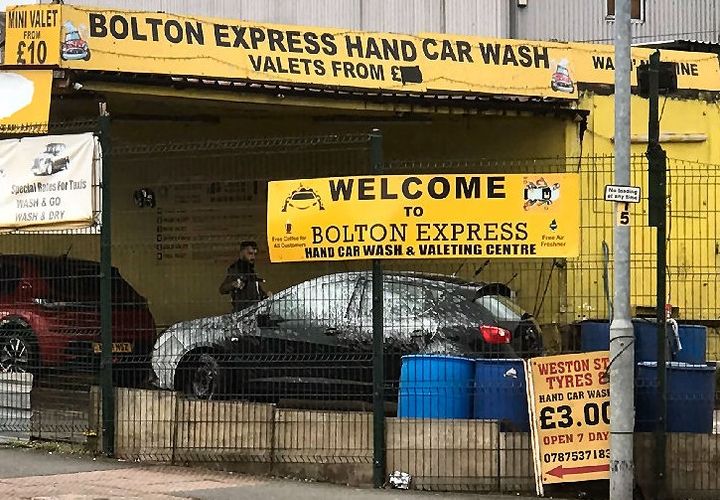

If I could, I would filter the water from washing my car/van; I'd like to. It would also be great if our local authorities and government got behind giving a bit more of a s t like our friends in Europe do. Instead, we get banned from using a hosepipe because we can't be trusted (but we're allowed take our motors to the local 'Inside Outside Boss' establishment, pay them 20-30 quid (CASH) and watch them use the same, if not more water than we would have at home.
He explained that in Belgium you're not allowed to wash your car at home; washing your car on public streets in Belgium is generally prohibited because soapy water and run-off can enter the storm drains and pollute the environment. Speaking to people I know in Holland, similar restrictions exist there too, and from a recent trip to Berlin, washing your car at home on private property or public streets is largely restricted - or even illegal across most of Germany - under the national Water Resources Act ( 'Wasserhaushaltsgesetz' ).
To wash you car you have to go to a proper car wash place, or, exemptions apply to places or residences if the property has a special drainage system connected to the wastewater network equipped with an oil and grease separator. Some municipalities allow rinsing with plain water only, though many ban even that.
Meanwhile, here:
If I could, I would filter the water from washing my car/van; I'd like to. It would also be great if our local authorities and government got behind giving a bit more of a s
t like our friends in Europe do. Instead, we get banned from using a hosepipe because we can't be trusted (but we're allowed take our motors to the local 'Inside Outside Boss' establishment, pay them 20-30 quid (CASH) and watch them use the same, if not more water than we would have at home. StevieBee said:
There's a few other countries that have similar bans.
IIRC - and I may be wrong on this - is that in the UK, run off from road drainage feeds into the sewer system rather than directly into local water courses so undergoes proper treatment.
Depends where you are. Surface water sometimes goes into the sewage, it just as often, runs straight into a water course,gulley, or the sea.IIRC - and I may be wrong on this - is that in the UK, run off from road drainage feeds into the sewer system rather than directly into local water courses so undergoes proper treatment.
StevieBee said:
There's a few other countries that have similar bans.
IIRC - and I may be wrong on this - is that in the UK, run off from road drainage feeds into the sewer system rather than directly into local water courses so undergoes proper treatment.
Where I am (Manchester), United Utilities says the street grid/gulley drain off into the rivers and are usual road drainage and as such are council infrastructure. The sewerage system is theirs. The drains on my drive flow into the sewerage system because that's how I had them done and the pipe from the house runs under the drive to the main street sewer. I would think the rest of the UK is the same. So really we are the same as Germany/Belgium, but we just don't enforce car wash water going into the street gulleys if cars are washed there. But to be fair, it's hardly the worst of things that end up in them.IIRC - and I may be wrong on this - is that in the UK, run off from road drainage feeds into the sewer system rather than directly into local water courses so undergoes proper treatment.
And yet...
https://www.bbc.co.uk/news/articles/cg435gg66gpo
She was stopped by three enforcement officers at the bus stop near Richmond station and given a fine under Section 33 of the Environmental Protection Act 1990, which makes it an offence to deposit or dispose of waste in a way likely to pollute land or water, including pouring liquids into street drains.
But for some reason if it's all sorts of chemicals for blasting tar and brake dust off alloys it's fine!
Electronicpants said:
And yet...
https://www.bbc.co.uk/news/articles/cg435gg66gpo
She was stopped by three enforcement officers at the bus stop near Richmond station and given a fine under Section 33 of the Environmental Protection Act 1990, which makes it an offence to deposit or dispose of waste in a way likely to pollute land or water, including pouring liquids into street drains.
But for some reason if it's all sorts of chemicals for blasting tar and brake dust off alloys it's fine!
The fine was cancelled due to the uproar. I even wrote to the council to complain - crazy.https://www.bbc.co.uk/news/articles/cg435gg66gpo
She was stopped by three enforcement officers at the bus stop near Richmond station and given a fine under Section 33 of the Environmental Protection Act 1990, which makes it an offence to deposit or dispose of waste in a way likely to pollute land or water, including pouring liquids into street drains.
But for some reason if it's all sorts of chemicals for blasting tar and brake dust off alloys it's fine!
normalbloke said:
StevieBee said:
There's a few other countries that have similar bans.
IIRC - and I may be wrong on this - is that in the UK, run off from road drainage feeds into the sewer system rather than directly into local water courses so undergoes proper treatment.
Depends where you are. Surface water sometimes goes into the sewage, it just as often, runs straight into a water course,gulley, or the sea.IIRC - and I may be wrong on this - is that in the UK, run off from road drainage feeds into the sewer system rather than directly into local water courses so undergoes proper treatment.
There's a documentary about the largest Worlds Biggest Car Wash in Germany:
https://www.youtube.com/watch?v=PU5orW-mtVs&pp...
https://www.youtube.com/watch?v=PU5orW-mtVs&pp...
Interesting
I noticed that the water in the drains in my road does not drain away you can see it in there about 5 feet down - assumed it was blocked
Then the other day a truck turned up and vacuumed the water away from each drain. No effort at inspecting or unblocking just a 2 minute vacuum then gone
I wonder if they do not actually go anywhere just holding drains - is that a thing?
menousername said:
Interesting
I noticed that the water in the drains in my road does not drain away you can see it in there about 5 feet down - assumed it was blocked
Then the other day a truck turned up and vacuumed the water away from each drain. No effort at inspecting or unblocking just a 2 minute vacuum then gone
I wonder if they do not actually go anywhere just holding drains - is that a thing?
Roadside gulleys have a trap to keep the worst of the solids likely to cause blockages The outlet pipe is near the top. Water usually sits in them, or dries out after a prolonged spell. Often seen with plod emptying them out in particularly stabby places after an incident..I noticed that the water in the drains in my road does not drain away you can see it in there about 5 feet down - assumed it was blocked
Then the other day a truck turned up and vacuumed the water away from each drain. No effort at inspecting or unblocking just a 2 minute vacuum then gone
I wonder if they do not actually go anywhere just holding drains - is that a thing?
Glassman said:
A few months back a guy from Brussels drove his Porsche 993 over to have its creaking windscreen fixed. When he arrived, the car was mint not only because it was a well looked after car but it looked it had just been detailed. He told me he wanted to have it washed after the drive here and couldn't believe how many hand car washes he saw.
He explained that in Belgium you're not allowed to wash your car at home; washing your car on public streets in Belgium is generally prohibited because soapy water and run-off can enter the storm drains and pollute the environment. Speaking to people I know in Holland, similar restrictions exist there too, and from a recent trip to Berlin, washing your car at home on private property or public streets is largely restricted - or even illegal across most of Germany - under the national Water Resources Act ( 'Wasserhaushaltsgesetz' ).
To wash you car you have to go to a proper car wash place, or, exemptions apply to places or residences if the property has a special drainage system connected to the wastewater network equipped with an oil and grease separator. Some municipalities allow rinsing with plain water only, though many ban even that.
Sort of...He explained that in Belgium you're not allowed to wash your car at home; washing your car on public streets in Belgium is generally prohibited because soapy water and run-off can enter the storm drains and pollute the environment. Speaking to people I know in Holland, similar restrictions exist there too, and from a recent trip to Berlin, washing your car at home on private property or public streets is largely restricted - or even illegal across most of Germany - under the national Water Resources Act ( 'Wasserhaushaltsgesetz' ).
To wash you car you have to go to a proper car wash place, or, exemptions apply to places or residences if the property has a special drainage system connected to the wastewater network equipped with an oil and grease separator. Some municipalities allow rinsing with plain water only, though many ban even that.
For a private individual washing their own car at home, no environmental permit is needed in Flanders — it falls under non-classified activities (VLAREM heading 15.4, which only classifies commercial and mobile car washes), but remember that polluted wastewater that must not reach the rainwater sewer or ditch.
StevieBee said:
There's a few other countries that have similar bans.
IIRC - and I may be wrong on this - is that in the UK, run off from road drainage feeds into the sewer system rather than directly into local water courses so undergoes proper treatment.
Which is fed directly into our rivers by Thames Water. IIRC - and I may be wrong on this - is that in the UK, run off from road drainage feeds into the sewer system rather than directly into local water courses so undergoes proper treatment.
When I ran my business we had to pay significant water charges and also have tanks in the ground for separation of the fines / oils etc. This was because we had wash bays for vehicles / plant.
It was the Environment Agency who turned up one day who said we had to do it. This would have been about 1997 ish I think when the tanks had to go in.
The local businesses all had to do the same, not all did tbh. The tanks were pumped / cleaned every couple of years, paperwork kept for checking etc.
I am retired now but I think the Environment Agency are much less active these days - I know they used to turn up at least once a year at my place till maybe 2015-16 when they stopped. The business next to mine was a scrap yard and they used to get them every few months and since COVID I dont think they had a single inspection.
RSTurboPaul said:
Not sure what is implied by 'CASH' - presumably it is the assertion that any person paying with or accepting cash is actively evading tax, which would appear to need a citation.

You make an assumption and now want a citation.
He/they always ask for cash. There are some/a few who will have a card machine, but it's usually/mostly cash. Make of that what you will.
Gassing Station | The Lounge | Top of Page | What's New | My Stuff