
Replacement of "hot air" heating ?
Discussion


Bought an old three storey Victorian house.
It currently has an old hot-air heating system with a big "furnace" in the basement feeding huge ducts throughout the house.
Do I need to rip it out ??...some suggestion of asbestos
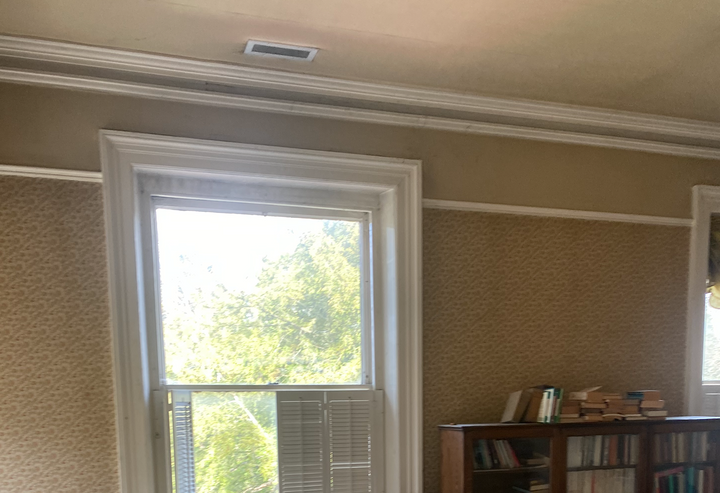
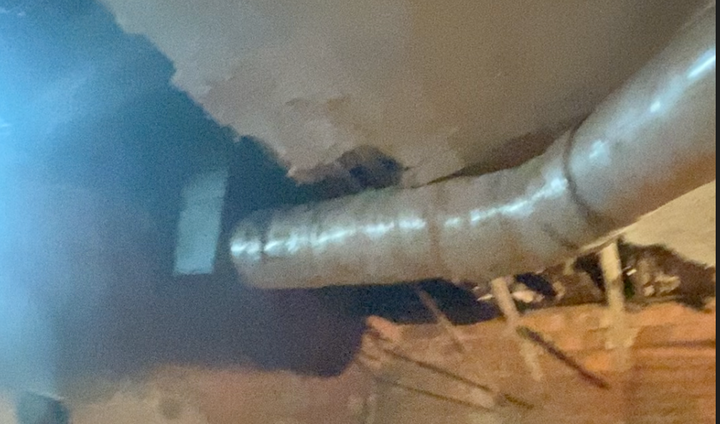
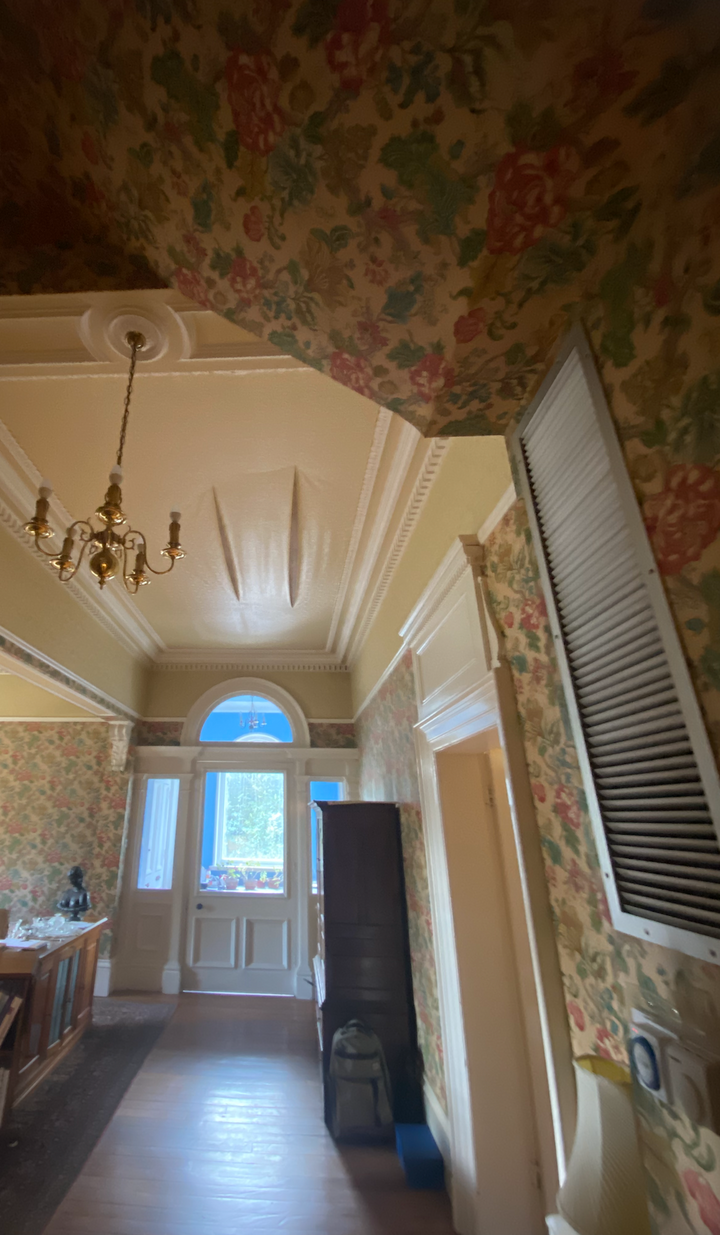
Fortunately, the ducts serving the middle floor run across the basement ceiling and vent through floor grilles, while the duct for the top floor rises through boxed in duct, then runs through the loft, and vents through ceiling grilles.
The hot water is by a mid size Aga type thing, which I am having ripped out day one and replaced with a new boiler and unvented cylinder.
The heating is less urgent, but I'm trying to work out the best approach.
I really don't like the huge ducting, and I can't imagine the hot air solution is particularly efficient. Also, there's currently no heating in the basement.
My current thinking is:
Install radiators on the ground and first floors.
Run the pipework down from the loft to the radiators (top floor, Is this even sensible ?) and on the middle floor bring the pipes up from the basement (using the existing vent holes)
In the future Install underfloor heating in the basement (new boiler will be located down there).
Ideally, I don't want to start tearing the house apart by lifting floorboards.
Am I missing a better solution?
Someone suggested replacing the existing hot air furnace with an air-source heat pump that could also provide air conditioning. I'd only really consider this if the existing large ducts could be replaced with much smaller ones.
Interested to hear other ideas
Cheers.
PS for those interested the boiler (35kw), tank (300 liters), copper, valves, tails for future heating, rip out of old tanks, gas run for cooker etc is just over £6k (inc), from a great plumber who I used for years.
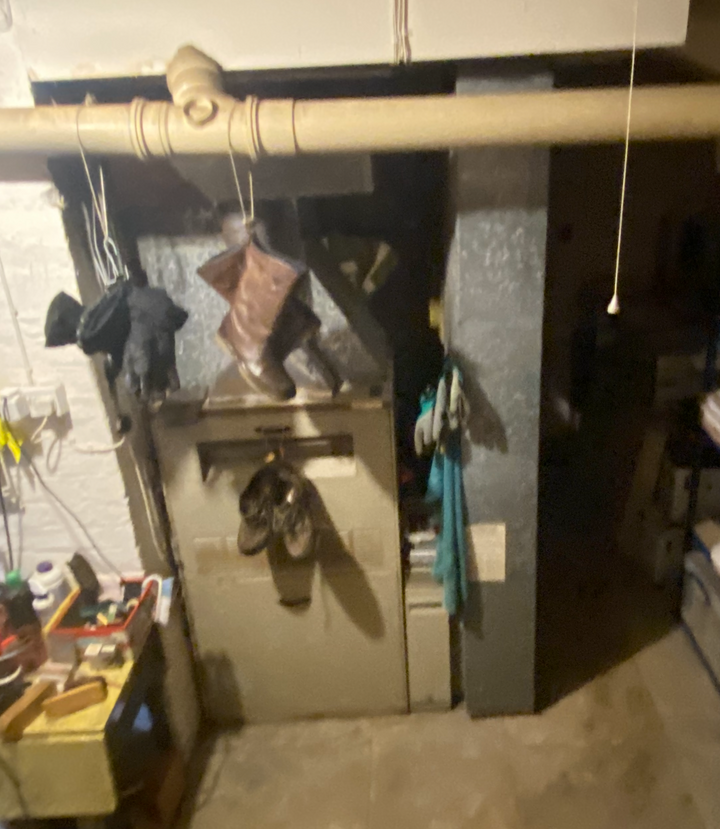
It currently has an old hot-air heating system with a big "furnace" in the basement feeding huge ducts throughout the house.
Do I need to rip it out ??...some suggestion of asbestos
Fortunately, the ducts serving the middle floor run across the basement ceiling and vent through floor grilles, while the duct for the top floor rises through boxed in duct, then runs through the loft, and vents through ceiling grilles.
The hot water is by a mid size Aga type thing, which I am having ripped out day one and replaced with a new boiler and unvented cylinder.
The heating is less urgent, but I'm trying to work out the best approach.
I really don't like the huge ducting, and I can't imagine the hot air solution is particularly efficient. Also, there's currently no heating in the basement.
My current thinking is:
Install radiators on the ground and first floors.
Run the pipework down from the loft to the radiators (top floor, Is this even sensible ?) and on the middle floor bring the pipes up from the basement (using the existing vent holes)
In the future Install underfloor heating in the basement (new boiler will be located down there).
Ideally, I don't want to start tearing the house apart by lifting floorboards.
Am I missing a better solution?
Someone suggested replacing the existing hot air furnace with an air-source heat pump that could also provide air conditioning. I'd only really consider this if the existing large ducts could be replaced with much smaller ones.
Interested to hear other ideas
Cheers.
PS for those interested the boiler (35kw), tank (300 liters), copper, valves, tails for future heating, rip out of old tanks, gas run for cooker etc is just over £6k (inc), from a great plumber who I used for years.
Very unusual to see that type of heating in a Victorian house. You can put in some very efficient warm air heating, or there are also water/air heat exchangers which work with conventional wet boilers.
But unless you're attached to it or don't want the disruption I'd move to a more mainstream system.
But unless you're attached to it or don't want the disruption I'd move to a more mainstream system.
We had a hot air central heating system in the house I grew up in. It was great for warming the house up quickly, but also tended to give everyone a sore throat if it came on overnight.
If it was my house OP I think I would look into getting rid of it and fitting a more conventional system.
If it was my house OP I think I would look into getting rid of it and fitting a more conventional system.
I would try to understand what the building needs for you to be most comfortable in it, with regards to the whole heating/cooling/ventilation/air quality conundrum.
Having a lot of ducting already in place is a big opportunity to have a multi-source system which would otherwise be impractical.
Do you have mains gas?
Will you have fires/wood burners?
What's your goal?
If I had lots of ducting already, and ample free wood, then an advanced MVHR system combined with a heat store and a log furnace could be attractive.
I would say it's not 1990 anymore, don't rush to rip it out and slap in a plain old gas boiler and radiators.
Having a lot of ducting already in place is a big opportunity to have a multi-source system which would otherwise be impractical.
Do you have mains gas?
Will you have fires/wood burners?
What's your goal?
If I had lots of ducting already, and ample free wood, then an advanced MVHR system combined with a heat store and a log furnace could be attractive.
I would say it's not 1990 anymore, don't rush to rip it out and slap in a plain old gas boiler and radiators.
Thanks all for replies.
The heating works, in fairness, it blows plenty of hot air. The problem is no heating in the bathrooms or kitchen, and as the house has poor insulation I imagine when not blowing the house cools very quickly.
I'd like to reclaim the space in the basement currently taken up by the ducting in the ceiling and the furnace, and have to come up with a heating solution for the basement.
I might just see how we get on with the hot air solution over the winter. The wife, the dogs and I are all fairly hardy northers, unfortunately, kids (in the 20s) all a bit soft, not used to waking up with ice on the inside of the windows
The heating works, in fairness, it blows plenty of hot air. The problem is no heating in the bathrooms or kitchen, and as the house has poor insulation I imagine when not blowing the house cools very quickly.
I'd like to reclaim the space in the basement currently taken up by the ducting in the ceiling and the furnace, and have to come up with a heating solution for the basement.
I might just see how we get on with the hot air solution over the winter. The wife, the dogs and I are all fairly hardy northers, unfortunately, kids (in the 20s) all a bit soft, not used to waking up with ice on the inside of the windows
We recently moved into a 1970's 4 bed detached with a warm air heating system. Ducts underneath the concrete floor for the downstairs and through the loft space for the upstairs. We had a vented hot water tank warmed only by an immersion heater for hot water. We lived with it last winter and didn't enjoy it, the house warmed up quickly, but did seem to fluctuate a lot in temperature, it was also difficult to balance the vents to ensure even temperature between all the rooms.
I spent a long time investigating different options: gas boiler and radiators, upgrading the warm air heating, A2A heat pump, A2W heat pump. We have just had a complete new heating and hot water system installed now. We ended up going for a 10kW Air to Water heat pump, Underfloor heating throughout the whole downstairs, radiators throughout the upstairs, and a 300l hot water tank where the old warm air boiler used to be.
We haven't lived a winter with it yet, so I can't fully comment, but expecting to have a much better heating system. With a complete absence of a wet heating system, we had the opportunity to start again, with correctly sized pipes and rads for the heat pump to work at a 40c flow temperature. I am expecting this to be cheaper than the previous system to run, even more so when we eventually get a battery installed to benefit from the cheap overnight rates.
For context total cost for all this through a well recommended local plumbing firm was 18.5k, 7.5k of which came through the government BUS scheme. So ~11k total outlay for us.
I spent a long time investigating different options: gas boiler and radiators, upgrading the warm air heating, A2A heat pump, A2W heat pump. We have just had a complete new heating and hot water system installed now. We ended up going for a 10kW Air to Water heat pump, Underfloor heating throughout the whole downstairs, radiators throughout the upstairs, and a 300l hot water tank where the old warm air boiler used to be.
We haven't lived a winter with it yet, so I can't fully comment, but expecting to have a much better heating system. With a complete absence of a wet heating system, we had the opportunity to start again, with correctly sized pipes and rads for the heat pump to work at a 40c flow temperature. I am expecting this to be cheaper than the previous system to run, even more so when we eventually get a battery installed to benefit from the cheap overnight rates.
For context total cost for all this through a well recommended local plumbing firm was 18.5k, 7.5k of which came through the government BUS scheme. So ~11k total outlay for us.
I can cheerfully recommend sticking with a warm air system.
The British have a strange opposition to air systems in domestic situations yet they work well in larger homes. I suggest you get the professionals in to see what they say about possible upgrade. You could consider adding A/C at the same time.
The British have a strange opposition to air systems in domestic situations yet they work well in larger homes. I suggest you get the professionals in to see what they say about possible upgrade. You could consider adding A/C at the same time.
pimentocheese said:
We recently moved into a 1970's 4 bed detached with a warm air heating system. Ducts underneath the concrete floor for the downstairs and through the loft space for the upstairs. We had a vented hot water tank warmed only by an immersion heater for hot water. We lived with it last winter and didn't enjoy it, the house warmed up quickly, but did seem to fluctuate a lot in temperature, it was also difficult to balance the vents to ensure even temperature between all the rooms.
I spent a long time investigating different options: gas boiler and radiators, upgrading the warm air heating, A2A heat pump, A2W heat pump. We have just had a complete new heating and hot water system installed now. We ended up going for a 10kW Air to Water heat pump, Underfloor heating throughout the whole downstairs, radiators throughout the upstairs, and a 300l hot water tank where the old warm air boiler used to be.
We haven't lived a winter with it yet, so I can't fully comment, but expecting to have a much better heating system. With a complete absence of a wet heating system, we had the opportunity to start again, with correctly sized pipes and rads for the heat pump to work at a 40c flow temperature. I am expecting this to be cheaper than the previous system to run, even more so when we eventually get a battery installed to benefit from the cheap overnight rates.
For context total cost for all this through a well recommended local plumbing firm was 18.5k, 7.5k of which came through the government BUS scheme. So ~11k total outlay for us.
Super useful - thanks I spent a long time investigating different options: gas boiler and radiators, upgrading the warm air heating, A2A heat pump, A2W heat pump. We have just had a complete new heating and hot water system installed now. We ended up going for a 10kW Air to Water heat pump, Underfloor heating throughout the whole downstairs, radiators throughout the upstairs, and a 300l hot water tank where the old warm air boiler used to be.
We haven't lived a winter with it yet, so I can't fully comment, but expecting to have a much better heating system. With a complete absence of a wet heating system, we had the opportunity to start again, with correctly sized pipes and rads for the heat pump to work at a 40c flow temperature. I am expecting this to be cheaper than the previous system to run, even more so when we eventually get a battery installed to benefit from the cheap overnight rates.
For context total cost for all this through a well recommended local plumbing firm was 18.5k, 7.5k of which came through the government BUS scheme. So ~11k total outlay for us.
I'd certainly explore reusing the ducts (or duct runs) to run an Air-Air ASHP heating/aircon system.
If you need supplementary heating for kitchen/bathrooms, look at wet underfloor. Some of the overlay systems are now quite thin.
I understand that it's now possible to have an ASHP unit that can handle wet UFH and aircon. The below extracted from a document I was given last week for a commercial project:
If you need supplementary heating for kitchen/bathrooms, look at wet underfloor. Some of the overlay systems are now quite thin.
I understand that it's now possible to have an ASHP unit that can handle wet UFH and aircon. The below extracted from a document I was given last week for a commercial project:
doc said:
TDM/hybrid systems. Samsung's EHS TDM Plus is exactly this product: one outdoor unit serving a hydro unit (wet UFH + DHW cylinder) and wall-mounted air-to-air indoor units — on the 9–16 kW models, up to about 7 A2A indoor units. Live pricing: the 16 kW single-phase outdoor unit is £2,897.86 ex VAT and the matching 16 kW hydro unit £2,624.13 ex VAT, so roughly £5.5k ex VAT per block in core kit before wall cassettes (typically £400–700 each), cylinder, pipework and install. SCOP is 4.6–4.7, comfortably clearing the 3.2 in the construction notes, and SEER 5.2 in cooling. At ~198 m² <snip> is plausibly within a 12–16 kW unit's range, subject to a proper heat-loss calculation.
Two caveats on TDM Plus. First, it runs "smart alternating" operation between air-to-water and air-to-air — it switches between duties on a priority logic rather than doing both flat-out simultaneously. In practice this matters little (UFH is off on days you want cooling; DHW reheat briefly interrupts AC), but it's worth understanding. Second, and more strategically: it's an R410A machine, and R410A is being phased down under F-gas rules, with the EU already barring high-GWP refrigerants in new small splits and GB expected to follow. Buying new R410A plant in 2026 means committing to increasingly expensive servicing gas over the system's life. <snip> should ask any supplier pointedly about refrigerant roadmap before ordering.
The commercial-grade version of the same idea is VRF with a hydrobox — Daikin VRV with the HXY low-temperature hydrobox feeding 35°C water to the UFH alongside DX wall units, or Mitsubishi City Multi / HVRF with hydro units. Heat-recovery variants can even pump heat extracted from a cooled room into the hot water. These are excellent but usually three-phase and priced for larger buildings — likely overkill at ~200 m² <snip>.
I suspect it may well be possible to rig that sort of hybrid system to ducted rather than wall mounted AC units.Two caveats on TDM Plus. First, it runs "smart alternating" operation between air-to-water and air-to-air — it switches between duties on a priority logic rather than doing both flat-out simultaneously. In practice this matters little (UFH is off on days you want cooling; DHW reheat briefly interrupts AC), but it's worth understanding. Second, and more strategically: it's an R410A machine, and R410A is being phased down under F-gas rules, with the EU already barring high-GWP refrigerants in new small splits and GB expected to follow. Buying new R410A plant in 2026 means committing to increasingly expensive servicing gas over the system's life. <snip> should ask any supplier pointedly about refrigerant roadmap before ordering.
The commercial-grade version of the same idea is VRF with a hydrobox — Daikin VRV with the HXY low-temperature hydrobox feeding 35°C water to the UFH alongside DX wall units, or Mitsubishi City Multi / HVRF with hydro units. Heat-recovery variants can even pump heat extracted from a cooled room into the hot water. These are excellent but usually three-phase and priced for larger buildings — likely overkill at ~200 m² <snip>.
I would live with it for a while if it all works and see how you get on. I'd include the Aga type thing in that too.
I had grand plans to install a modern "efficient" heating system when we bought our our old rambling Aberdeenshire cottage almost a decade ago. It's all gravity fed and runs off a decrepit looking Stanley oil fired range that operates with all the finesse of a traction engine. Everyone who saw the setup told me it would be unreliable and ruinous to run but it's actually turned out to be perfectly reliable, easy to service and doesn't even use that much oil.
Give it all at least a winter unless it's clearly not fit for purpose.
I had grand plans to install a modern "efficient" heating system when we bought our our old rambling Aberdeenshire cottage almost a decade ago. It's all gravity fed and runs off a decrepit looking Stanley oil fired range that operates with all the finesse of a traction engine. Everyone who saw the setup told me it would be unreliable and ruinous to run but it's actually turned out to be perfectly reliable, easy to service and doesn't even use that much oil.
Give it all at least a winter unless it's clearly not fit for purpose.
We now moved in, had all the vents and ducting professionally cleaned, £1,500 
Fired up the furnace, which is a 'Lennox G30 warm-air system, it actually runs really well and blows plenty of warm air, as it should.
As suggested by another poster, there’s no zoning beyond manually closing the vents in individual rooms.
The issue is that it’s around 50 years old and therefore not particularly efficient.
It’s located in the basement, but that area has direct access to an outside courtyard, therefore we are considering replacing it with an air-to-air heat pump (added benefit of cooling in the summer).
It's an old poorly insulated Victorian house, would we be better sticking to the hot air of the furnace rather than warm air from the heat pump ?
Also any idea what a realistic cost might be, a quick Google search suggests something between £15k to £20k (for heating, cooling, air filtration & humidity)....with both VAT relief and £7,500 Gov grant possibly available.
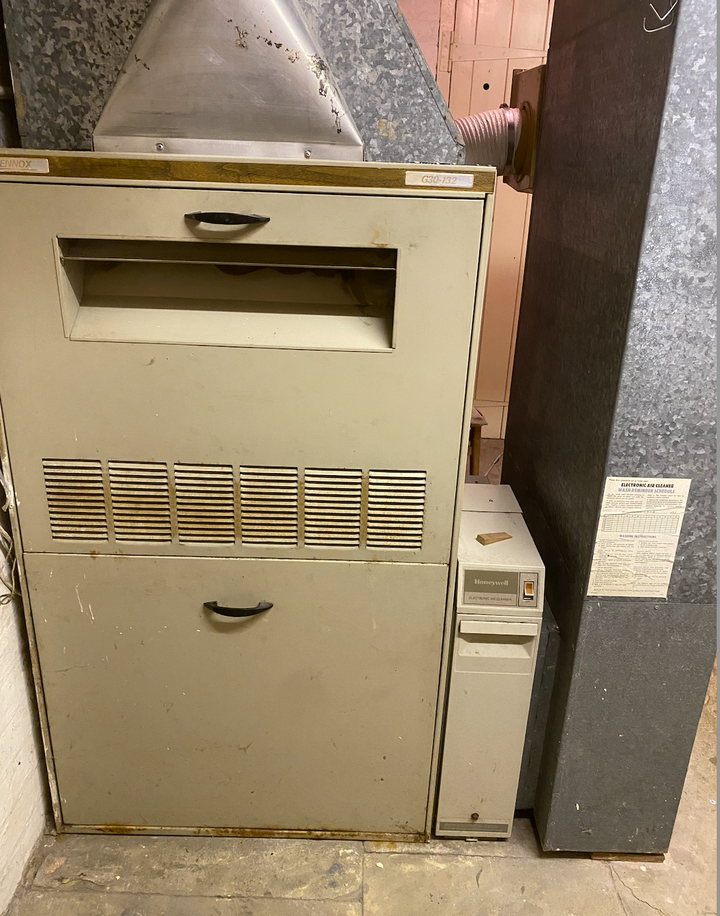
Fired up the furnace, which is a 'Lennox G30 warm-air system, it actually runs really well and blows plenty of warm air, as it should.
As suggested by another poster, there’s no zoning beyond manually closing the vents in individual rooms.
The issue is that it’s around 50 years old and therefore not particularly efficient.
It’s located in the basement, but that area has direct access to an outside courtyard, therefore we are considering replacing it with an air-to-air heat pump (added benefit of cooling in the summer).
It's an old poorly insulated Victorian house, would we be better sticking to the hot air of the furnace rather than warm air from the heat pump ?
Also any idea what a realistic cost might be, a quick Google search suggests something between £15k to £20k (for heating, cooling, air filtration & humidity)....with both VAT relief and £7,500 Gov grant possibly available.
Despite being 45 years old, it's essentially burning gas to create heat, so even a fancy new top-of-the-range one probably won't be twice as efficient? So there's probably nothing wrong with leaving it for a winter and living in the house.
But it should be an easy-ish job to replace with a heat pump setup, to blow hot & dry air around the house. You may even be able to site the unit outside, and join up to a convenient duct, which may save some interior space, if that's useful. From my limited experience with the grants, the price will be inflated to match, so have a look at what's needed before talking to companies who talk up the grants.
If you really must have zoning, then replacing with radiators could be an option. Your ducts then become really convenient conduits all around the house for plumbing / ethernet etc.
But it should be an easy-ish job to replace with a heat pump setup, to blow hot & dry air around the house. You may even be able to site the unit outside, and join up to a convenient duct, which may save some interior space, if that's useful. From my limited experience with the grants, the price will be inflated to match, so have a look at what's needed before talking to companies who talk up the grants.
If you really must have zoning, then replacing with radiators could be an option. Your ducts then become really convenient conduits all around the house for plumbing / ethernet etc.
Over the years we've had our warm air system I've looked at various replacement options and despite being only ~80% efficient there's no way a new one would ever pay for itself so we've just continued as is. It's such a simple contraption it mostly just plods on. There would be other benefits with a new system but nothing very persuasive for me. Perhaps the main drawback right now is that repairing any issues could be very difficult due to spares/willingness of technicians.
I'd recommend suitably placed carbon monoxide detectors in case of breakdown in the heat exchanger though, that is one weakness as they get old.
Re. grants - I think if you are buying a system which has a cooling capability it drops from £7.5k to £2.5k.
I'd recommend suitably placed carbon monoxide detectors in case of breakdown in the heat exchanger though, that is one weakness as they get old.
Re. grants - I think if you are buying a system which has a cooling capability it drops from £7.5k to £2.5k.
Panamax said:
I can cheerfully recommend sticking with a warm air system.
The British have a strange opposition to air systems in domestic situations yet they work well in larger homes. I suggest you get the professionals in to see what they say about possible upgrade. You could consider adding A/C at the same time.
Exactly this.The British have a strange opposition to air systems in domestic situations yet they work well in larger homes. I suggest you get the professionals in to see what they say about possible upgrade. You could consider adding A/C at the same time.
What a brilliant opportunity to upgrade to an air-to-air heat pump system without the cost of ripping up floors, wall and installing ducts. Warm in the winter, cool in the summer.
This is the reasons that, when I hopefully move next year, I'm looking for 60s/70s built houses as I calculate they're easier to convert to this sort of system and easier to insulate than older stuff. But you've got it in already! Brilliant.
Go to the Heat Geek website and find a proper local company to advise.
TheInternet said:
Over the years we've had our warm air system I've looked at various replacement options and despite being only ~80% efficient there's no way a new one would ever pay for itself so we've just continued as is. It's such a simple contraption it mostly just plods on. There would be other benefits with a new system but nothing very persuasive for me. Perhaps the main drawback right now is that repairing any issues could be very difficult due to spares/willingness of technicians.
I'd recommend suitably placed carbon monoxide detectors in case of breakdown in the heat exchanger though, that is one weakness as they get old.
Re. grants - I think if you are buying a system which has a cooling capability it drops from £7.5k to £2.5k.
That seems pretty asinine, it's bad enough with the hairshirt idiots telling us "it was hotter in 1976" without the govt effectively joining in.I'd recommend suitably placed carbon monoxide detectors in case of breakdown in the heat exchanger though, that is one weakness as they get old.
Re. grants - I think if you are buying a system which has a cooling capability it drops from £7.5k to £2.5k.
My sister moved from this house 6 months ago where she had been for over 25 years - ducted warm air heating as per the OP.
https://www.bailey-and.co/property/17-brandling-pa...
They investigated the possibility of going for a heat pump but, with the insulation levels (lack of it), the load was going to be so large they would have required 3 phase to run it and that's before considering the cost of the actual installation and then increased energy costs. So they stuck with the ducted system.
It is often the case that in old houses an ASHP is a non starter.
https://www.bailey-and.co/property/17-brandling-pa...
They investigated the possibility of going for a heat pump but, with the insulation levels (lack of it), the load was going to be so large they would have required 3 phase to run it and that's before considering the cost of the actual installation and then increased energy costs. So they stuck with the ducted system.
It is often the case that in old houses an ASHP is a non starter.
Gassing Station | Homes, Gardens and DIY | Top of Page | What's New | My Stuff