
Weighing a car before restoration
Discussion


Never heard anyone suggest this before, but having seen the amount of filler that goes into even supposedly concours or multi hundred thousand pound restorations, this would seem a good idea? Gives the car owner a baseline expectation for the returned vehicle?
Also, it gives the restorer at post-strip down phase the opportunity to point out existing filler and the pile of dust that will need replacing with new metal. Everyone is on the same page.
Three examples that form my view:
1) A well known restorer/painter that was having an argument with his metalworker who wanted less filler in the businesses work. Answer came back. There is nothing that can’t be solved with 100lb of body filler.
2) Many times I have heard from metal workers that the painter is their best friend. Read filler to cover the work.
3) Head of a well known classic car insurer in the USA told me he was disappointed that when a storm raged through a Cobra meeting, a lot of the claims for perfect cars were in fact cars ladled with bondo to a crazy extent.
So thoughts please?
Also, it gives the restorer at post-strip down phase the opportunity to point out existing filler and the pile of dust that will need replacing with new metal. Everyone is on the same page.
Three examples that form my view:
1) A well known restorer/painter that was having an argument with his metalworker who wanted less filler in the businesses work. Answer came back. There is nothing that can’t be solved with 100lb of body filler.
2) Many times I have heard from metal workers that the painter is their best friend. Read filler to cover the work.
3) Head of a well known classic car insurer in the USA told me he was disappointed that when a storm raged through a Cobra meeting, a lot of the claims for perfect cars were in fact cars ladled with bondo to a crazy extent.
So thoughts please?
Edited by anonymous-user on Saturday 21st February 12:47
Not sure about weighing the car, but agree on the use of filler.
There used to be a tv show about making custom cars in the US. Every car had a load of filler put on and sanded down before paint. I was always surprised.
Very, very few cars had filler from the factory (although lead loading was a thing in many cars) and they shouldnt have any now,
There used to be a tv show about making custom cars in the US. Every car had a load of filler put on and sanded down before paint. I was always surprised.
Very, very few cars had filler from the factory (although lead loading was a thing in many cars) and they shouldnt have any now,
Sebring440 said:
I think the premise of this thread is utter nonsense.
Is lead-loading lighter that a skim of modern lightweight polyester filler?
I have no problem with filler. What I am describing is very common practice, and is often almost carving the car out of filler as opposed to getting the underlying bodywork correct as a starting point. Is lead-loading lighter that a skim of modern lightweight polyester filler?
williamp said:
Not sure about weighing the car, but agree on the use of filler.
There used to be a tv show about making custom cars in the US. Every car had a load of filler put on and sanded down before paint. I was always surprised.
Very, very few cars had filler from the factory (although lead loading was a thing in many cars) and they shouldnt have any now,
American Hotrod.There used to be a tv show about making custom cars in the US. Every car had a load of filler put on and sanded down before paint. I was always surprised.
Very, very few cars had filler from the factory (although lead loading was a thing in many cars) and they shouldnt have any now,
Basically the whole car had a skim of filler…
MysteryCar said:
I have no problem with filler.
When I was stripping down my Land Rover for restoration, I drilled out some rivets to remove some chequer plate from behind the rear wheel, a slab of filler dropped off, said slab is around 30cm x 20cm and 12mm thick and that's just the bit that fell off.The good news is that the (aluminium, so no rust) body underneath is still solid, just a little rippled.
I did wonder how come the body work was (in places) far better in appearance than you would expect on a 60 year old, well-used off-roader.
For this to make sense youd have to compare like with like. Although im not sure how accurate measuring a car thays over 40 years is. Its already had a life and probably already has its share of repairs.
With a reapir it is possible to achieve a perfect repair 'in the metal', but it follows the law of deminiahing returns. I repaired a 355 Challenge Ferrari 3 times last year. By the 3rd time I was told just to do enough. There was a chance I'd be seeing it again after all!
A panel car be repared to 90% in about the same time the panel takes to go from 90%to 100%. Or, the painter can sort it in 30 mins. Yes the complete panel may be skimmed but only the smallest amount of product is left on.
Its the same with a polished aluminium body, A LOT more care and time is taken to achieve this result, not everyone sees value in this.
With a reapir it is possible to achieve a perfect repair 'in the metal', but it follows the law of deminiahing returns. I repaired a 355 Challenge Ferrari 3 times last year. By the 3rd time I was told just to do enough. There was a chance I'd be seeing it again after all!
A panel car be repared to 90% in about the same time the panel takes to go from 90%to 100%. Or, the painter can sort it in 30 mins. Yes the complete panel may be skimmed but only the smallest amount of product is left on.
Its the same with a polished aluminium body, A LOT more care and time is taken to achieve this result, not everyone sees value in this.
Just watch Retropower Uncut to see the amount of work that goes into bodywork to…. Reduce the amount of filler or lead that’s used in a spray.
Never going to eliminate it totally but as said above there a difference between prepping for flawless paint a carving a shape out of filler.
PS I’d highly recommend Retropower Uncut on the YouTube if you’re interested in what goes on a produce high end resto mods/restorations.
Never going to eliminate it totally but as said above there a difference between prepping for flawless paint a carving a shape out of filler.
PS I’d highly recommend Retropower Uncut on the YouTube if you’re interested in what goes on a produce high end resto mods/restorations.
On the Lotus forums, an Esprit restorer is weighing his car as he goes along.
I’ve been weighing some parts myself as I remove them (for example there was around 12Kg of acoustic matting in the rear bulkhead whereas a modern equivalent is around a single kilogram. Won’t be as good but will save a bit of weight).
Biggest surprise was around a kilogram of extra wire in the decades long botched wiring loom versus a brand new one.
With newer lightweight carpets, alloy fuel tanks and better seat trimming, plus the removal of an aftermarket sunroof and some metal work around the battery box that was a bad repair, the car will be a good 50kgs lighter once completed. As it only has around 180bhp, that might be a useful figure, I can also recreate how it might feel by adding a small passenger then kicking them out and repeating the same route
I’ve been weighing some parts myself as I remove them (for example there was around 12Kg of acoustic matting in the rear bulkhead whereas a modern equivalent is around a single kilogram. Won’t be as good but will save a bit of weight).
Biggest surprise was around a kilogram of extra wire in the decades long botched wiring loom versus a brand new one.
With newer lightweight carpets, alloy fuel tanks and better seat trimming, plus the removal of an aftermarket sunroof and some metal work around the battery box that was a bad repair, the car will be a good 50kgs lighter once completed. As it only has around 180bhp, that might be a useful figure, I can also recreate how it might feel by adding a small passenger then kicking them out and repeating the same route
robemcdonald said:
williamp said:
Not sure about weighing the car, but agree on the use of filler.
There used to be a tv show about making custom cars in the US. Every car had a load of filler put on and sanded down before paint. I was always surprised.
Very, very few cars had filler from the factory (although lead loading was a thing in many cars) and they shouldnt have any now,
American Hotrod.There used to be a tv show about making custom cars in the US. Every car had a load of filler put on and sanded down before paint. I was always surprised.
Very, very few cars had filler from the factory (although lead loading was a thing in many cars) and they shouldnt have any now,
Basically the whole car had a skim of filler
williamp said:
996Type said:
Biggest surprise was around a kilogram of extra wire in the decades long botched wiring loom versus a brand new one.
Blimey! 1 kg of scrap copper. That'll pay for ta pint or two!robemcdonald said:
williamp said:
Not sure about weighing the car, but agree on the use of filler.
There used to be a tv show about making custom cars in the US. Every car had a load of filler put on and sanded down before paint. I was always surprised.
Very, very few cars had filler from the factory (although lead loading was a thing in many cars) and they shouldnt have any now,
American Hotrod.There used to be a tv show about making custom cars in the US. Every car had a load of filler put on and sanded down before paint. I was always surprised.
Very, very few cars had filler from the factory (although lead loading was a thing in many cars) and they shouldnt have any now,
Basically the whole car had a skim of filler
But sure, there will be cars that get loaded up and sculpted..
Back to OP's question, I'm not sure what you'd achieve by weighing a car before and after, too many variables in a resto that could affect finished weight. Be far better to use trusted/recognised people for the work and/or viewing during.
Edited by Crafty_ on Monday 23 February 22:44
Tim Cognito said:
williamp said:
996Type said:
Biggest surprise was around a kilogram of extra wire in the decades long botched wiring loom versus a brand new one.
Blimey! 1 kg of scrap copper. That'll pay for ta pint or two!Can’t really add anything more to the above, weighed the old loom and the fresh new one and they were “around” 1Kg difference as outlined. Even got a photo of it:
996Type said:
It did include other associated trinketry such as push button start modules and the like ..also many multiple cut & shuts, one section had 9X separate crimp joins and various tape repairs, plus parallel power runs where taking the old ones out seemed to be too much trouble.
Can t really add anything more to the above, weighed the old loom and the fresh new one and they were around 1Kg difference as outlined. Even got a photo of it:
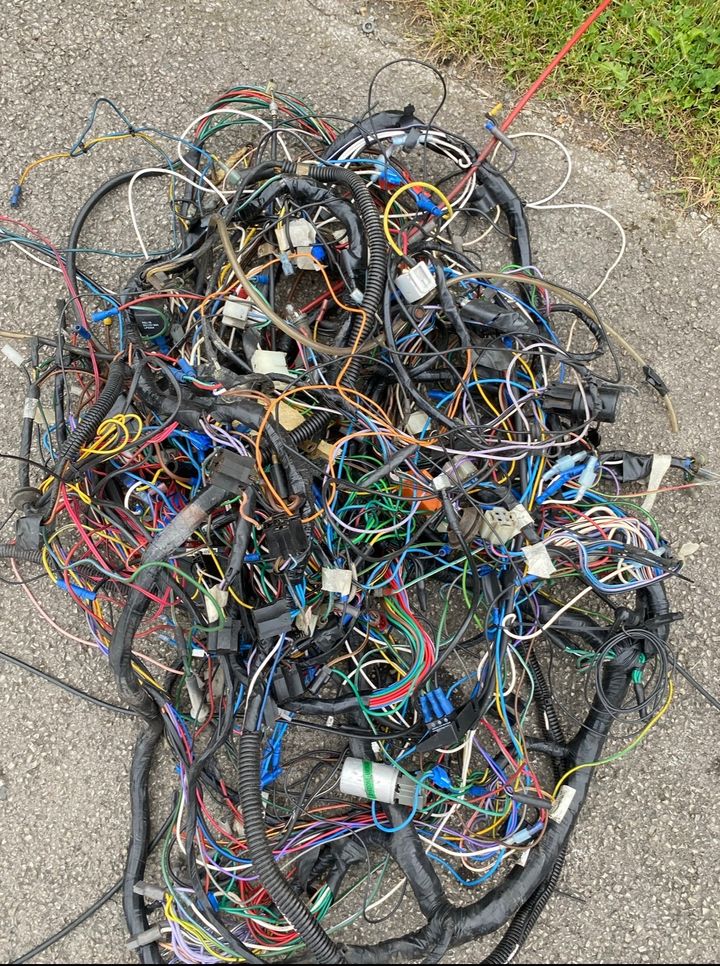
Blimey! Consider the doubters corrected, good effort.Can t really add anything more to the above, weighed the old loom and the fresh new one and they were around 1Kg difference as outlined. Even got a photo of it:
This is not a new thing I'm afraid.
The older ones among us may remember a TV program where John Harvey Jones (an industry trouble shooter) went into Morgan and proposed numerous changes to cut costs.
One of his proposals was to pay less for the metal front and rear wings that were bought in from an outside firm. The owner of that firm (unfortunately now passed away) reliably told me that when Morgan dictated that they were then going to pay less for the panels, the owner made them aware that as profits were so tight anyway, that they would have to spend less time making each panel, resulting in them not being of such a good standard. Morgan accepted this. However more man hours had to be spent overall on those panels by Morgan filling and blocking out the imperfections. It ended up costing Morgan more in the long run and the quality suffered.
In my experience, a big issue here is the USA. They readily accept large quantities of filler being used and it's common practice. I personally would be very very wary of buying a restored car from the US. I've seen cars from there that look stunning on the outside, almost too good, but underneath the surface the standard is shocking.
I had contact with an aluminium bonnet from a Lotus 11 that came from the US, that had 5 full buckets of filler removed from it!
The older ones among us may remember a TV program where John Harvey Jones (an industry trouble shooter) went into Morgan and proposed numerous changes to cut costs.
One of his proposals was to pay less for the metal front and rear wings that were bought in from an outside firm. The owner of that firm (unfortunately now passed away) reliably told me that when Morgan dictated that they were then going to pay less for the panels, the owner made them aware that as profits were so tight anyway, that they would have to spend less time making each panel, resulting in them not being of such a good standard. Morgan accepted this. However more man hours had to be spent overall on those panels by Morgan filling and blocking out the imperfections. It ended up costing Morgan more in the long run and the quality suffered.
In my experience, a big issue here is the USA. They readily accept large quantities of filler being used and it's common practice. I personally would be very very wary of buying a restored car from the US. I've seen cars from there that look stunning on the outside, almost too good, but underneath the surface the standard is shocking.
I had contact with an aluminium bonnet from a Lotus 11 that came from the US, that had 5 full buckets of filler removed from it!
Gassing Station | Classic Cars and Yesterday's Heroes | Top of Page | What's New | My Stuff