
SWA Armoured Cable
Discussion


I’m planning to run an SWA cable from my home consumer unit to the far end of the garden, in preparation for a hot tub to be installed later.
Is it simply a case of burying the cable at the correct depth (450 mm in the lawn / 600 mm under paths), then bringing it up, clipping it to the wall, and routing it back into the consumer unit?
Can the cable be installed and connected at the consumer unit now, even if nothing is connected at the garden end yet (assuming it’s safely terminated in a suitable enclosure)?
I’ll be using a qualified electrician, but want to make sure I’m asking for the right work.
Lastly it's a 20metre run, so I assume a 6mm SWA and a 32A RCBO is appropriate for a hot tub.
Is it simply a case of burying the cable at the correct depth (450 mm in the lawn / 600 mm under paths), then bringing it up, clipping it to the wall, and routing it back into the consumer unit?
Can the cable be installed and connected at the consumer unit now, even if nothing is connected at the garden end yet (assuming it’s safely terminated in a suitable enclosure)?
I’ll be using a qualified electrician, but want to make sure I’m asking for the right work.
Lastly it's a 20metre run, so I assume a 6mm SWA and a 32A RCBO is appropriate for a hot tub.
Yes, 6mm SWA is fine for that length of run and current.
If you know who is supplying the Hot Tub in due course, ask them what their requirements are; usually it should be terminated in a rotary isolator switch at least 2m from the hot tub. When the hot tub is then installed they will run cable from the isolator to the hot tub.
You can connect it all up now and then leave the breaker switched off (and lock off the rotary isolator).
A lot of hot tubs draw 32A, so you’ll probably want a Type C 40A ‘A’ RCBO.
SWA doesn’t have to be buried - can be left on the surface or clipped to a fence. If buried there is no actual specified depth - just “sufficient to avoid being damaged”.
Best to discuss and agree with the electrician you’re going to use - he’ll need to sign it off.
If you know who is supplying the Hot Tub in due course, ask them what their requirements are; usually it should be terminated in a rotary isolator switch at least 2m from the hot tub. When the hot tub is then installed they will run cable from the isolator to the hot tub.
You can connect it all up now and then leave the breaker switched off (and lock off the rotary isolator).
A lot of hot tubs draw 32A, so you’ll probably want a Type C 40A ‘A’ RCBO.
SWA doesn’t have to be buried - can be left on the surface or clipped to a fence. If buried there is no actual specified depth - just “sufficient to avoid being damaged”.
Best to discuss and agree with the electrician you’re going to use - he’ll need to sign it off.
surbiton said:
Yes, 6mm SWA is fine for that length of run and current.
If you know who is supplying the Hot Tub in due course, ask them what their requirements are; usually it should be terminated in a rotary isolator switch at least 2m from the hot tub. When the hot tub is then installed they will run cable from the isolator to the hot tub.
You can connect it all up now and then leave the breaker switched off (and lock off the rotary isolator).
A lot of hot tubs draw 32A, so you ll probably want a Type C 40A A RCBO.
SWA doesn t have to be buried - can be left on the surface or clipped to a fence. If buried there is no actual specified depth - just sufficient to avoid being damaged .
Best to discuss and agree with the electrician you re going to use - he ll need to sign it off.
This is brilliant - thanks for that. Just one question, if the hot tub draws 32A, why would you use a 40A RCBO rather than a 32A?If you know who is supplying the Hot Tub in due course, ask them what their requirements are; usually it should be terminated in a rotary isolator switch at least 2m from the hot tub. When the hot tub is then installed they will run cable from the isolator to the hot tub.
You can connect it all up now and then leave the breaker switched off (and lock off the rotary isolator).
A lot of hot tubs draw 32A, so you ll probably want a Type C 40A A RCBO.
SWA doesn t have to be buried - can be left on the surface or clipped to a fence. If buried there is no actual specified depth - just sufficient to avoid being damaged .
Best to discuss and agree with the electrician you re going to use - he ll need to sign it off.
SkinnyPete said:
surbiton said:
Yes, 6mm SWA is fine for that length of run and current.
If you know who is supplying the Hot Tub in due course, ask them what their requirements are; usually it should be terminated in a rotary isolator switch at least 2m from the hot tub. When the hot tub is then installed they will run cable from the isolator to the hot tub.
You can connect it all up now and then leave the breaker switched off (and lock off the rotary isolator).
A lot of hot tubs draw 32A, so you ll probably want a Type C 40A A RCBO.
SWA doesn t have to be buried - can be left on the surface or clipped to a fence. If buried there is no actual specified depth - just sufficient to avoid being damaged .
Best to discuss and agree with the electrician you re going to use - he ll need to sign it off.
This is brilliant - thanks for that. Just one question, if the hot tub draws 32A, why would you use a 40A RCBO rather than a 32A?If you know who is supplying the Hot Tub in due course, ask them what their requirements are; usually it should be terminated in a rotary isolator switch at least 2m from the hot tub. When the hot tub is then installed they will run cable from the isolator to the hot tub.
You can connect it all up now and then leave the breaker switched off (and lock off the rotary isolator).
A lot of hot tubs draw 32A, so you ll probably want a Type C 40A A RCBO.
SWA doesn t have to be buried - can be left on the surface or clipped to a fence. If buried there is no actual specified depth - just sufficient to avoid being damaged .
Best to discuss and agree with the electrician you re going to use - he ll need to sign it off.
I've prepped mine myself, with my mate who's a sparky terminating in the CU.
I burried 6mm SWA across my lawn - about 1 spade (head) deep, lifted a path (stones), went under there, and terminated in a box with a gland. He then ran a short 6mm T&E to the CU to it's own MCB - As it was a short run up a wall and running SWA into the CU was just not practical (plus the holes it woudl have required). Other end went into a "garage" CU in my barn. That run was for barn power and for my solar setup.
The other run - for my 32A hot tub (coming tomorrow) - is 6mm SWA I ran along the outside wall - Terminates into a 40A rotary isolator (40A as my sparky said there is more room to work inside the box) - I'm running 5m of H07RN-F 6mm cable from the isolator, left ready for the hot tun company (that's what they ask for - they don't touch the isolator, they dont supply the wire - they want the wire, ready to connect to the tub.
Re earthing - its standard stuff. SWA has its sheilding earthed in addition to the internal earth cable, and I don't believe the flex cable has an armour earth , just its main internal earth cable. - I'm collecting it this morning.
p.s. you don't really need an RCBO when your CU will already have an RCD I'll look inside mine and see what one my sparky used - I think he reused the one that was there for the old kitchen as we ran my SWA off the old kitchen's 6mm T&E . I'd still use a 32A not a 40A, just make sure it's a type C. Just checked - it's a type B so off to get a type C!
My belt sander (commercial) is rated at 32A max and it runs of a 32A Type C RCD. The C type means it's slower to trip, so can handle initial start up surge. Its not going to "get red hot" - the rating is for tripping current, not for how much it can handle before melting. Even 6A MCBs are rating to handle 10,000Amps
I burried 6mm SWA across my lawn - about 1 spade (head) deep, lifted a path (stones), went under there, and terminated in a box with a gland. He then ran a short 6mm T&E to the CU to it's own MCB - As it was a short run up a wall and running SWA into the CU was just not practical (plus the holes it woudl have required). Other end went into a "garage" CU in my barn. That run was for barn power and for my solar setup.
The other run - for my 32A hot tub (coming tomorrow) - is 6mm SWA I ran along the outside wall - Terminates into a 40A rotary isolator (40A as my sparky said there is more room to work inside the box) - I'm running 5m of H07RN-F 6mm cable from the isolator, left ready for the hot tun company (that's what they ask for - they don't touch the isolator, they dont supply the wire - they want the wire, ready to connect to the tub.
Re earthing - its standard stuff. SWA has its sheilding earthed in addition to the internal earth cable, and I don't believe the flex cable has an armour earth , just its main internal earth cable. - I'm collecting it this morning.
p.s. you don't really need an RCBO when your CU will already have an RCD I'll look inside mine and see what one my sparky used - I think he reused the one that was there for the old kitchen as we ran my SWA off the old kitchen's 6mm T&E . I'd still use a 32A not a 40A, just make sure it's a type C. Just checked - it's a type B so off to get a type C!
My belt sander (commercial) is rated at 32A max and it runs of a 32A Type C RCD. The C type means it's slower to trip, so can handle initial start up surge. Its not going to "get red hot" - the rating is for tripping current, not for how much it can handle before melting. Even 6A MCBs are rating to handle 10,000Amps
Edited by Griffith4ever on Monday 19th January 08:19
Edited by Griffith4ever on Monday 19th January 08:22
Edited by Griffith4ever on Monday 19th January 08:51
Griffith4ever said:
Re earthing - its standard stuff. SWA has its sheilding earthed in addition to the internal earth cable, and I don't believe the flex cable has an armour earth , just its main internal earth cable. - I'm collecting it this morning.
That depends very much on what you're connecting: we've had connections made to various things that have required the installation of dedicated earth rods to ensure safety. Some of those installations, although done in SWA, don't actually have internal earth wires and have the shielding earthed only at the supply end.Installing an earth rod isn't difficult. Getting it in the right place within the installation, and testing it, needs the right kit and knowledge.
It's definitely one where the OP should be asking his sparky.
LooneyTunes said:
Griffith4ever said:
Re earthing - its standard stuff. SWA has its sheilding earthed in addition to the internal earth cable, and I don't believe the flex cable has an armour earth , just its main internal earth cable. - I'm collecting it this morning.
That depends very much on what you're connecting: we've had connections made to various things that have required the installation of dedicated earth rods to ensure safety. Some of those installations, although done in SWA, don't actually have internal earth wires and have the shielding earthed only at the supply end.Installing an earth rod isn't difficult. Getting it in the right place within the installation, and testing it, needs the right kit and knowledge.
It's definitely one where the OP should be asking his sparky.
Thanks for all the comments so far, really appreciate it.
At this stage, I’m simply looking to lay the cable ( this one) in advance of a new path and patio being installed. The hot tub itself will be installed later on a separate patio, but for now I just want the cable in place as part of the first-fix groundworks.
When the time comes, an electrician will then connect it to the consumer unit and fit a rotary isolator at the other end. I’m assuming things like the earth rod/shielding can be dealt with at this stage.
LooneyTunes said:
What has the hot tub supplier / your sparky said about earthing?
To be honest, I haven’t thought that far ahead yet.At this stage, I’m simply looking to lay the cable ( this one) in advance of a new path and patio being installed. The hot tub itself will be installed later on a separate patio, but for now I just want the cable in place as part of the first-fix groundworks.
When the time comes, an electrician will then connect it to the consumer unit and fit a rotary isolator at the other end. I’m assuming things like the earth rod/shielding can be dealt with at this stage.
I ran SWA for power points, lights and a hot tub in our garden a few years ago.
I ran one line from the front of our house where the CU is, through the basement to a separate 'garage' CU. From there I ran the three lengths for the 3 purposes noted. The hot tub has a rotary switch a couple of meters away on a wall with SWA in and SWA out. It's all clipped to a wall and then ran beneath the decking the hot tub sits on.
For the lights / power runs, that's all clipped to fence posts deep within a hedge, all earthed back to the CU. Where the lines move from the hedge into the garden at various points, I have dug about a spade depth and buried. Some locations I've not done that as it wasn't practicable.
The main house CU end I left with significant excess and got a Rated People sparky to come and do the final connection. He also checked everything downstream of there all the way into the garden, just to be sure.
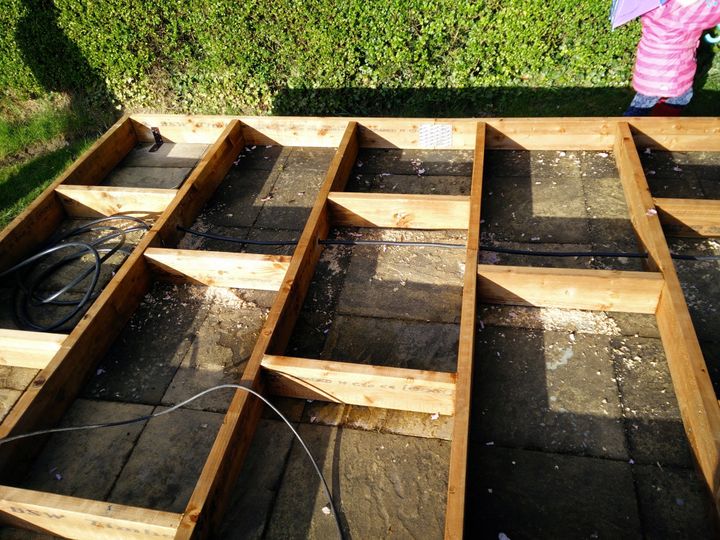
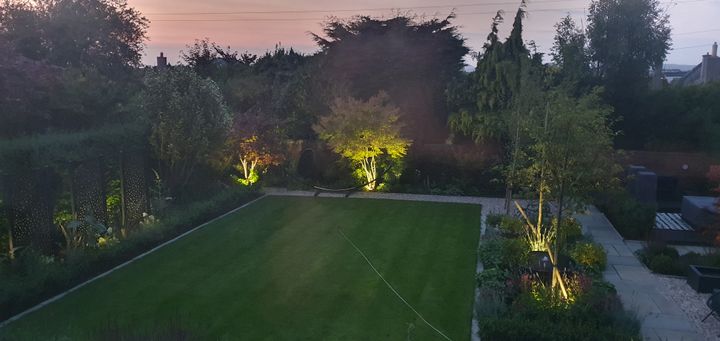
I ran one line from the front of our house where the CU is, through the basement to a separate 'garage' CU. From there I ran the three lengths for the 3 purposes noted. The hot tub has a rotary switch a couple of meters away on a wall with SWA in and SWA out. It's all clipped to a wall and then ran beneath the decking the hot tub sits on.
For the lights / power runs, that's all clipped to fence posts deep within a hedge, all earthed back to the CU. Where the lines move from the hedge into the garden at various points, I have dug about a spade depth and buried. Some locations I've not done that as it wasn't practicable.
The main house CU end I left with significant excess and got a Rated People sparky to come and do the final connection. He also checked everything downstream of there all the way into the garden, just to be sure.
Electrics aside, worth noting that hot tubs, depending on volume, can be significantly heavier than you might think by the time they're full of water and people. Normal residential ones are typically concrete friendly, but big rap video ones can weigh more than a large SUV!
All worth checking before you start work.
All worth checking before you start work.
Gassing Station | Homes, Gardens and DIY | Top of Page | What's New | My Stuff