
Economist s recent cover: When war is framed as an
Discussion


Am I the only that found this unacceptable!
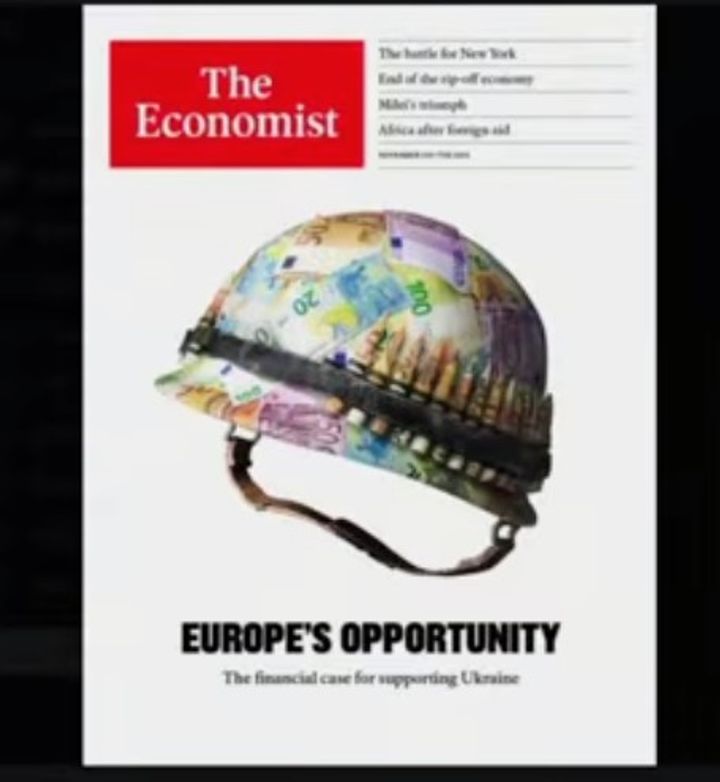
This is not a question of being “offended”; it is a question of ethical responsibility in media representation. When influential publications normalise the idea that war is primarily an economic instrument, they risk desensitising their audience to the human cost. The cover erases the most fundamental truth of war: that it results in death, displacement, and long-term trauma for millions of people.
War should never be presented as a marketplace of opportunities. It is not a balance sheet. It is a humanitarian catastrophe.
This is not a question of being “offended”; it is a question of ethical responsibility in media representation. When influential publications normalise the idea that war is primarily an economic instrument, they risk desensitising their audience to the human cost. The cover erases the most fundamental truth of war: that it results in death, displacement, and long-term trauma for millions of people.
War should never be presented as a marketplace of opportunities. It is not a balance sheet. It is a humanitarian catastrophe.
I think you are missing my concern.
I am not disputing that war has economic dimensions, or that The Economist should analyse them. Of course war is intertwined with economics and politics—Clausewitz was right about that.
My issue is with the framing—specifically the word "opportunity" in the headline. There is a difference between:
"The Economic Consequences of Modern Warfare"
"War as Economic Opportunity"
The first analyses. The second frames war as something potentially beneficial—something to be seized.
Yes, The Economist is an economics publication. But even economic analysis exists within an ethical framework. When defence contractors' stock prices rise, when reconstruction contracts are awarded, when certain industries profit—these are economic facts worth analysing. But presenting them as "opportunities" without adequate emphasis on the human catastrophe risks normalising a transactional view of human suffering.
When you frame war through the lens of opportunity, you risk creating a feedback loop where the population subconsciously view conflict as acceptable because of its economic "upsides."
I am not calling for The Economist to stop covering war economics. I am suggesting that even in economic analysis, the publication has a responsibility not to frame mass human suffering as a market advantage—regardless of whether some actors do profit from it.
I am not disputing that war has economic dimensions, or that The Economist should analyse them. Of course war is intertwined with economics and politics—Clausewitz was right about that.
My issue is with the framing—specifically the word "opportunity" in the headline. There is a difference between:
"The Economic Consequences of Modern Warfare"
"War as Economic Opportunity"
The first analyses. The second frames war as something potentially beneficial—something to be seized.
Yes, The Economist is an economics publication. But even economic analysis exists within an ethical framework. When defence contractors' stock prices rise, when reconstruction contracts are awarded, when certain industries profit—these are economic facts worth analysing. But presenting them as "opportunities" without adequate emphasis on the human catastrophe risks normalising a transactional view of human suffering.
When you frame war through the lens of opportunity, you risk creating a feedback loop where the population subconsciously view conflict as acceptable because of its economic "upsides."
I am not calling for The Economist to stop covering war economics. I am suggesting that even in economic analysis, the publication has a responsibility not to frame mass human suffering as a market advantage—regardless of whether some actors do profit from it.
paddy1970 said:
I think you are missing my concern.
I am not disputing that war has economic dimensions, or that The Economist should analyse them. Of course war is intertwined with economics and politics Clausewitz was right about that.
My issue is with the framing specifically the word "opportunity" in the headline. There is a difference between:
"The Economic Consequences of Modern Warfare"
"War as Economic Opportunity"
The first analyses. The second frames war as something potentially beneficial something to be seized.
Yes, The Economist is an economics publication. But even economic analysis exists within an ethical framework. When defence contractors' stock prices rise, when reconstruction contracts are awarded, when certain industries profit these are economic facts worth analysing. But presenting them as "opportunities" without adequate emphasis on the human catastrophe risks normalising a transactional view of human suffering.
When you frame war through the lens of opportunity, you risk creating a feedback loop where the population subconsciously view conflict as acceptable because of its economic "upsides."
I am not calling for The Economist to stop covering war economics. I am suggesting that even in economic analysis, the publication has a responsibility not to frame mass human suffering as a market advantage regardless of whether some actors do profit from it.
Ukraine could have pushed Russia out years ago with more robust support from the West, and the US in particular. Instead the tactic is to drag this out as long as possible to maximise profits, just like GWoT. A quick resolution was never the plan. I am not disputing that war has economic dimensions, or that The Economist should analyse them. Of course war is intertwined with economics and politics Clausewitz was right about that.
My issue is with the framing specifically the word "opportunity" in the headline. There is a difference between:
"The Economic Consequences of Modern Warfare"
"War as Economic Opportunity"
The first analyses. The second frames war as something potentially beneficial something to be seized.
Yes, The Economist is an economics publication. But even economic analysis exists within an ethical framework. When defence contractors' stock prices rise, when reconstruction contracts are awarded, when certain industries profit these are economic facts worth analysing. But presenting them as "opportunities" without adequate emphasis on the human catastrophe risks normalising a transactional view of human suffering.
When you frame war through the lens of opportunity, you risk creating a feedback loop where the population subconsciously view conflict as acceptable because of its economic "upsides."
I am not calling for The Economist to stop covering war economics. I am suggesting that even in economic analysis, the publication has a responsibility not to frame mass human suffering as a market advantage regardless of whether some actors do profit from it.
Is it 'right'? Probably not. Is it how the world works? Yes of course. War is a racket, and has been since time immemorial.
Gassing Station | Finance | Top of Page | What's New | My Stuff