
'British Planes That Won The War'
Discussion


Just come across this on Freeview 56 '5Select''. 9pm tonight - the Sopwith Camel - presented by Rob Bell.
'Two years into the war, the British fleet was being outgunned'.
Even though the 20-year-old who wrote that forgot to replace 'fleet' with 'air force' after the previous programme which was presumably about Jutland, it should make a change from BoB and the Dambusters, which get all the publicity.
'Two years into the war, the British fleet was being outgunned'.
Even though the 20-year-old who wrote that forgot to replace 'fleet' with 'air force' after the previous programme which was presumably about Jutland, it should make a change from BoB and the Dambusters, which get all the publicity.
Simpo Two said:
Just come across this on Freeview 56 '5Select''. 9pm tonight - the Sopwith Camel - presented by Rob Bell.
'Two years into the war, the British fleet was being outgunned'.
Even though the 20-year-old who wrote that forgot to replace 'fleet' with 'air force' after the previous programme which was presumably about Jutland, it should make a change from BoB and the Dambusters, which get all the publicity.
Two years into the Great War we didn't have an Air Force. We had an Air Corps? 'Two years into the war, the British fleet was being outgunned'.
Even though the 20-year-old who wrote that forgot to replace 'fleet' with 'air force' after the previous programme which was presumably about Jutland, it should make a change from BoB and the Dambusters, which get all the publicity.
Tom Sopwith. Two World Wars, no America's Cup.
OutInTheShed said:
Two years into the Great War we didn't have an Air Force. We had an Air Corps?
I meant 'air force' in a general term, an aerial force if you like.They could have said 'Two years into the war, the Royal Flying Corps was being outgunned', but perhaps they thought that was a bit too technical for people to understand. So they made it '...the British fleet was being outgunned' which then sounds like a naval matter.
Eric Mc said:
The Sopwith Camel is often touted as Britain's best World War 1 fighter plane. I would argue that this accolade really belongs to the Royal Aircraft Factory SE5A.
Would that be the earliest military aircraft to be honoured by having a car named after it? Reliant Scimitar SE5A.LotusOmega375D said:
Eric Mc said:
The Sopwith Camel is often touted as Britain's best World War 1 fighter plane. I would argue that this accolade really belongs to the Royal Aircraft Factory SE5A.
Would that be the earliest military aircraft to be honoured by having a car named after it? Reliant Scimitar SE5A.LotusOmega375D said:
I think the SE5A predates the Spitfire by quite a few years. Also Armstrong Siddeley had the Hurricane long before Triumph’s Spitfire.
I was going by the date of the car, doh...OK try this: https://en.wikipedia.org/wiki/Flyer_(automobile)
Eric Mc said:
The Sopwith Camel is often touted as Britain's best World War 1 fighter plane. I would argue that this accolade really belongs to the Royal Aircraft Factory SE5A.
During WW1 air war power shifted backwards and forwards as various innovations and designs were tried out. I would argue that the best plane was whatever shifted the power back to the allies, so in that respect you could argue for many different types over the period (although I am a fan of the Se5a).It's a really interesting period of military innovation, considering that at the start of the war, it was balloons and scouts just for gathering information, and by the end there were all the specialist classes of aircraft.
LotusOmega375D said:
Would that be the earliest military aircraft to be honoured by having a car named after it? Reliant Scimitar SE5A.
I think in the Reliant's case that's just a happy coincidence - they'd already started the 'SE?' model names with the Sabre SE1 in 1964, and I really doubt that the blokes at Tamworth drew up their development programme so that they'd have just enough major and minor updates to arrive at SE5A. And I also doubt that, even in the 1960s, anyone really cared about the SE5A aircraft enough to make it worth having a car named after it. The Camel is the 'go-to' WW1 British fighter aircraft...and I don't think it's really a name fitting for the bootlid of a sports car. tangerine_sedge said:
During WW1 air war power shifted backwards and forwards as various innovations and designs were tried out. I would argue that the best plane was whatever shifted the power back to the allies, so in that respect you could argue for many different types over the period (although I am a fan of the Se5a).
It's a really interesting period of military innovation, considering that at the start of the war, it was balloons and scouts just for gathering information, and by the end there were all the specialist classes of aircraft.
I always go for the SE5A over the Camel because I am pretty sure more British aces flew the SE5A and it was less of a handful to fly. The Camel had some vicious flight characteristics.It's a really interesting period of military innovation, considering that at the start of the war, it was balloons and scouts just for gathering information, and by the end there were all the specialist classes of aircraft.
Eric Mc said:
I always go for the SE5A over the Camel because I am pretty sure more British aces flew the SE5A and it was less of a handful to fly. The Camel had some vicious flight characteristics.
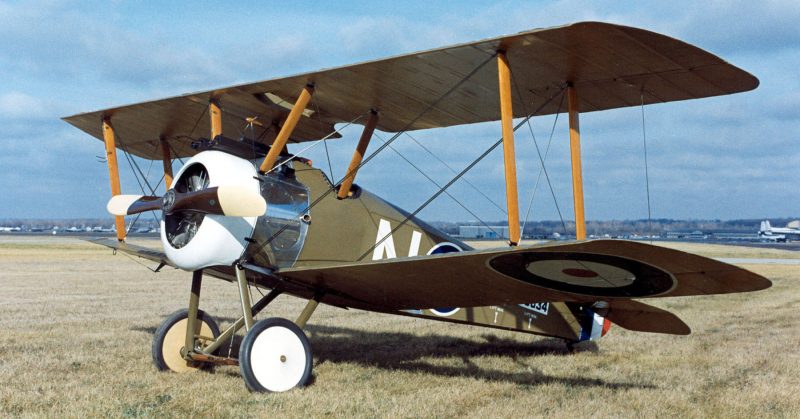
I'd be inclined to agree. Having a plane with superlative agility and some handling quirks that a skilled pilot can use to their advantage (like the Camel's directional instability and extreme gyro response) is one thing, but to really turn the tide in an air campaign you need something that merely 'average' pilots can use to good effect and which won't kill them, or vital inexperienced newcomers, in the process. The Camel had to take off with a dangerously rear-biased centre of gravity if fully fuelled and armed, it didn't have any means of pitch trim and could only be flown hands-off at certain altitudes (determined by how the wings and control surfaced were rigged), it turned very quickly to the right but very reluctantly to the left (so much so that sometimes it was better to do a long right turn to turn left...) and had a sudden stall which led to a near-unrecoverable spin. Camels killed nearly as many pilots during training as were lost flying them in combat, and was one of the first (if not the first?) fighter to have a two-seat trainer version specifically developed for 'transition' training.
Of course the Camel replaced the Pup, which was generally acknowledged to have lovely and docile flying characteristics in Sopwith's catalogue, but it was the SE5A that generally replaced the Pup in squadron service - the SE5A was faster, not quite as maneuverable but much more manageable and easy-going handling. Which turned out much better for the RFC when it came to sending up pilots with very limited training and no combat experience after the massacre of Bloody April.
It's a bit of a Spitfire v. Hurricane or P-51 v. P-40 situation - there's the glamorous, famous one which everyone knows about and had the reputation for being superior and a 'pilot's aircraft', and then there was the more numerous, less exciting, less superlative one that did most of the actual donkey work.
I kind of agree but unlike the Spitfire v' Hurricane situation - where the Spitfire was genuinely the better aeroplane, the SE5A was, from what I can see, the better aeroplane, as it did its job better.
As the Camel was such a handful, how did its successor, the Snipe perform? Did they mange to eliminate the worst characteristics of the Camel?
Camel
Snipe

As the Camel was such a handful, how did its successor, the Snipe perform? Did they mange to eliminate the worst characteristics of the Camel?
Camel
Snipe
LotusOmega375D said:
The Wright Flyer wasn’t a military aircraft. Sorry.
Turns out there was - the Wright Military Flyer, although it was based on a Model A.maffski said:
LotusOmega375D said:
The Wright Flyer wasn’t a military aircraft. Sorry.
Turns out there was - the Wright Military Flyer, although it was based on a Model A.
Thank you maffski, I'll be over to collect my medal tomorrow

Eric Mc said:
I kind of agree but unlike the Spitfire v' Hurricane situation - where the Spitfire was genuinely the better aeroplane, the SE5A was, from what I can see, the better aeroplane, as it did its job better.
As the Camel was such a handful, how did its successor, the Snipe perform? Did they mange to eliminate the worst characteristics of the Camel?
Yeah, I did say it was a 'bit of a Spit v. Hurricane situation' - it's not an entirely correct comparison. More in the public perception - even at the time the Camel was more famous, and I suspect that most people in 2022 who can name the Camel as a WW1 fighter aircraft (if only because of Biggles and Snoopy) can't name another one. As the Camel was such a handful, how did its successor, the Snipe perform? Did they mange to eliminate the worst characteristics of the Camel?
By all accounts the Snipe was much easier to fly and much less vicious than the Camel. In the photos you can see that it has dihedral on both wings (the Camel only had dihedral on the lower wing), a round-sided fuselage (not square-sided), a larger vertical stabiliser and a balanced rudder (although iirc both those were adopted after its entry to squadron service due to early Snipes still having some nasty low-speed/stall characteristics). The Snipe also had its cockpit further back than on the Camel, removing the Camel's extremely front-loaded weight distribution. Some Camel pilots felt the Snipe was a bit of a dud due to it lacking the older plane's turn-on-a-pin agility, but unlike the Camel the Snipe had a decent post-war career which probably speaks to its all-round superiority.
It's perhaps notable that the Snipe was the first Sopwith fighter to be developed specifically for the RFC (although it didn't enter service until after the formation of the RAF). All previous Sopwith fighters had been developed for, and introduced to, the RNAS because of an exclusive contract between the Admiralty and Sopwith. The RFC's first batches of Pups and Camels came from RNAS stock which was 'diverted' and for a while even new Camels destined for the RFC were first allocated to the RNAS before being officially transferred to the army.
The RFC were supposed to only obtain aircraft that had been designed and build by the RAF (which, at that time, meant Royal Aircraft Factory) at Farnborough. Some were better than others. Even the early de Havilland aircraft designs had originated when Geoffrey de Havilland had been employed at Farnborough.
Obviously, as the war progressed and demand for aircraft grew massively, relying on one factory to supply all your aircraft wasn't really a sensible course of action so other manufacturers began to be considered. de Havilland himself left the RAF to set up his own company, not de Havilland but the The Aircraft Development Company or Airco.
After World War 1, the companies set up by Tommy Sopwith and Geoffrey de Havilland were wound up and two new companies were set up to replace them, Hawker Aircraft and de Havilland Aircraft. An early form of "phoenixing" I suppose.
Obviously, as the war progressed and demand for aircraft grew massively, relying on one factory to supply all your aircraft wasn't really a sensible course of action so other manufacturers began to be considered. de Havilland himself left the RAF to set up his own company, not de Havilland but the The Aircraft Development Company or Airco.
After World War 1, the companies set up by Tommy Sopwith and Geoffrey de Havilland were wound up and two new companies were set up to replace them, Hawker Aircraft and de Havilland Aircraft. An early form of "phoenixing" I suppose.
Gassing Station | Boats, Planes & Trains | Top of Page | What's New | My Stuff