
Contrails - Daft Question?
Discussion


I'm in the process of reading Richard Graham's SR71 Revealed and read a section that I understood to mean that the SR71 didn't leave a contrail? Is this correct?
As I understand it the contrail is due to the formation of ice crystals at low temperatures/high altitudes as a result of water vapour in the jet's exhaust gasses? I assumed this would apply to the SR71 even at 80,000ft?
It's a good read too if you have any interest in the SR71, the technology is amazing when you consider that it was mainly developed in the late 50s, early 60s.
As I understand it the contrail is due to the formation of ice crystals at low temperatures/high altitudes as a result of water vapour in the jet's exhaust gasses? I assumed this would apply to the SR71 even at 80,000ft?
It's a good read too if you have any interest in the SR71, the technology is amazing when you consider that it was mainly developed in the late 50s, early 60s.
"I'd be on station for five hours, and I'd see a SR-71 contrail above me, coming in from the China Sea toward Thailand. An hour later, I'd see a contrail going the other way. I'd know that pretty soon that S.O.B. would be in a bar having a cold beer and telling stories and I'd still have five more hours up there. You can imagine the feeling."
Col. Willie Horton
U-2 pilot
http://www.habus.org/revealed/blackbird.htm
Col. Willie Horton
U-2 pilot
http://www.habus.org/revealed/blackbird.htm
As per Eric's comment, it's a pressure/temperature thing. You need the correct heat and the correct pressure for water vapour to collect into small droplets and then freeze into visible crystals. The actual atmospheric conditions varry due to things like sea / land temperature, amount of sun light, and position over the earth (tropical winds/ updrafts etc) so although generally super high (>50k) flying planes do not leave contrails (at such low pressure the vapour stays as vapour) sometimes particular conditions result in contrails (higher temp/ higher pressure).
Lockheed developed a range of aditive chemicals to add to the jet efflux to try to limit the formation of contrails, but some of the other Skunk Works books suggest these had limited effect in most cases.
These same variations led to the SR-71 having a varriable top speed depending on the atmospheric conditions, as Vmax was limited by aerothermal heating of the nose and leading edges, and by the pressure wave heating in the engines air intake system (~2300mph >>> ~300mph in 12 feet!).
Lockheed developed a range of aditive chemicals to add to the jet efflux to try to limit the formation of contrails, but some of the other Skunk Works books suggest these had limited effect in most cases.
These same variations led to the SR-71 having a varriable top speed depending on the atmospheric conditions, as Vmax was limited by aerothermal heating of the nose and leading edges, and by the pressure wave heating in the engines air intake system (~2300mph >>> ~300mph in 12 feet!).
Would it the engines be a factor in the lack of contrails whilst at maximum operating power.
My understanding was that at max cruise speed, a large amount of thrust came from compression in the cones that by-passed the turbines. Turning the engine into a Ramjet. Thus, when looking at it compared to "normal" jet engines, the air coming out the nozzle is a lot more "diluted" in relation to exhaust gases?
That could all be rubbish, just thought that may also be a factor.
My understanding was that at max cruise speed, a large amount of thrust came from compression in the cones that by-passed the turbines. Turning the engine into a Ramjet. Thus, when looking at it compared to "normal" jet engines, the air coming out the nozzle is a lot more "diluted" in relation to exhaust gases?
That could all be rubbish, just thought that may also be a factor.
roverspeed said:
Would it the engines be a factor in the lack of contrails whilst at maximum operating power.
My understanding was that at max cruise speed, a large amount of thrust came from compression in the cones that by-passed the turbines. Turning the engine into a Ramjet. Thus, when looking at it compared to "normal" jet engines, the air coming out the nozzle is a lot more "diluted" in relation to exhaust gases?
That could all be rubbish, just thought that may also be a factor.
I'd guess that the effective bypass ratio of an SR-71 engine is much lower than a modern civil engine... (ie less "diluted")My understanding was that at max cruise speed, a large amount of thrust came from compression in the cones that by-passed the turbines. Turning the engine into a Ramjet. Thus, when looking at it compared to "normal" jet engines, the air coming out the nozzle is a lot more "diluted" in relation to exhaust gases?
That could all be rubbish, just thought that may also be a factor.
Thanks all for your responses, Eric and Max Torque's suggestion that the very low atmospheric pressure prevents the formation of ice crystals makes sense.
I'm not sure about engine bypass diluting exhaust gas as from my understanding it's not bypass in the sense that you get in a conventional civil jet but more of a ram jet effect where the incoming air bypasses the turbine and goes straight to the afterburner section where fuel is added. Sadly it's 20 years since I looked at jet engine design and that was from a materials perspective so I'm not much of an expert. Over to Eric the Expert?
I'm not sure about engine bypass diluting exhaust gas as from my understanding it's not bypass in the sense that you get in a conventional civil jet but more of a ram jet effect where the incoming air bypasses the turbine and goes straight to the afterburner section where fuel is added. Sadly it's 20 years since I looked at jet engine design and that was from a materials perspective so I'm not much of an expert. Over to Eric the Expert?
I think the compression thrust that the engines of the Blackbird could use did not require any afterburner or burning at all. It is an effect of air entering the intake at very high speed, being compressed in the engine body and being squirted out the back.
In fact, aircraft like the Spitfire and Mustang could get a few pounds of "jet thrust" by clever design of radiator intakes and vents.
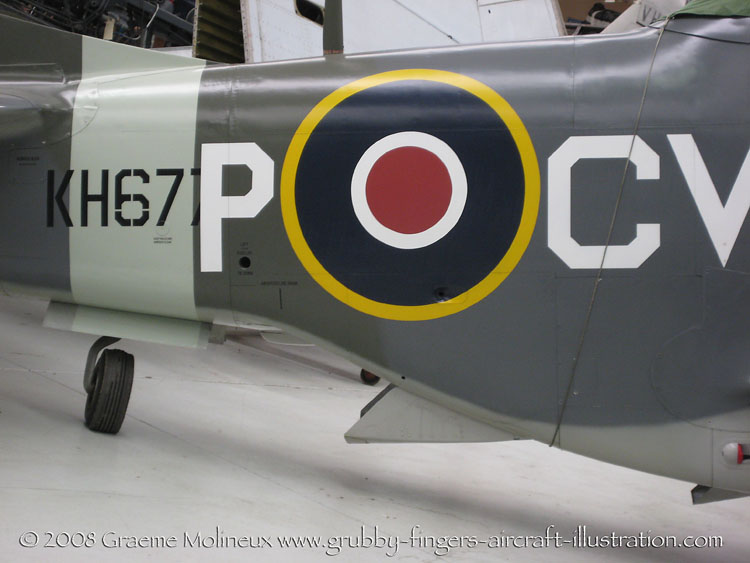
In fact, aircraft like the Spitfire and Mustang could get a few pounds of "jet thrust" by clever design of radiator intakes and vents.
Max_Torque said:
As per Eric's comment, it's a pressure/temperature thing. You need the correct heat and the correct pressure for water vapour to collect into small droplets and then freeze into visible crystals. The actual atmospheric conditions varry due to things like sea / land temperature, amount of sun light, and position over the earth (tropical winds/ updrafts etc) so although generally super high (>50k) flying planes do not leave contrails (at such low pressure the vapour stays as vapour) sometimes particular conditions result in contrails (higher temp/ higher pressure).
Lockheed developed a range of aditive chemicals to add to the jet efflux to try to limit the formation of contrails, but some of the other Skunk Works books suggest these had limited effect in most cases.
These same variations led to the SR-71 having a varriable top speed depending on the atmospheric conditions, as Vmax was limited by aerothermal heating of the nose and leading edges, and by the pressure wave heating in the engines air intake system (~2300mph >>> ~300mph in 12 feet!).
Lockheed developed a range of aditive chemicals to add to the jet efflux to try to limit the formation of contrails, but some of the other Skunk Works books suggest these had limited effect in most cases.
These same variations led to the SR-71 having a varriable top speed depending on the atmospheric conditions, as Vmax was limited by aerothermal heating of the nose and leading edges, and by the pressure wave heating in the engines air intake system (~2300mph >>> ~300mph in 12 feet!).

The air is stationary and very thin, the engine is moving through the air at 2300mph it is not on a conveyor

The air is being accelerated and compressed so that it is also travelling at 2300mph and compressed to a density that the engine can deal with. Jet engines like every other type of fuel burning engine don't like low pressure air.
Eric Mc said:
I think the compression thrust that the engines of the Blackbird could use did not require any afterburner or burning at all. It is an effect of air entering the intake at very high speed, being compressed in the engine body and being squirted out the back.
You do realise that what you posted describes a perpetual motion engine?! You need to compress the air at the inlet and to compress air takes energy and you've failed to account for atmosheric drag. The energy to move the engine and inlet fast enough to compress the air and overcome drag comes from the burning of fuel.
So unless your name is Lisa Simpson you are required to obey the relevant laws of thermodynamics
Why did they make those radiators venturi shaped then? The air was compressed as it went through the venturi and was expelled at a higher speed than it entered. I presume the density on exit was less than on entry - as it would be the rapid expansion of the air as it left the choke point of the ventri that gave the "thrust"?
Eric Mc said:
Why did they make those radiators venturi shaped then? The air was compressed as it went through the venturi and was expelled at a higher speed than it entered. I presume the density on exit was less than on entry - as it would be the rapid expansion of the air as it left the choke point of the ventri that gave the "thrust"?
The clue is in the word 'Radiator' Heat was exchanged from the radiator to the air adding energy to the airstream as it passed through the system. The extra heat is then converted into thrust in the same way as a jet engine but at much lower tempreatures and pressures.If you simply compressed the air then squeezed it out the back you wouldn't gain any thrust as you're not adding energy to the equation in the form of heat.
ETA
In fact you would end up with extra drag as energy is required to compress the air but there wouldn't be any gains in terms of thrust due to the fact that it would be impossible to design the system 100% efficient.
Another way of designing radiators is to use the fact that nature does not allow a vaccum so air travelling around the airframe can be used to pull the exiting air through the radiator.
Edited by Tango13 on Tuesday 21st February 12:32
Tango13 said:
Eric Mc said:
Why did they make those radiators venturi shaped then? The air was compressed as it went through the venturi and was expelled at a higher speed than it entered. I presume the density on exit was less than on entry - as it would be the rapid expansion of the air as it left the choke point of the ventri that gave the "thrust"?
The clue is in the word 'Radiator' Heat was exchanged from the radiator to the air adding energy to the airstream as it passed through the system. The extra heat is then converted into thrust in the same way as a jet engine but at much lower tempreatures and pressures.If you simply compressed the air then squeezed it out the back you wouldn't gain any thrust as you're not adding energy to the equation in the form of heat.
Jeez, I really hope you lot never have to design anything that requires thermodynamics...... ;-)
Right, lets start at the beginning:
an SR-71 moveing at 2300mph through air that we will assume is stationary:
Now as we all know that beyond the speed of sound (mach1, which is NOT a fixed speed but depends upon atmospheric conditions) shock waves can no longer move "upstream" of the aircraft. Hence there is no way for the air to start to "get out of the way" of the approaching aircraft. This generates very high dynamic pressures at certain points, effectively the airframe is suddenly "cutting" through the air like a knife. (causing intense localised heating, hence the Ti airframe)
Turbojet engines use axial compressor blades to accelerate air to a high speed, which is then lost to a high pressure in the combustion cans.
But for a supersonic aircraft the compressor bladed cannot accelerate air already traveling supersonic. Hence the SR-71's famous pointed inlet system deccelerates the incomming air (hence my 2300mph to 300mph bit above ^^^) This leads to a sudden and rapid heating of the incoming air (and limits the planes maximum speed to that which will not overtemperature the compressor system) and a corresponding rise in pressure.
This massive decceleration means the total pressure behind the intake cones is much much higher than the total pressure immediately infront of the cones, hence there is a massive pressure ratio across the inlets. This attempts to push the intake cones out the front of the engine, which is resisted by the inlet positioning jackscrew assy, and hence provides a significant amount of "thrust" at high speed. (of course this thrust ulitmately comes from the fuel, but indirectly, it is NOT caused by the fuel heating the air and adding energy in the conventional sense. it also explains how the SR-71's fuel economy improves as speed increases!!)
The "bypass ducts" on the J58 engine effectively bypass several sections of the compressor, because they are not needed as the compression is being achieved by the intakes dynamic pressure recovery.
This bypass is re-introduced to the engines combustion system aft of the compressor section and all the air is then fuelled and burnt (although the primary combusters run lean for cooling purposes and the afterburner is used continuously to attain high mach flight. (SR-71 the only plane that can run afterburners continuously in cruise (because it cruises at or close to Vmax ;-)
Right, lets start at the beginning:
an SR-71 moveing at 2300mph through air that we will assume is stationary:
Now as we all know that beyond the speed of sound (mach1, which is NOT a fixed speed but depends upon atmospheric conditions) shock waves can no longer move "upstream" of the aircraft. Hence there is no way for the air to start to "get out of the way" of the approaching aircraft. This generates very high dynamic pressures at certain points, effectively the airframe is suddenly "cutting" through the air like a knife. (causing intense localised heating, hence the Ti airframe)
Turbojet engines use axial compressor blades to accelerate air to a high speed, which is then lost to a high pressure in the combustion cans.
But for a supersonic aircraft the compressor bladed cannot accelerate air already traveling supersonic. Hence the SR-71's famous pointed inlet system deccelerates the incomming air (hence my 2300mph to 300mph bit above ^^^) This leads to a sudden and rapid heating of the incoming air (and limits the planes maximum speed to that which will not overtemperature the compressor system) and a corresponding rise in pressure.
This massive decceleration means the total pressure behind the intake cones is much much higher than the total pressure immediately infront of the cones, hence there is a massive pressure ratio across the inlets. This attempts to push the intake cones out the front of the engine, which is resisted by the inlet positioning jackscrew assy, and hence provides a significant amount of "thrust" at high speed. (of course this thrust ulitmately comes from the fuel, but indirectly, it is NOT caused by the fuel heating the air and adding energy in the conventional sense. it also explains how the SR-71's fuel economy improves as speed increases!!)
The "bypass ducts" on the J58 engine effectively bypass several sections of the compressor, because they are not needed as the compression is being achieved by the intakes dynamic pressure recovery.
This bypass is re-introduced to the engines combustion system aft of the compressor section and all the air is then fuelled and burnt (although the primary combusters run lean for cooling purposes and the afterburner is used continuously to attain high mach flight. (SR-71 the only plane that can run afterburners continuously in cruise (because it cruises at or close to Vmax ;-)
LotusOmega375D said:
Max_Torque said:
(SR-71 the only plane that can run afterburners continuously in cruise (because it cruises at or close to Vmax ;-)
Didn't Concorde use afterburners continuously in cruise or were they just used to get the a/c up to Mach 2 and then switched off?LotusOmega375D said:
Didn't Concorde use afterburners continuously in cruise or were they just used to get the a/c up to Mach 2 and then switched off?
As I understand it Concorde's afterburners were used for the take-off roll and initial climb-out, and then later to push it through the sound barrier.Gassing Station | Boats, Planes & Trains | Top of Page | What's New | My Stuff