
2026 Hyundai Ioniq 6 N | PH Review
Lighter, slipperier and quicker than the 5 N - is Hyundai's new super-EV another world-beater?
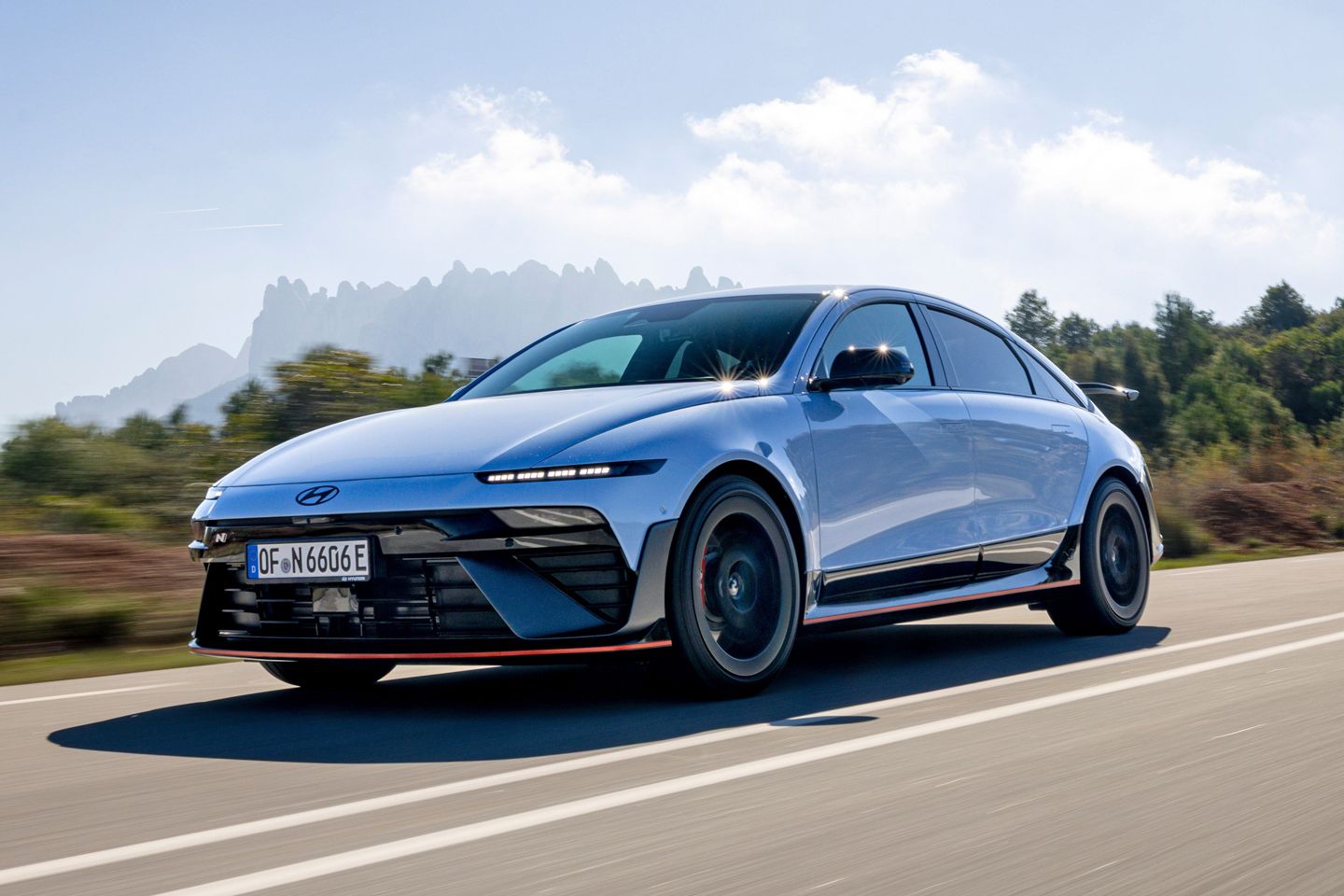
While it’s clearly not for everyone, few would dispute the idea that Hyundai’s ballistic Ioniq 5 N prioritises fun. But the 6 N? It arrives with a slightly different brief, promising to be a more rounded super-EV, no less capable of family duties than it is of fast stints on the track. To achieve that aim, the N division has introduced a load of changes to its twin-motor electric car formula, creating a machine that engineers reckon has a distinct character in every way - from how it steers and rides, to how it pretends to have an engine. The 6 N, they reckon, is a more ‘senior’ offering. But where, you might ask, is the fun in that?
An initial skim of the spec sheet suggests the best eye-widening bits remain. Peak outputs of 650hp and 568lb ft of torque rank the 6 N alongside its explosive, boxier sibling. But look closer and you’ll notice a 0-62mph time two-tenths quicker at 3.2 seconds and a kerbweight 50kg lighter. The saving helps to partly explain the quicker launch time, but it’s also to do with shorter gearing provided by 20-inch wheels (rather than the 5 N’s 21s), along with twin motors that produce the same outputs but are said to be even faster responding, as well as the slipperier shape.
Like the Ioniq 5 N, however, straight-line performance barely scratches the surface of what the £65,800 6 N is all about. Hyundai’s excellent (and still unique) simulated engine software is back, but it’s liberally tweaked, with tighter gear ratios for the simulated eight-speed dual-clutch, a new sound inspired by Hyundai’s i30 N Nurburgring race car and some more aggressive crackles from the exhausts, which in reality are just the rear interior speakers playing overrun sounds when you lift off the accelerator. If this still all sounds silly to you, don’t forget most petrol performance cars have fully synthesised sounds these days. And don’t get me started on pops and bangs.
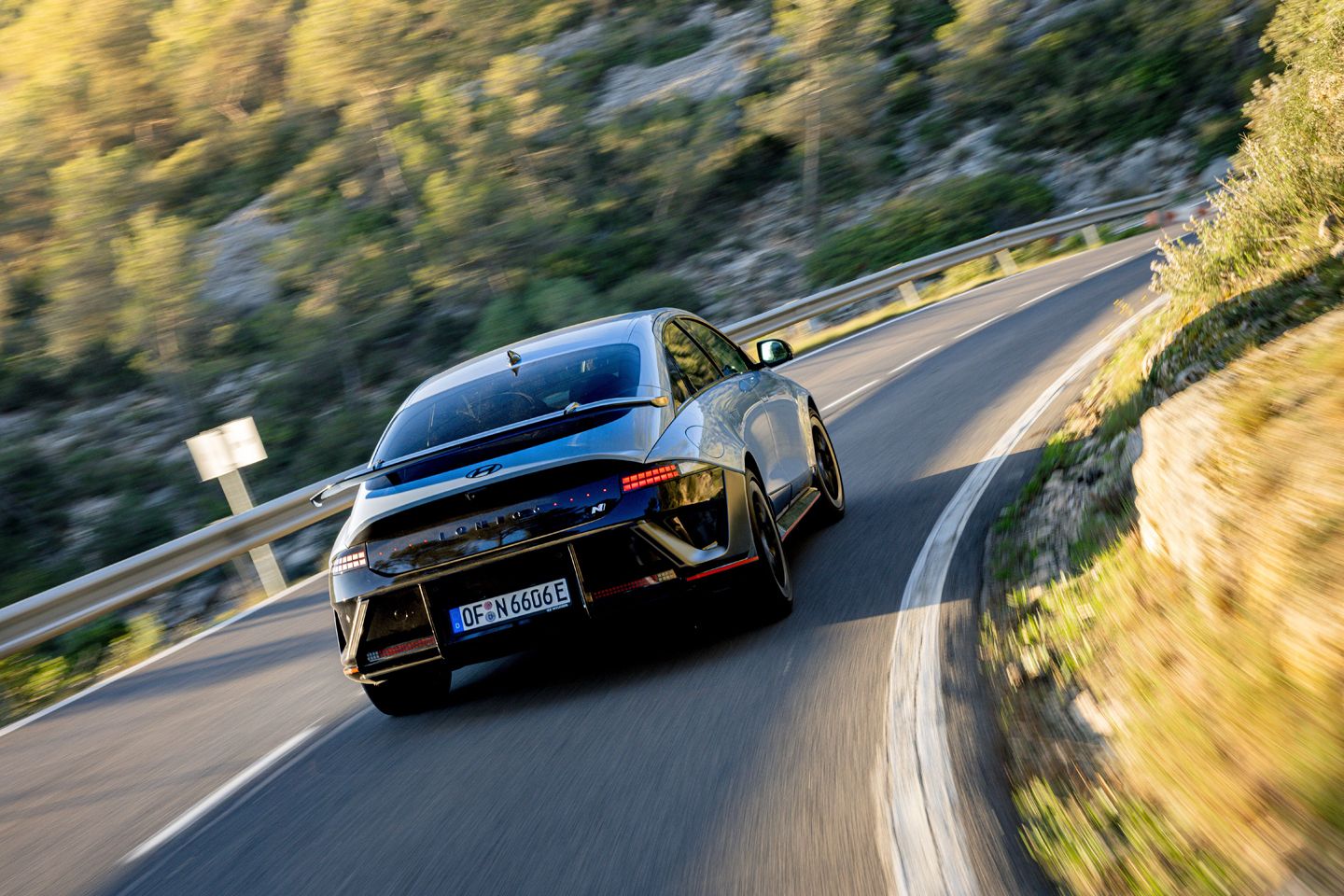
Anyway, the fake engine stuff is, like that straight-line performance, only a small portion of what Hyundai’s electric N cars bring to the table. Drive a 5 N and it’s the driveline - and more specifically how it puts the power down - combined with how the chassis manages a bonkers amount of torque, that gives the car its character. The 6 N gets big changes in these departments, with new adaptive suspension tech that’s so active, it’s constantly making adjustments to suit demands and surface challenges as you go. The 5 N can be a tad firm on a British road, so a lighter, lower and more cleverly suspended 6 N sounds good— right?
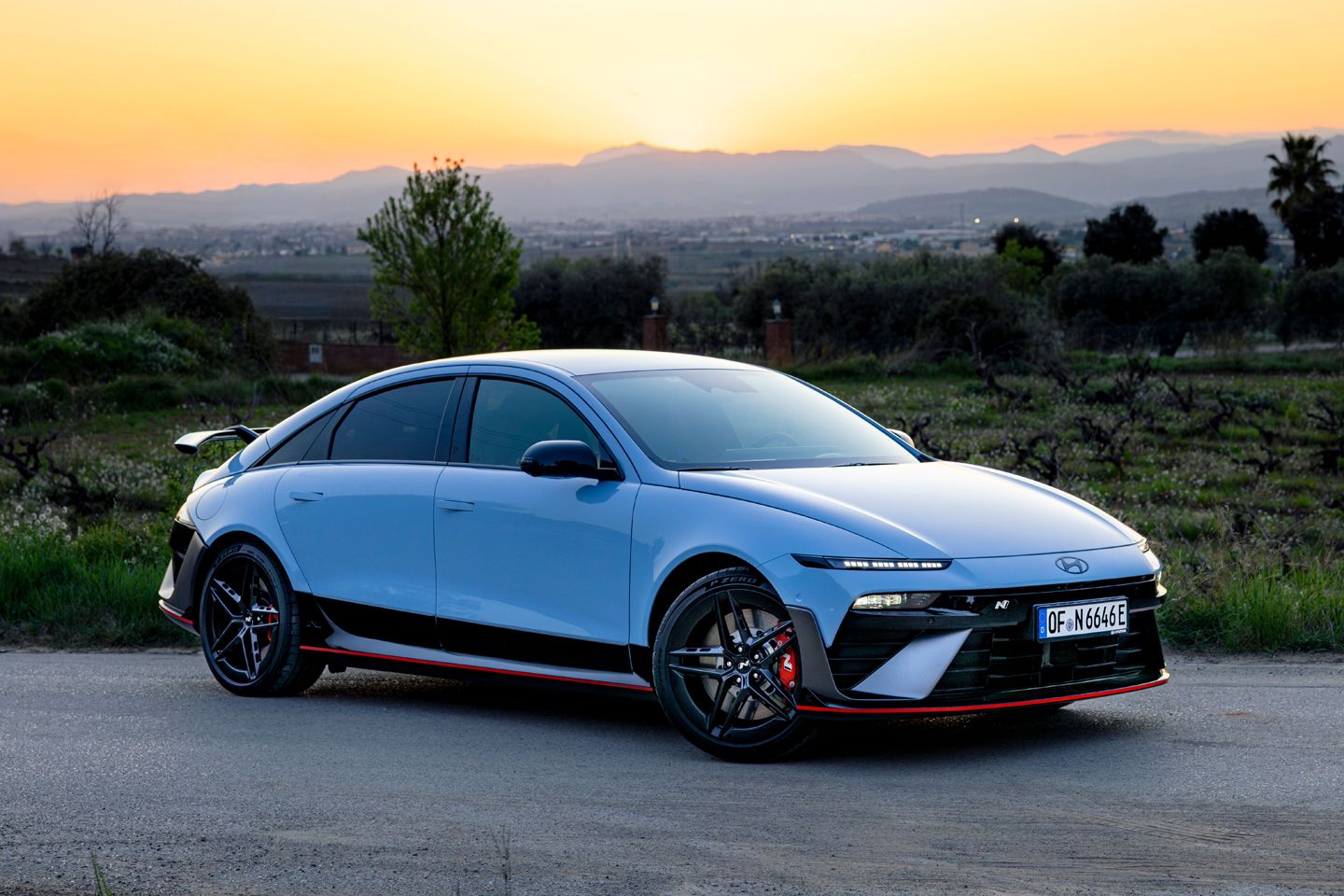
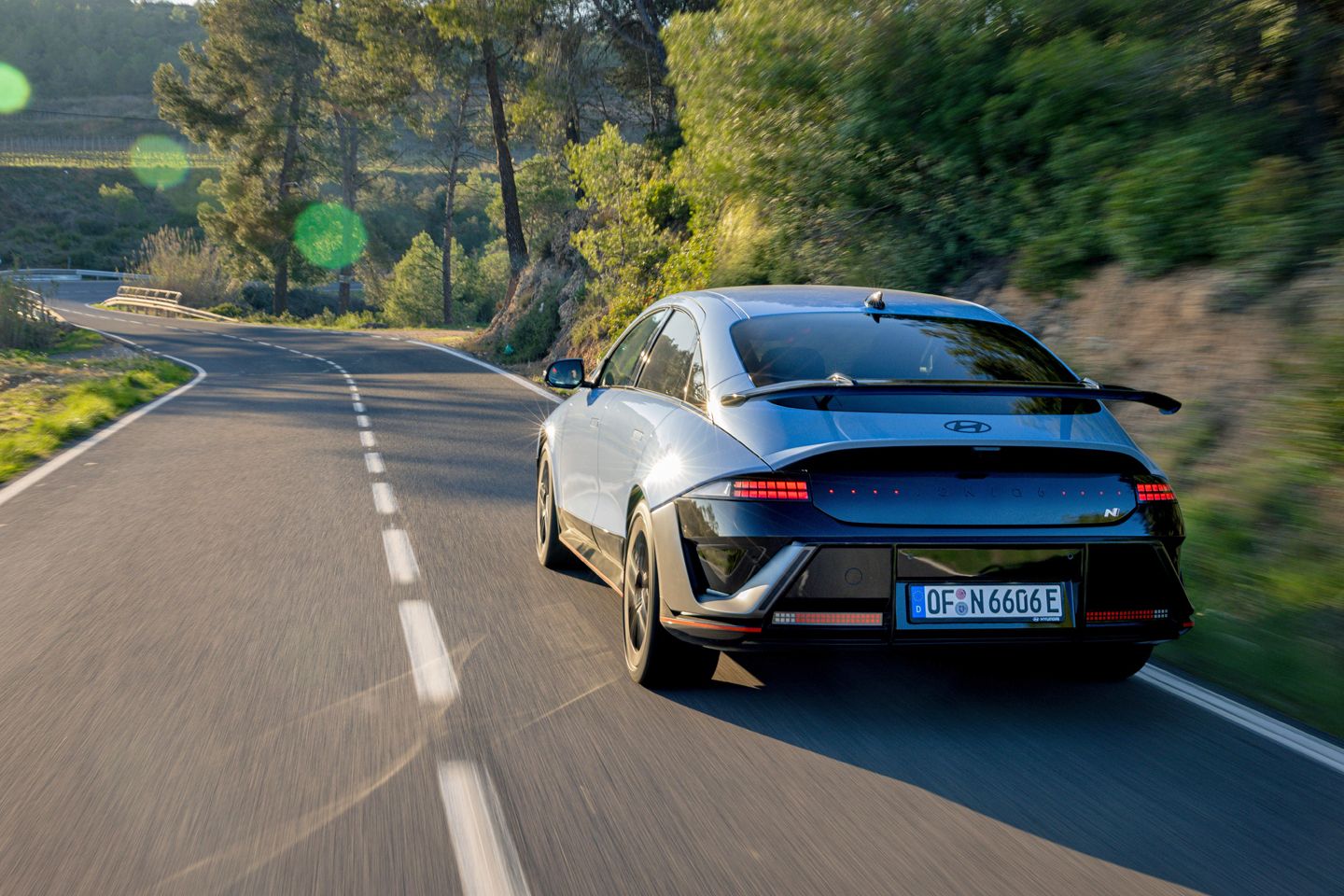
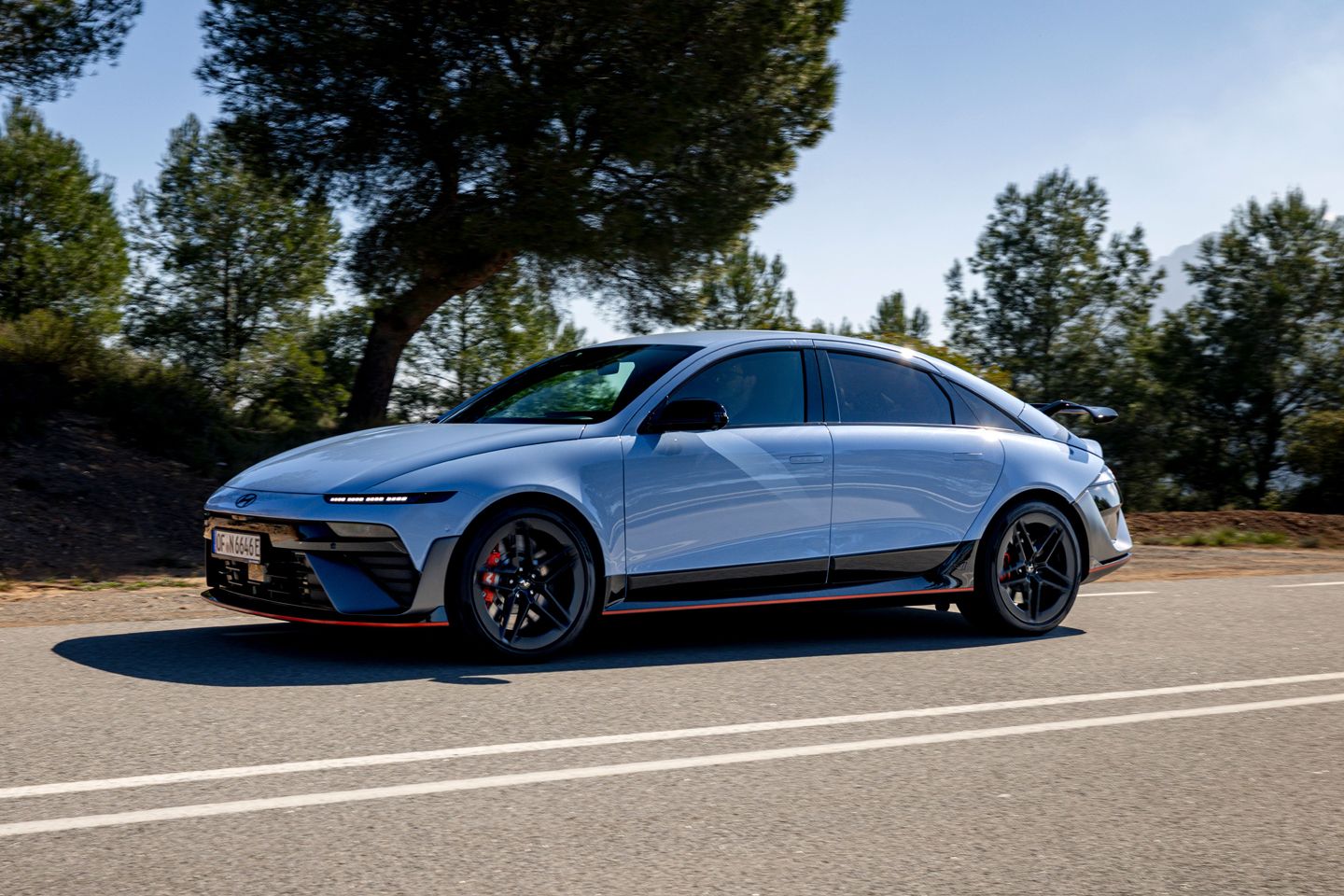
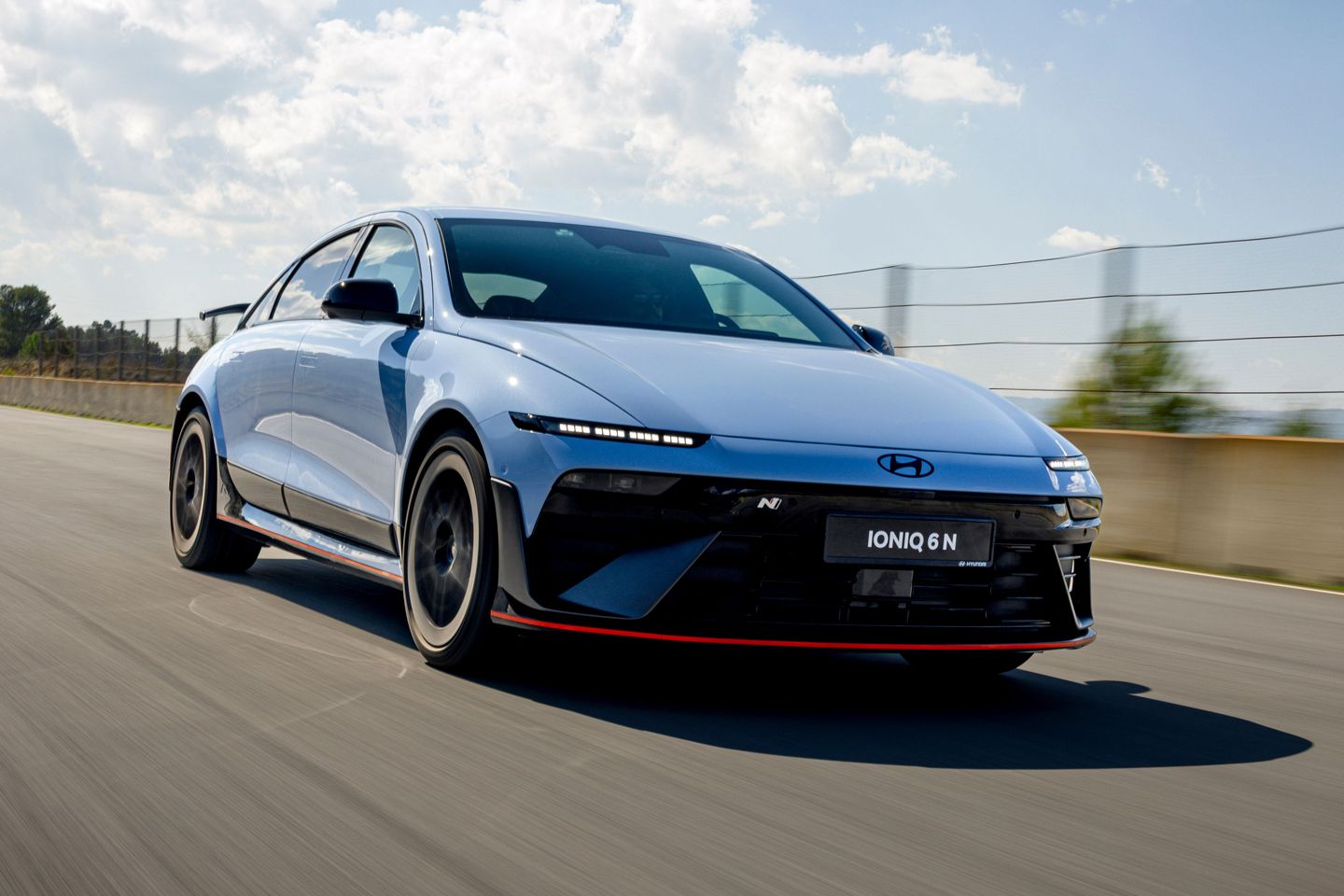
I’ll be the first to say the body draped over all that new stuff isn’t my preferred look. The 5 appears butch and purposeful from all angles, but the 6 N has none of the muscle or toughness in its underlying shape. The wing on the back helps set the record straight, of course, but you have to look closer to see the adaptive intake aero bits on the nose, notice the slight forward rake and gauge that there’s a spoiler under the wing, for double aero points. There’s actual downforce at work here on both ends, adding to the promise of more high-speed stability, which all sounds sensible. But for me at least, the 5 remains the more cleverly styled EV— even if there’s no denying which car looks more mature.
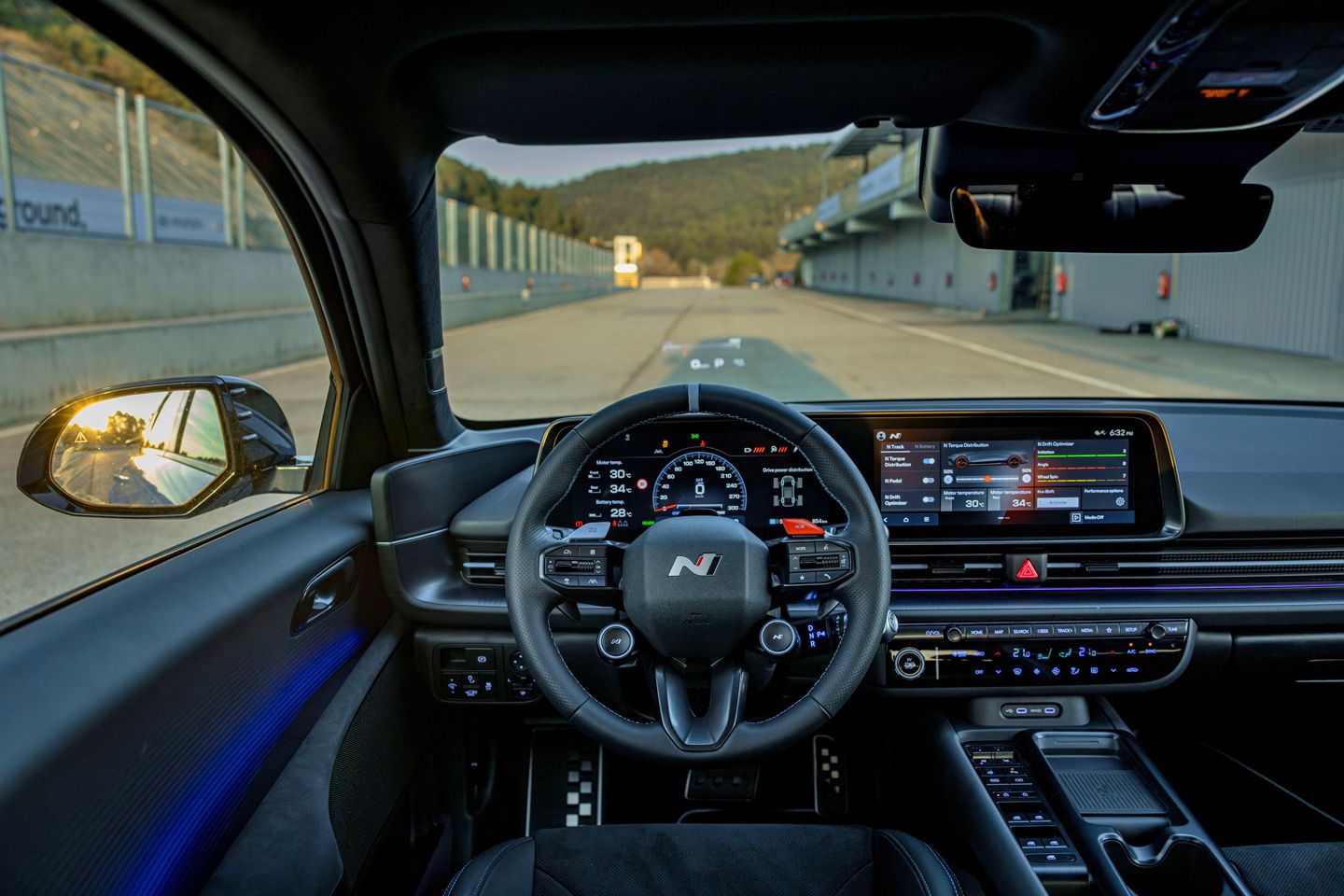
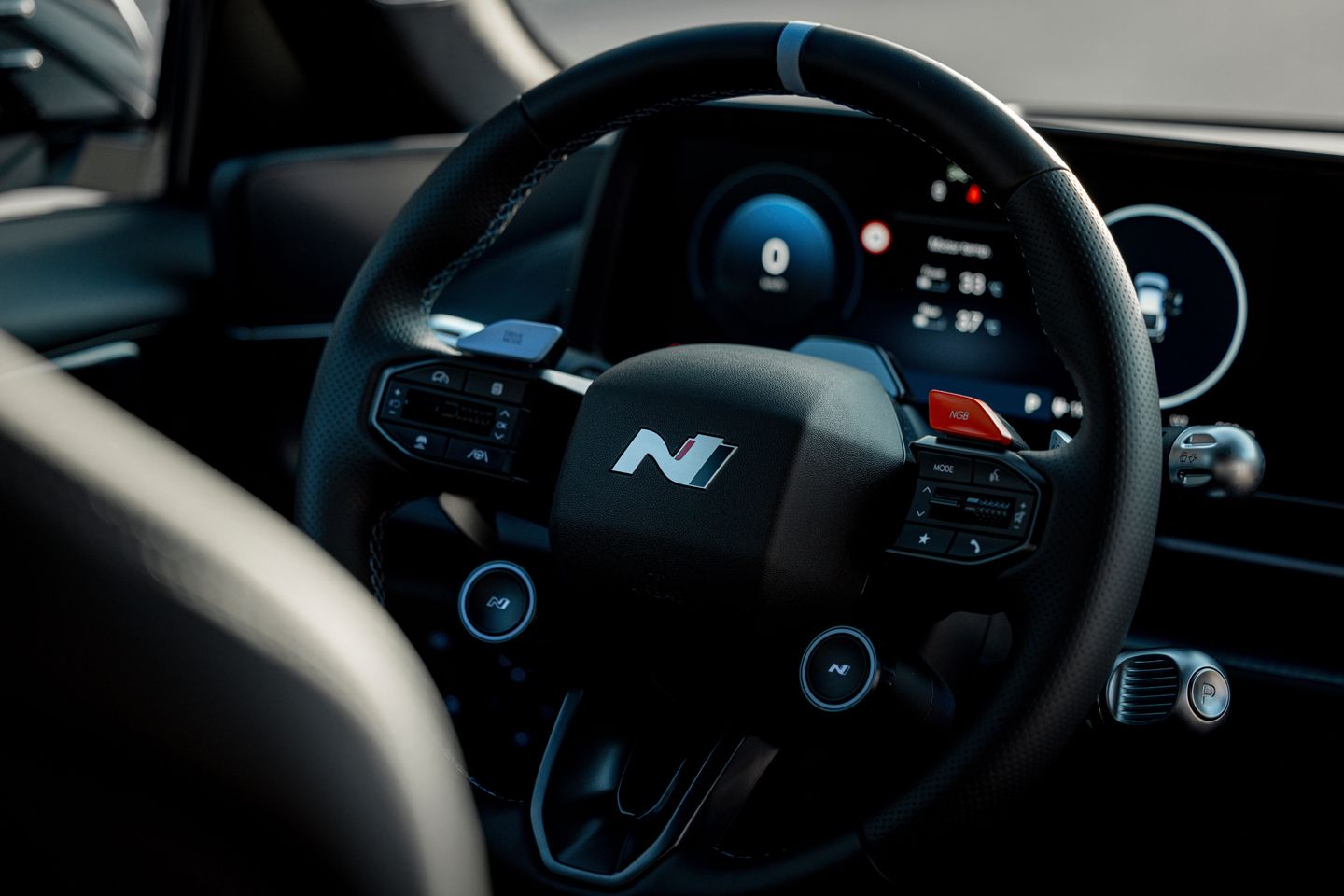
Inside, the 6 N continues Hyundai’s recent good form, with a round (yes, round!) steering wheel, complete with its two N buttons, a Drive Mode switch (to choose between the non-N settings) and others that switch off the annoying ADAS bings and bongs. The bucket-style seats are comfortable and provide great lateral support, and while I’d like it if the driver’s seat could go about an inch lower, it’s easy to get comfortable. Passengers in the back, by the way, have generous amounts of legroom, but that swoopy roofline does impede headroom for anyone over five-foot ten, meaning the 5 N is actually more practical if you’ve got tall kids. But a body stiffening bar at the front of the boot has no noticeable impact on overall space. This, as far as space is concerned, is a regular 6, ready and willing to handle family-style punishment.
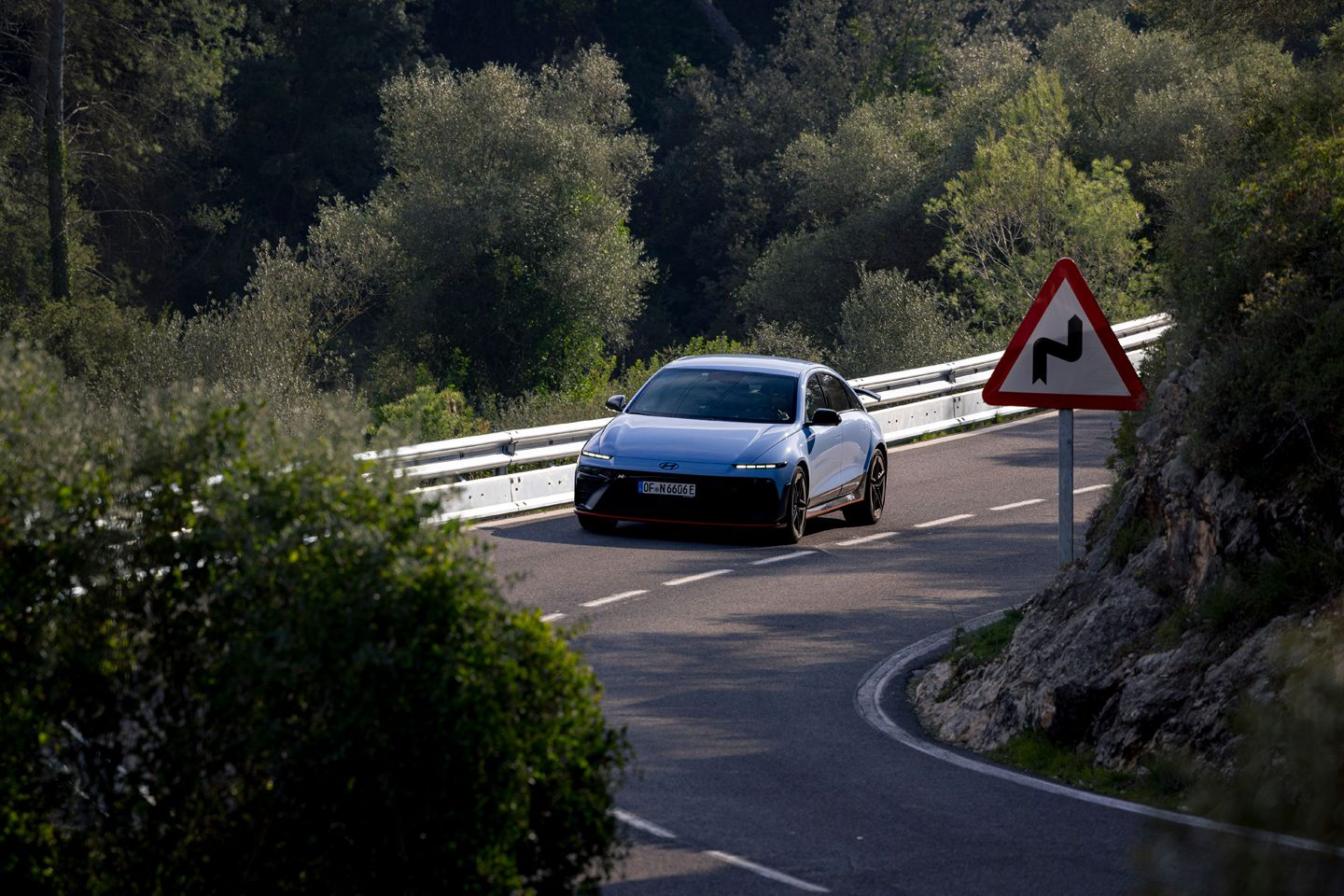
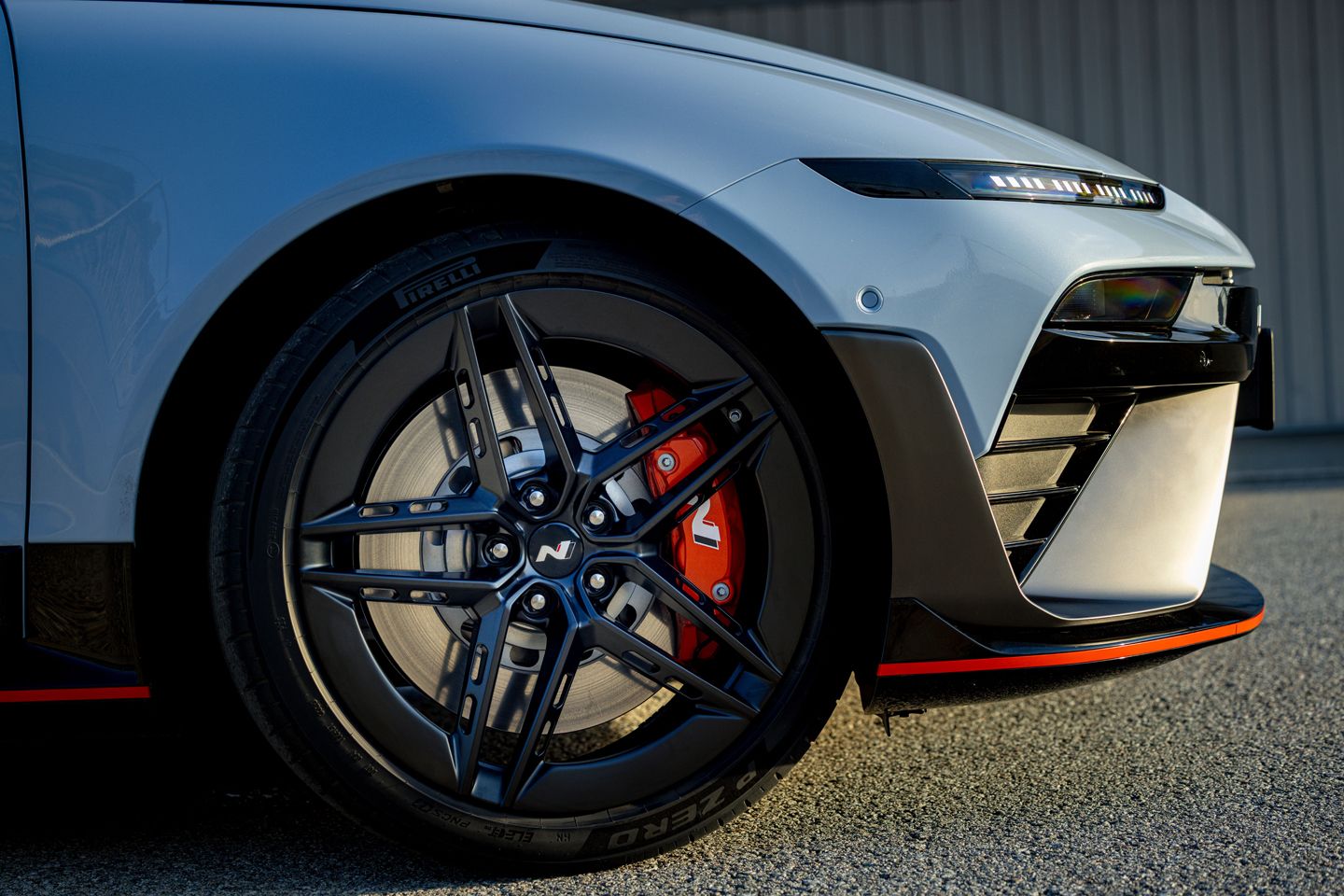
That’s where the similarities end, though, because it takes about 20 seconds behind the wheel of a moving 6 N to sense the quality in the damping. It’s tense, but not firm, purposeful, but not unforgiving, with the active suspension seemingly able to soften off over bumps, while keeping the body tightly controlled. At lower speeds, the 6 N is more comfortable than the 5 N, and it’s just as quiet and effortless as an EV. As an everyday car on bumpy British asphalt, on this initial evidence, the 6 N is likely the model to go for.
Having said that, it only takes about five minutes before the right N button becomes too hard to resist. Pressing it switches on N division’s electric car party piece, that simulated engine setup, and it’s here that the 6 N’s own fun side becomes readily apparent - and in a different way to before. A default silky smooth, almost flat-six-like Normal mode is replaced by a coarser ‘engine’ tone that’s very slightly less PlayStation-y than the 5 N’s. It’s more believable, although without any mechanical vibration up front when you rev in neutral, it’s not until you’re properly giving it some that you can fully immerse yourself in the simulated realness.
Do that, and the flappy paddles on the wheel (having now switched from their regen-adjusting role in Normal mode to control the N’s ‘gearbox’) now make it feel like a simulated powertrain has manifested itself under the bonnet. Full throttle upshifts are 911 GT3 PDK fast, with a punch of torque for good measure as the ‘box bangs through its imaginary cogs. Downshifts are identically fast, and like any good modern DCT you can’t over-rev the engine with over-enthusiastic downshifts, but you can smack headfirst into a hard limiter, which is both entertaining and also useful if you want to get a bit sideways, as I’ll explain shortly.
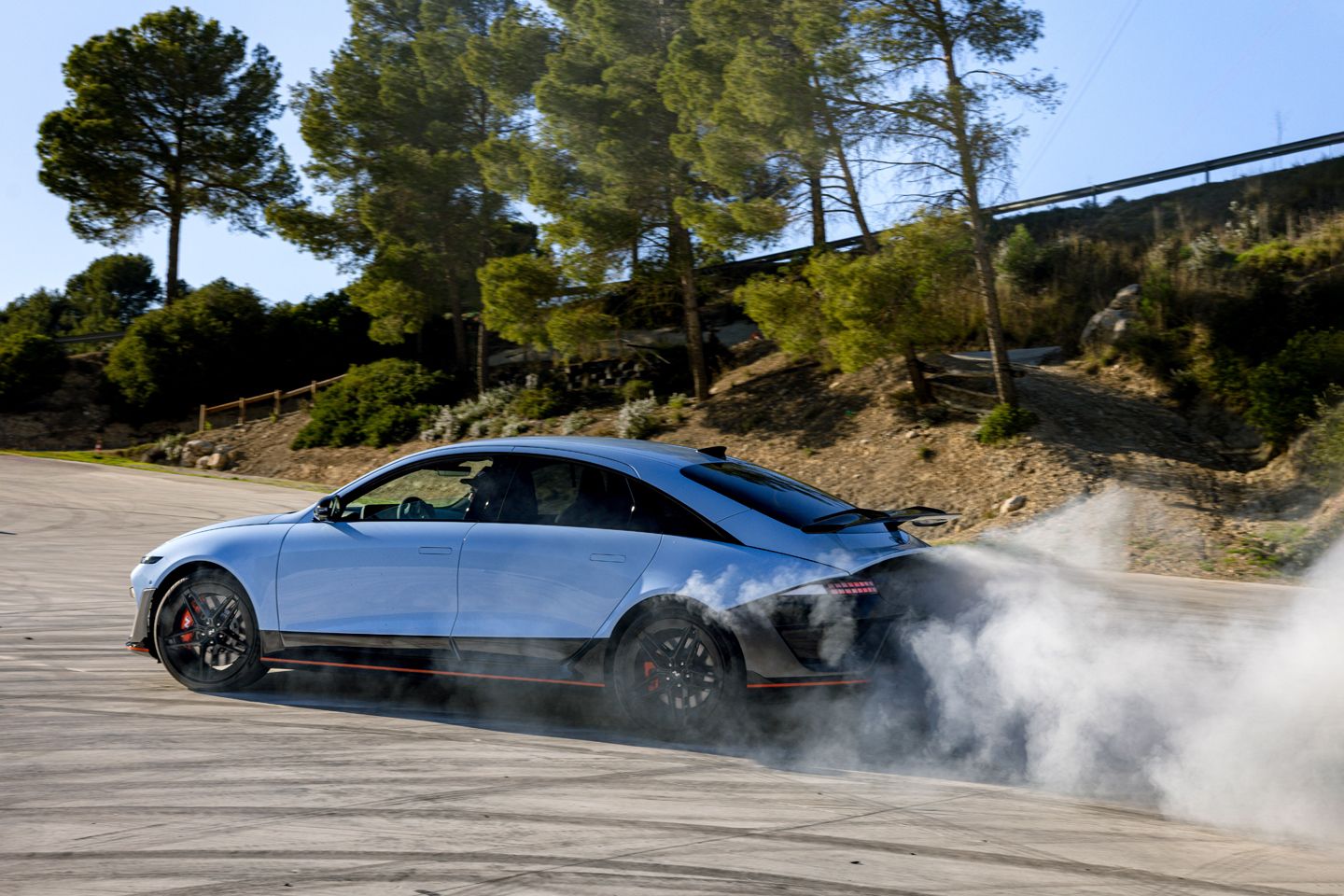
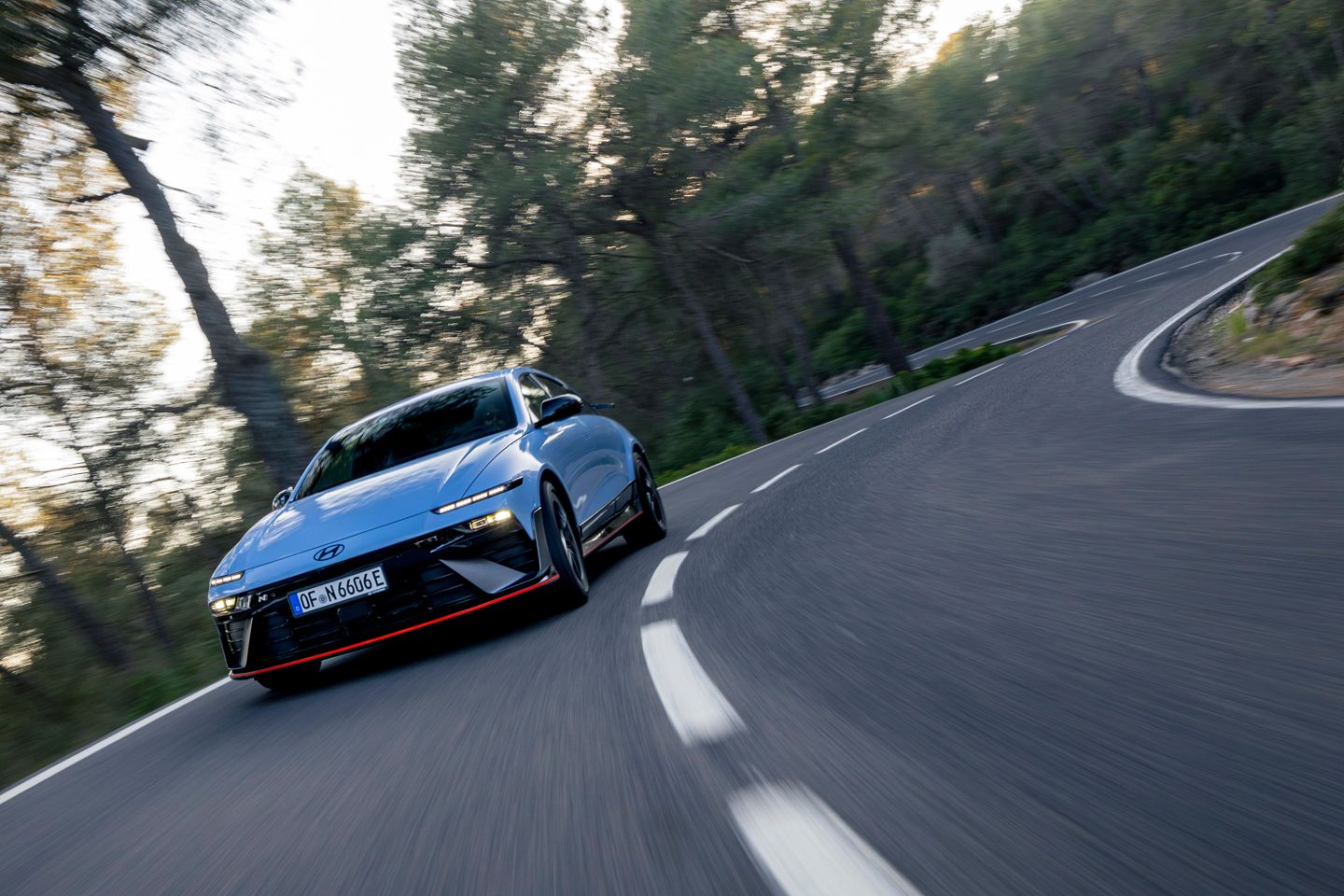
First, I want to reiterate the amazing attention to detail of the N simulated powertrain. You can, for example, leave it in ‘automatic’ and even switch back to Normal mode, so if you prefer the more familiar thrust of a petrol car with gears, you can experience it as you would in, say, Comfort mode in an M3. They didn’t need to do that, but I love that they did. You can use the gears to slow the car too, so you can click down the ratios when coasting up to a red light or down a steep hill. The way the regen is manipulated to simulate that is brilliant. Conversely, the way the torque curve feels so real and different in each gear - so much so that asking for full power when you’re doing 40 mph in eighth is met with an engine that’s lugging and struggling to build speed - is endlessly impressive.
That was all true in the 5 N, but in the 6, the more tightly stacked ratios mean there’s more for you (or the car, in auto mode) to do, which just makes things more engaging. Launch off the line and you’ll be hurtling through upshifts like a rallycross driver; charge out of a second gear corner and you’ll see the rev counter spinning in tandem with building thrust so quickly that third and fourth are demanded seconds apart. It’s more ferocious, more immersive and more believable than the 5’s system. And that’s before you sample ESC sport and experience the same visceral stuff with kicks of manageable oversteer, aided by an E-diff and brake-actuated torque vectoring.
Warm Spanish roads have a habit of flattering any car, but it definitely feels like the 15mm longer wheelbase of the 6 N makes it break traction more progressively. The rear definitely comes around, though not as keenly as the 5’s - and coupled with higher stability on the way into a corner, it means the 6 feels less lairy. That said, the new suspension tech definitely helps to keep the body in check under duress, with the front-end changing direction keenly even when you’re still hard on the anchors. But to get the 6 N to move around on its P-Zero rubber, you have to hustle it harder, and on a narrow country route, that means it’s perhaps a tad harder to explore the mechanical limits. Although a well-sighted hairpin and willing right foot will fix that.
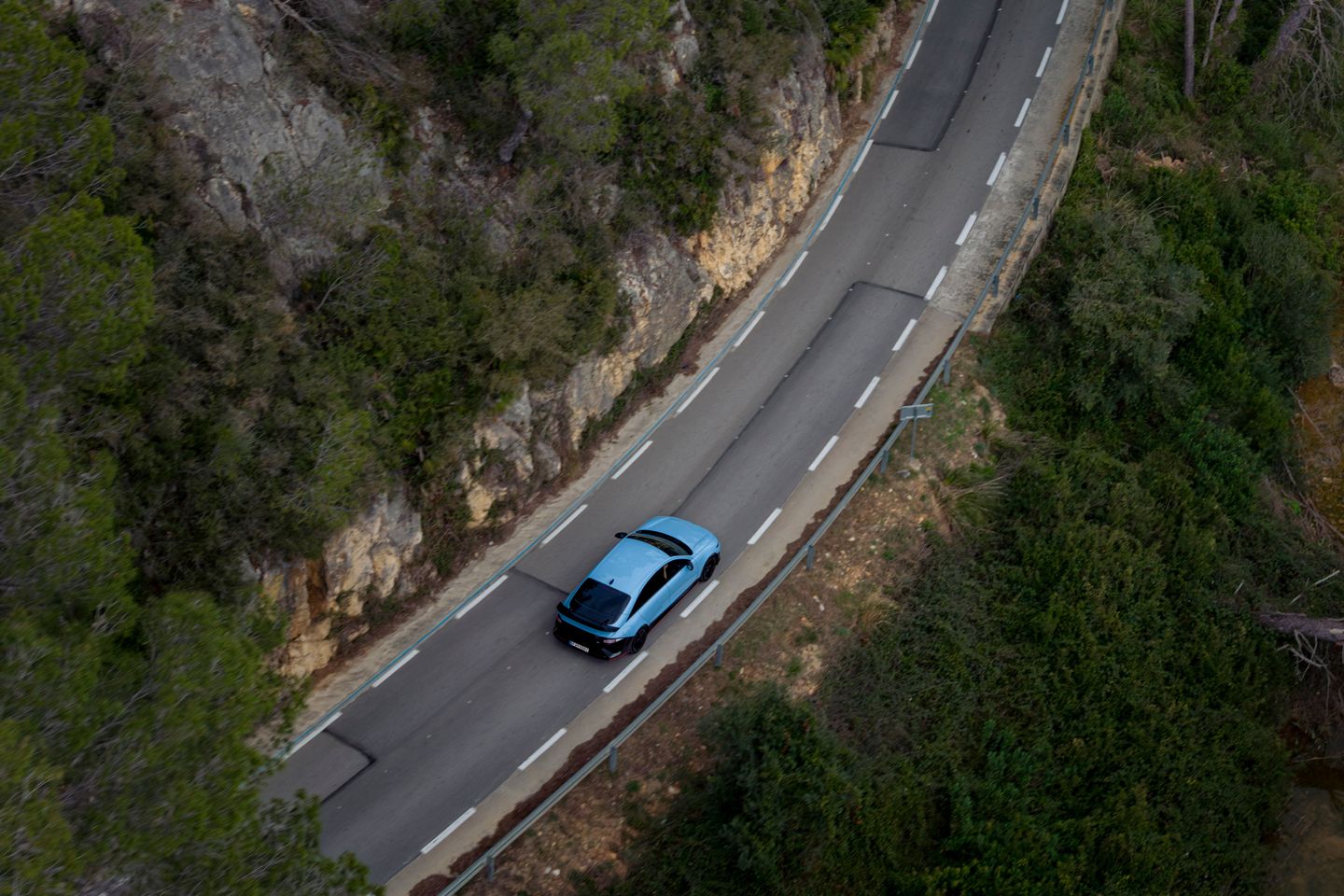
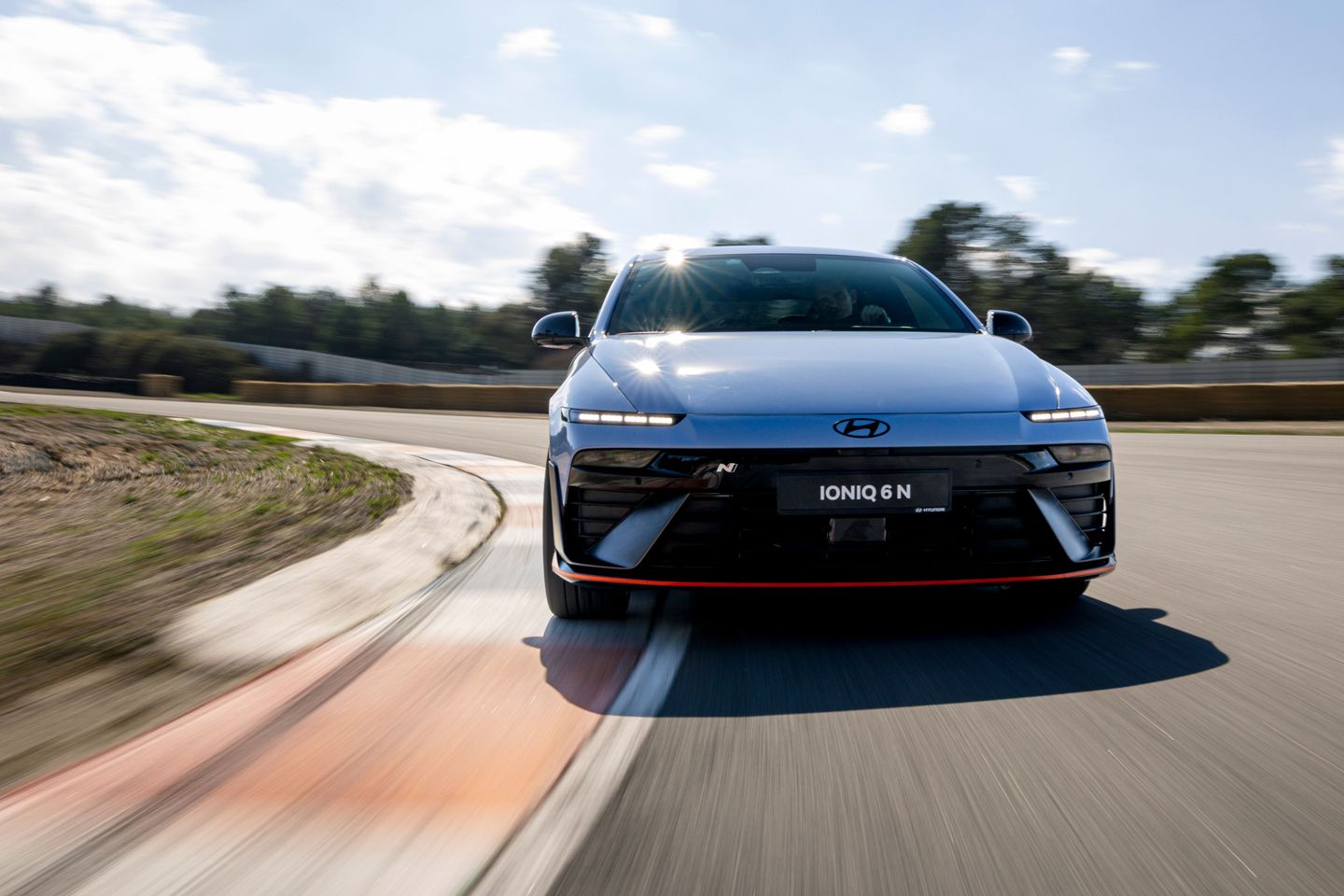
To really explore the car’s high-speed agility without meeting a hard-charging Leon head-on, we venture onto track at Kini Motorparc, just outside Barcelona. There, it’s clear the 6 N’s lower centre of gravity and sophisticated chassis combine to offer an elevated level of mechanical grip. Roll into a corner clumsily and the 6 still offers a margin of safety understeer, where the Pirellis bite enough to get you turning but not so much that you’re required to make any counter-movements. But pitch the car into a bend with a trailed brake and this 2.1-tonne five-seater gets right up on its tippy toes, insisting you chase the throttle.
Do so, and with the ESC fully off you can produce power slides out of corners that require minimal corrective lock. This is where the added stability lends itself to creating a more approachable car than the 5 N, which can feel more on edge in these moments. It’s not night and day, perhaps, but it’s enough to cement the 6 N’s place as a more serious driver’s car. This confidence-inspiring vibe is maintained by a brake pedal that never changes in pressure, making speed easy to modulate, and steering that, while lacking feel, still provides a strong enough connection to the front axle thanks to its consistent weighting. Interestingly, you can actually feel the tyres reach their limits more via subtle vibrations in the floor of the car, so you’re not blind in that regard - just reading the rubber in a different way.
This is useful because, in case you hadn’t guessed it, the 6 N is monstrously fast. Do you notice the extra wallop of higher-functioning motors? Not really. But that’s only to illustrate just how bloody quick the 5 N was in the first place. The 6 N’s closer simulated gears do more to ramp up the feeling of a straight-line performance enhancement than anything else. Leave the car out of its fake engine mode and there’s still reward to be had from Hyundai’s tuning of the electric setup. Power is delivered with scenery-blurring effects, though without the headache-inducing motion sickness other EVs provide. Like the simulated gears, it’s all in the details with this car - something is just better.
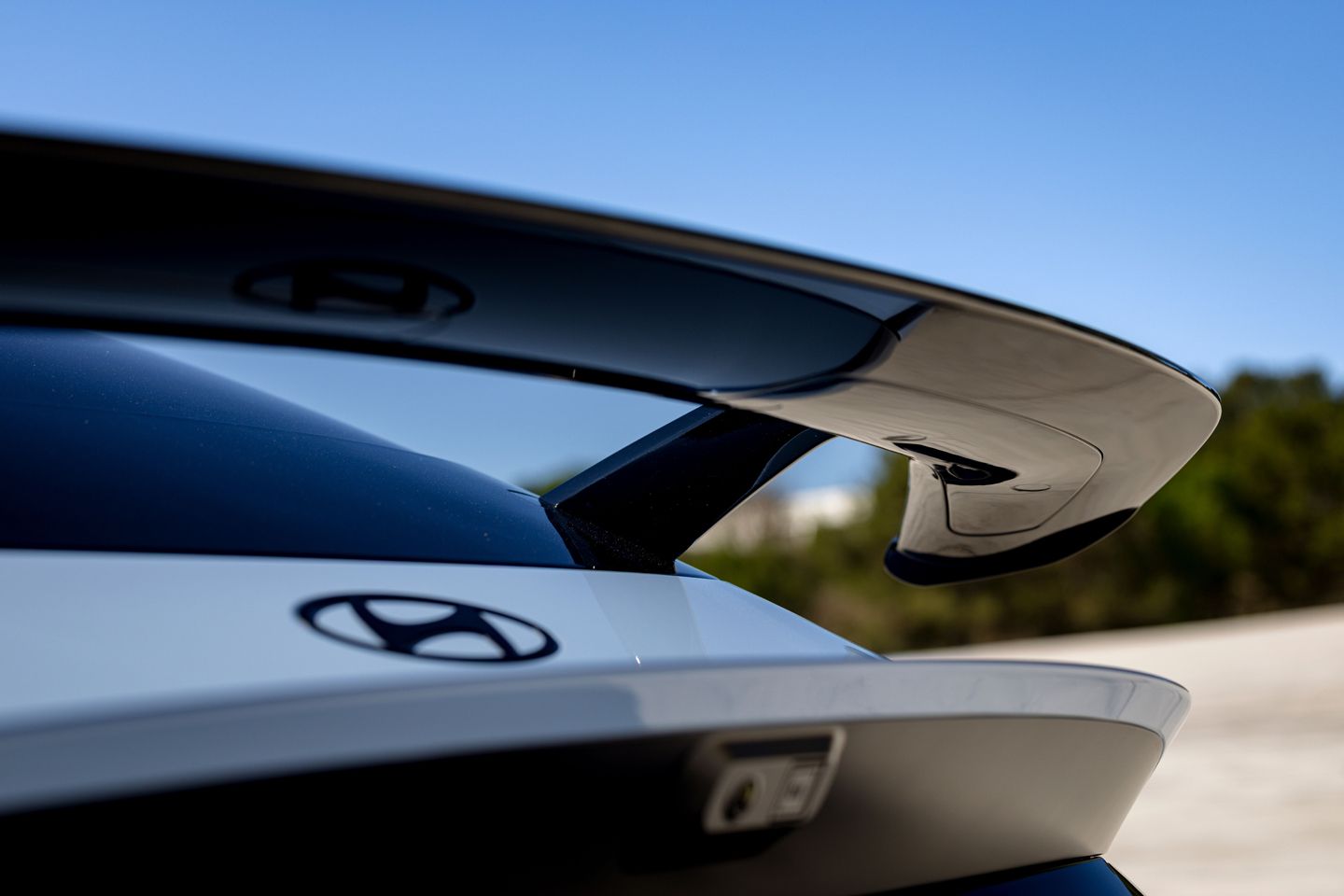
Nevertheless, there are moments, especially when trying to link left-to-right slides, where the car’s mass can be felt. As good as the E-diff and torque vectoring are, the 6 N’s torque-glut and the inevitable pendulum effect of a plus-two-tonne car do mean that too much enthusiasm with power and steering angle requires cat-like reactions to gather things up. It’s more stable in general than the 5 N, but like the shorter car, there’s also a point of no return that comes earlier than it would in something lighter and powered by an actual engine. Although the 6 N doesn’t take itself too seriously in that regard, as evidenced by an updated Drift mode, which now allows you to customise how the car breaks traction and distributes torque at the rear, giving you more ways to turn tyres into white smoke.
Ultimately, as promised, it seems that Hyundai’s new fast EV is a more approachable, forgiving road car, one that also feels more polished at high speed thanks to its active suspension tech. Shorter simulated gear ratios make it feel more alive and the busyness of your fingers helps to mask the fact that the 6 N does not steer like a Taycan. As a point-to-point bruiser, the impression that it rides better than the 5, while not diluting its ability to have you whoop like an eight-year-old who has just discovered opposite lock on Sega Rally, inevitably marks it out as a step up from the hatchback. But the fact that it also suffers practically no battery-powered rivals in thrill-seeking terms is still Hyundai’s broader triumph. What a pair they make.
SPECIFICATION | HYUNDAI IONIQ 6 N
Engine: Twin permanent magnet synchronous electric motors
Transmission: Single-speed, all-wheel drive
Power (hp): 650 (with overboost)
Torque (lb ft): 568 (with overboost)
0-62mph: 3.2 secs
Top speed: 160mph
Weight: 2,166kg
Battery: 800V lithium-ion, 84kWh capacity
Efficiency/range: 3.3miles/kWh, 291 miles
Max DC charging: 350kW; 10-80% charge in 18mins
Price: £65,800


My only real complaint was it was just too big and tall - I don't like sitting that high up.
This appeals far more - it sounds like they've worthwhile improvements to the software and when I sat in an Ioniq 6 after driving the 5N I much preferred the seating position.
Ultimately its way bigger than we need, but if they trickle this tech down to something closer to an i30 N size it would be very interesting - I'd happily take the synthetic engine trickery in a single motor package with half the power, smaller, less weight, less range, etc.
 tter) so an electric car with some fake gearchanges etc has some appeal. I'd love an Elantra N but this is something else to aspire to if I ever get rich. I reckon though ditch the speakers making external noise. I'm happy to listen to fake revs and stuff inside but that is because I am childish, no need to subject people outside the car to it.
I was going to place an order but the insurance would be over £4k a year (very high risk area in London) so didn't go ahead.
That's absolutely nuts.
I had read that some insurers didn't like EVs but I genuinely didn't expect that.
My thoughts are the same as the first comment.
Fast and probably the only manufacturer that is trying to make EVs interesting, but do I want one?
Nope, not at all.

Gassing Station | General Gassing | Top of Page | What's New | My Stuff