
So, what exactly does money/do pounds look like
Discussion


Bear with me on this one (!!)
I happened to look at a couple of £50 notes I had on me today and my eye was caught by the line printed towards the top of the note that said 'I promise to pay the bearer on demand the sum of fifty pounds' (yes, I had seen it before, but never really thought about it any further).
Exhibit A:

To me, I read that as this is almost a 'voucher' for £50 as opposed to actual fifty pounds.
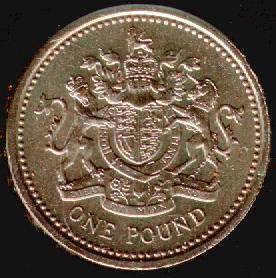
So, back to my question and the title of the thread, it got me thinking - what exactly does a pound actually look like?
Or is it just an outdated phrase that is still around because it always has been?
I happened to look at a couple of £50 notes I had on me today and my eye was caught by the line printed towards the top of the note that said 'I promise to pay the bearer on demand the sum of fifty pounds' (yes, I had seen it before, but never really thought about it any further).
Exhibit A:
To me, I read that as this is almost a 'voucher' for £50 as opposed to actual fifty pounds.
So, back to my question and the title of the thread, it got me thinking - what exactly does a pound actually look like?
Or is it just an outdated phrase that is still around because it always has been?
The Moose said:
I happened to look at a couple of £50 notes I had on me today and my eye was caught by the line printed towards the top of the note that said 'I promise to pay the bearer on demand the sum of fifty pounds' (yes, I had seen it before, but never really thought about it any further).
Look at me....look at me! 

MonkeyBusiness said:
The Moose said:
I happened to look at a couple of £50 notes I had on me today and my eye was caught by the line printed towards the top of the note that said 'I promise to pay the bearer on demand the sum of fifty pounds' (yes, I had seen it before, but never really thought about it any further).
Look at me....look at me! 
It's all to do with paper money.
Clearly a piece of paper is worth very little - however as the B of E will give you 50 pounds for it, everyone else will accept it to pay a debt, as they it turn can get 50 pounds for it.
It goes back to the basic question "what is money?".
(A store of wealth, a medium of exchange, and a measure of value).
A banknote is an IOU from the central bank, in our case Bank Of England.
It's worth as much as your trust in that central bank. If you trust that at any time you really could take that note to a bank and get 50 pound coins, and we generally all do, then its a much more convenient way of carrying money around and helps liquidity. To put it another way if we all had to carry coins around for everything they'd be a much more precious commodity and we're less likely to part with them.
When the Bank of England is holding bank notes they're effectively an IOU to itself, and it can therefore quite happily tear the notes up. Also they can print more if they choose, but both these acts will impact exchange rates/inflation and so on. Actually I need to think that last bit through again but I'm sure it will.


billybob69 said:
fyi it is called The gold standard.
sorry you are wrong..
Britain’s gold supply constitutes roughly 4.05% of pounds in circulation
I am wrong only in that I said 'means' rather than 'meant'. At the time it stared appearing on notes you could indeed exchange the currency for the equivalent in gold (apparently). sorry you are wrong..
Britain’s gold supply constitutes roughly 4.05% of pounds in circulation
The amount of gold held by the treasury may have changed - but I did say 'in theory'. Obviously its never going to work - but the OP asked why it was on the notes and that is why...
Pounds/ money doesn't look like anything. Its a construct for us to exchange goods and services. All it does is give us an intermediate (or common) form in the exchange of goods and services, which is where the value is. Another way to look at it is that its a means of holding/exchanging debt.
This is why QE devalues our currency. you can print as much money as you like, but if we are still doing/making exactly the same things, then no extra value has been added. The value of each currency unit it therefore lowered.
This is why QE devalues our currency. you can print as much money as you like, but if we are still doing/making exactly the same things, then no extra value has been added. The value of each currency unit it therefore lowered.


billybob69 said:
fyi it is called The gold standard.
sorry you are wrong..
Britain’s gold supply constitutes roughly 4.05% of pounds in circulation
That's wrong also. sorry you are wrong..
Britain’s gold supply constitutes roughly 4.05% of pounds in circulation
The gold standard was the mechanism to reference different currencies to gold and create a fixed exchange rate, this failed and so did the ERM. I wonder what the Euro experiment will do.........
CaptainSlow said:
That's wrong also.
The gold standard was the mechanism to reference different currencies to gold and create a fixed exchange rate, this failed and so did the ERM. I wonder what the Euro experiment will do.........
i think you are confused - The gold standard is a monetary system in which the standard economic unit of account is a fixed weight of gold.The gold standard was the mechanism to reference different currencies to gold and create a fixed exchange rate, this failed and so did the ERM. I wonder what the Euro experiment will do.........
the gold EXCHANGE standard typically involves the circulation of only coins made of silver or other metals, but where the authorities guarantee a fixed exchange rate with another country that is on the gold standard.
Gassing Station | Finance | Top of Page | What's New | My Stuff