
Discussion


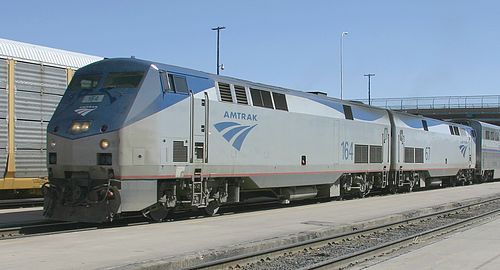
Well, those streamlined locomotives came about because, basically, the DC-3 happened and the railroads needed to compete with new airlines. The DC3 was a primary influence on the whole 'streamline' style trend. The locomotive streamlining had minimal aerodynamic benefit by the way – it was just fancy dress. I might suggest that those new locomotives are styled in similar trend-following way, this time possibly influenced by the F117 (see wacky angular Lamborghinis of late).
Not much of an answer but one way or another aerodynamics is a reason.
Not much of an answer but one way or another aerodynamics is a reason.
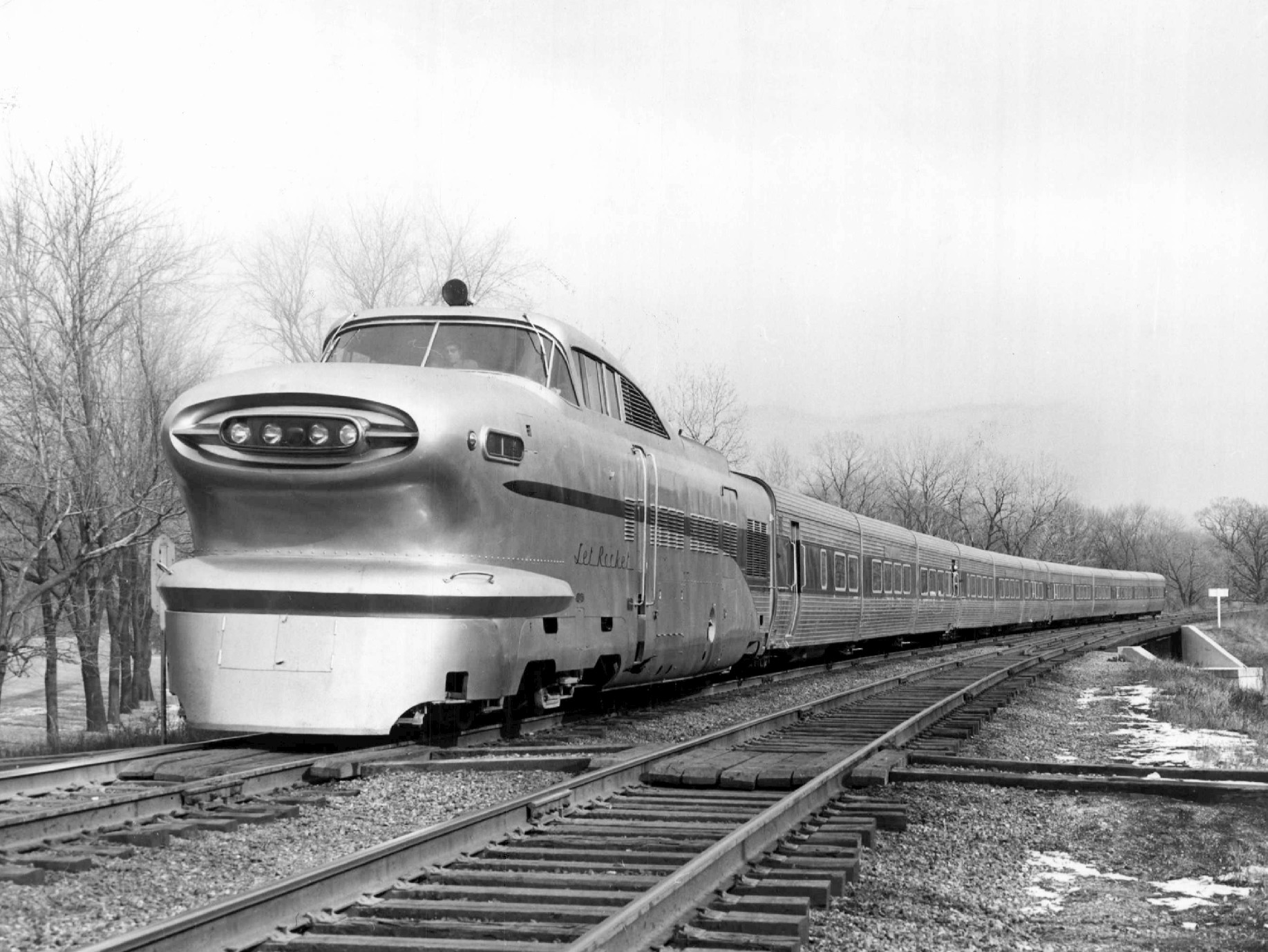
Mostly because people realised that a) the streamliners were a pain in the backside to maintain, be it in steam or diesel form and b) streamlining the front of a train makes almost no difference to how fast it goes (unless you're dealing with modern High Speed Rail-type speeds), as most of the drag comes from the sides and the spaces in between the carriages.
'Streamlining' as actually a very different thing to 'aerodynamics', as the former is mostly about style. As Yertis said it grew out of the first real moves towards scientific aerodynamics and the adoption of all-metal monoplanes by the American aircraft industry which suddenly introduced a smooth, sleek, futuristic look which everyone else wanted to copy, even if it had no functional advantage (at best).
So you got 'air-smoothed' cars like the Chrysler Airflow, the Hudson Terraplane, the Bugatti Type 57 and the Lancia Aprilia, none of which ever saw the inside of a wind tunnel. Most of the steam streamliners like the Penn T1, the Milwaukee A Class and the LMS Coronation were pure styling jobs and even with the rare exception of the LNER A4, which was actually designed using a wind tunnel, it's debatable how much the streamlining improves the performance while making it much harder to service. Most of the performance advantage on the A4s probably came from the streamlined articulated carriages they were supposed to work with, which had curtained sides and a 'beavertail' rear car.
The American diesel streamliners were mostly about marketing, to provide a modern image in the face of improving air travel and the interstate highways. But the classic 'bullnose' EMD diesel units were an operational headache since they could only be driven from one end, had very poor visibility out the front and you needed to remove the non-structural body panels to service or repair them. And it was a rare American passenger train which went above 60mph, making streamlining entirely pointless. When American passenger rail went into terminal decline in the late 1950s the railroads didn't need to bother with image and so started buying functional 'hood unit' locos which were ugly, easy to service and could work in either direction.
'Streamlining' as actually a very different thing to 'aerodynamics', as the former is mostly about style. As Yertis said it grew out of the first real moves towards scientific aerodynamics and the adoption of all-metal monoplanes by the American aircraft industry which suddenly introduced a smooth, sleek, futuristic look which everyone else wanted to copy, even if it had no functional advantage (at best).
So you got 'air-smoothed' cars like the Chrysler Airflow, the Hudson Terraplane, the Bugatti Type 57 and the Lancia Aprilia, none of which ever saw the inside of a wind tunnel. Most of the steam streamliners like the Penn T1, the Milwaukee A Class and the LMS Coronation were pure styling jobs and even with the rare exception of the LNER A4, which was actually designed using a wind tunnel, it's debatable how much the streamlining improves the performance while making it much harder to service. Most of the performance advantage on the A4s probably came from the streamlined articulated carriages they were supposed to work with, which had curtained sides and a 'beavertail' rear car.
The American diesel streamliners were mostly about marketing, to provide a modern image in the face of improving air travel and the interstate highways. But the classic 'bullnose' EMD diesel units were an operational headache since they could only be driven from one end, had very poor visibility out the front and you needed to remove the non-structural body panels to service or repair them. And it was a rare American passenger train which went above 60mph, making streamlining entirely pointless. When American passenger rail went into terminal decline in the late 1950s the railroads didn't need to bother with image and so started buying functional 'hood unit' locos which were ugly, easy to service and could work in either direction.
Brother D said:
2xChevrons said:
Lots of sensible stuff and valid points.
But they look good, and I don't think it hurts to have a styling that makes people stare in awe and be proud of their infrastructure. 
(probably one of my favorite units ever).
Brother D said:
2xChevrons said:
Lots of sensible stuff and valid points.
But they look good, and I don't think it hurts to have a styling that makes people stare in awe and be proud of their infrastructure. (probably one of my favorite units ever).
And I agree that some superfluous style and effort in public infrastructure is something that should be brought back.
Whilst nowhere near as stylish as the streamliners (what is???), a GE Genesis as posted by the OP is an impressive loco nonetheless. 4250hp V16 per loco which makes a Class 43 look like a toy.
Watching the present day Amtrak Empire Builder barrel past up an incline with all 4 Genesis locos fully lit is impressive, I can assure you!
Watching the present day Amtrak Empire Builder barrel past up an incline with all 4 Genesis locos fully lit is impressive, I can assure you!
dvs_dave said:
Whilst nowhere near as stylish as the streamliners (what is???), a GE Genesis as posted by the OP is an impressive loco nonetheless. 4250hp V16 per loco which makes a Class 43 look like a toy.
Watching the present day Amtrak Empire Builder barrel past up an incline with all 4 Genesis locos fully lit is impressive, I can assure you!
I think they look cool too. I note they only have a cab at one end though – do they always operate as a back-to-back pair?Watching the present day Amtrak Empire Builder barrel past up an incline with all 4 Genesis locos fully lit is impressive, I can assure you!
Yertis said:
I think they look cool too. I note they only have a cab at one end though – do they always operate as a back-to-back pair?
I'd imagine so. Most American freight locos are effectively single-directional these days. You can theoretically drive them 'long hood' first but the visibility is terrible so it's strongly discouraged (and I think a lot of the railroad unions reject such working) on safety grounds. So a loco rake always has the cabs at each end facing opposite directions so at the end of a trip the rake can just run around. Like in the UK the US railroads very quickly took up most of their turntables and turning wyes once steam was retired, and Amtrak its nearly always at the back of the queue when it comes to traffic paths so it's operationally easier for Amtrak to have coupled pairs of locos. Even in the 1950s the railroads were willing to break up the smooth lines of their streamliners with a cab unit at each end of the loco rake. 2xChevrons said:
I'd imagine so. Most American freight locos are effectively single-directional these days. You can theoretically drive them 'long hood' first but the visibility is terrible so it's strongly discouraged (and I think a lot of the railroad unions reject such working) on safety grounds. So a loco rake always has the cabs at each end facing opposite directions so at the end of a trip the rake can just run around. Like in the UK the US railroads very quickly took up most of their turntables and turning wyes once steam was retired, and Amtrak its nearly always at the back of the queue when it comes to traffic paths so it's operationally easier for Amtrak to have coupled pairs of locos. Even in the 1950s the railroads were willing to break up the smooth lines of their streamliners with a cab unit at each end of the loco rake.
In the early days of the hood type locomotive two railroads, Norfolk Southern and Baltimore & Ohio deliberately ran long hood forwards, mainly to protect the crews during collisions. The wide "safety" cab basically led to the abandonment of the practice.Spotters tip - on one end of the frame of USA diesel locomotives a small F can be spotted, this designates the front even in cases where you'd think it was obvious


Yertis said:
dvs_dave said:
Whilst nowhere near as stylish as the streamliners (what is???), a GE Genesis as posted by the OP is an impressive loco nonetheless. 4250hp V16 per loco which makes a Class 43 look like a toy.
Watching the present day Amtrak Empire Builder barrel past up an incline with all 4 Genesis locos fully lit is impressive, I can assure you!
I think they look cool too. I note they only have a cab at one end though – do they always operate as a back-to-back pair?Watching the present day Amtrak Empire Builder barrel past up an incline with all 4 Genesis locos fully lit is impressive, I can assure you!

Gassing Station | Boats, Planes & Trains | Top of Page | What's New | My Stuff