
Future proofing a frame
Discussion


Rather than keeping buying new bikes, I'm starting to think a custom frame may be the best way forward for me. There still seems to be quite a number of options available from all sorts of places. I'm rather taken by the thought of titanium frame.
I would want the frame to last a good number of years and eventually update it with discs and di2.
What would the best sizes to ask for the normal components. What would the best size head tube? 1 1/8? English BB? Rear disc mounts? Front derailleur Braze or band? Seat post size?
The basics are going to change that much over the next 10 years are they?
I would want the frame to last a good number of years and eventually update it with discs and di2.
What would the best sizes to ask for the normal components. What would the best size head tube? 1 1/8? English BB? Rear disc mounts? Front derailleur Braze or band? Seat post size?
The basics are going to change that much over the next 10 years are they?
I put together a "conceptual" Ti frame wishlist for a CX bike which included disc mounts inside the triangle, no front derailleur mount (I'd only have 1x these days), inside-frame cable/hose routing for both hydraulic rear brake hose and rear derailleur mech, post mounts for disc calipers, through axle, 35mm tyre capability, mudguard rack and bottle mounts, tapered headtube.
I didn't know what sort of BB I wanted but I thought I wanted to avoid any press-fit if possible. I'm not properly versed in the reasons why/why not though. I just *think* I've heard enough negatives about press-fits.
I'd also prefer a Ti fork too, rather than a CF one. Just to match. It might prove not to be as good but I would like them to match initially and believe that if anyone has bothered to make one, it ought to be worthwhile.
Obviously before I spunked my "conceptual" lottery win on such a thing, I'd probably do what you have here and ask the oracle (PH).
I didn't know what sort of BB I wanted but I thought I wanted to avoid any press-fit if possible. I'm not properly versed in the reasons why/why not though. I just *think* I've heard enough negatives about press-fits.
I'd also prefer a Ti fork too, rather than a CF one. Just to match. It might prove not to be as good but I would like them to match initially and believe that if anyone has bothered to make one, it ought to be worthwhile.
Obviously before I spunked my "conceptual" lottery win on such a thing, I'd probably do what you have here and ask the oracle (PH).
Your best bet is to just go and speak to a frame builder like Stephen Shand or Ricky Feather and talk about your requirements rather than second guessing spec and sizing. Its more than likely that you will get a steel frame, albeit something lovely like Reynold 853 or Columbus tubing but as i understand it, steel is easier to weld compared to ti and adding things like disc mounts or rack mounts etc down the line will be easier on a steel frame compared to ti. You can also strip and repaint steel frames easier.
I love the idea of future proofing, but lets be honest, they'll come along and change something that we didnt think of and you'll have a useless frame again.
MTB's have changes so much in the last 3 yeras with tapererd steerers, bolt through axles, 1x drive trains, wheels sizes, my god wheel sizes. could you imagine if you'd of made this decision 3 years ago "future proofing" a 26" wheeled 1/ 18th steerer HT with QR dropouts? It would be worthless now.
I tried a few months back to buy my wifes stead a new set of forks, she has a hardly used GT Force, but it has 1 1/8th steerer, can you buy a 100 -120mm fork thats QR, Nope, ended up having to get a second had set of floppy foxes.
I would personally find a pretty frame, use it, sell it and buy the next pretty frame when things change (and they will)
MTB's have changes so much in the last 3 yeras with tapererd steerers, bolt through axles, 1x drive trains, wheels sizes, my god wheel sizes. could you imagine if you'd of made this decision 3 years ago "future proofing" a 26" wheeled 1/ 18th steerer HT with QR dropouts? It would be worthless now.
I tried a few months back to buy my wifes stead a new set of forks, she has a hardly used GT Force, but it has 1 1/8th steerer, can you buy a 100 -120mm fork thats QR, Nope, ended up having to get a second had set of floppy foxes.
I would personally find a pretty frame, use it, sell it and buy the next pretty frame when things change (and they will)

pablo said:
Your best bet is to just go and speak to a frame builder like Stephen Shand or Ricky Feather and talk about your requirements rather than second guessing spec and sizing. Its more than likely that you will get a steel frame, albeit something lovely like Reynold 853 or Columbus tubing but as i understand it, steel is easier to weld compared to ti and adding things like disc mounts or rack mounts etc down the line will be easier on a steel frame compared to ti. You can also strip and repaint steel frames easier.
Just what I was thinking. If you're set on having a frame for 10 years, then steel is certainly the most versatile to make changes to. Ricky's work is superb, absolute work of art plus he's a top bloke! Better get your name down now though as he's got about a 2 year waiting list at the moment. vwsurfbum said:
hope he accepts changes in that time? blimey you could end up with a defunked frame before you'd ridden it otherwise LOL
He probably won't start building the frame until the later stages of that time so pretty sure that wouldn't be an issue.Matt_N said:
2 years is a bit mad, surely people will hear that and go to other frame builders.
Well he hand builds (on his own) at roughly one per week and the list is growing all the time, so people are clearly more than happy to wait.Couple of things I've seen that I like are a USB charging port in the frame for Di2, and internal routing for hydraulic brake discs.
I think our very own Dammit might be best placed to answer your questions.
I've seen the former on Rob English bikes, and the latter I can't find the source, it was just a pic I saved at the time.

I think our very own Dammit might be best placed to answer your questions.
I've seen the former on Rob English bikes, and the latter I can't find the source, it was just a pic I saved at the time.
vwsurfbum said:
I tried a few months back to buy my wifes stead a new set of forks, she has a hardly used GT Force, but it has 1 1/8th steerer, can you buy a 100 -120mm fork thats QR, Nope, ended up having to get a second had set of floppy foxes.

Am I missing something here? CRC alone have 15 different options from Marzocchi, Rockshox and Manitou which have between 100 & 120mm travel, 9mm QR and a 1 1/8" steerer???
I do not believe you can future proof a frame, just where would you stop also we don't know what the next big thing is yet or has someone got a crystal ball if so let me know what the euromilions numbers are for next week.
Just looking back mainly road bike biased
Carbon has allowed almost any shape you would like, limited by the UCI rules in most cases
Head set bearings external, internal, ball, roller, sealed cartridge and different sizes top and bottom.
Bottom brackets same as above
Crank set axle sizes
Number of gears I can remember 5 speed now we have 11 speed
Rear frame drop out width (wheel axle width)
Seat post length (amount showing) and shape
Stems have changed to something that can be changed in 10 mins the old type you have to remove the bake leaver and bar tape etc to thread it around the bars.
Brakes have changed a bit too and hydraulic brakes are waiting for the UCI and the industry to sort them selves out ref the standard for the peloton and then the rest of us.
At the risk of taking the thread off subject a little bit what do people think or want to change on a bike
I would like fully integrated Di2 sprinter and climber switches build into the handle bars, rather than that ugly lump of a switch that is available now.
Greater integration of the Di2 cable and control box etc so it all lives inside the frame and stem/bars
So to answer the OP's question I would buy the most modern bike I can afford and ride it then replace as and when your needs allow.
Just looking back mainly road bike biased
Carbon has allowed almost any shape you would like, limited by the UCI rules in most cases
Head set bearings external, internal, ball, roller, sealed cartridge and different sizes top and bottom.
Bottom brackets same as above
Crank set axle sizes
Number of gears I can remember 5 speed now we have 11 speed
Rear frame drop out width (wheel axle width)
Seat post length (amount showing) and shape
Stems have changed to something that can be changed in 10 mins the old type you have to remove the bake leaver and bar tape etc to thread it around the bars.
Brakes have changed a bit too and hydraulic brakes are waiting for the UCI and the industry to sort them selves out ref the standard for the peloton and then the rest of us.
At the risk of taking the thread off subject a little bit what do people think or want to change on a bike
I would like fully integrated Di2 sprinter and climber switches build into the handle bars, rather than that ugly lump of a switch that is available now.
Greater integration of the Di2 cable and control box etc so it all lives inside the frame and stem/bars
So to answer the OP's question I would buy the most modern bike I can afford and ride it then replace as and when your needs allow.
I think the posters who are advising that you make the most of what is available now, and be prepared to move on do have a point.
You'll get the most out of a bike (especially if going the custom route) if you start out with a really clear idea of what you want to do with it.
Once you've got that nailed down then the design will come from that.
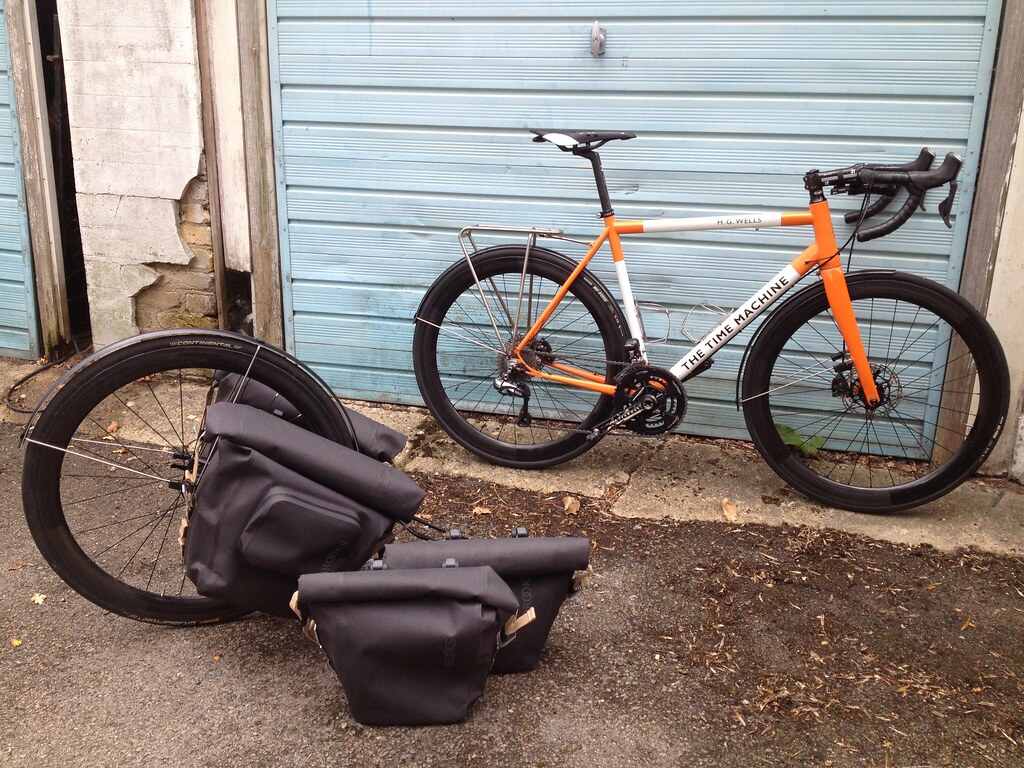
As a for instance, a couple of years ago I wanted a training bike that had mudguards, disc brakes, Di2 and the same geometry as a Cannondale SuperSix Evo - this was before disc braked road bikes were available.
So I went to Ryan at Oak Cycles and he made me a frame that fulfilled all of these requirements and my all-weather training bike was the result:
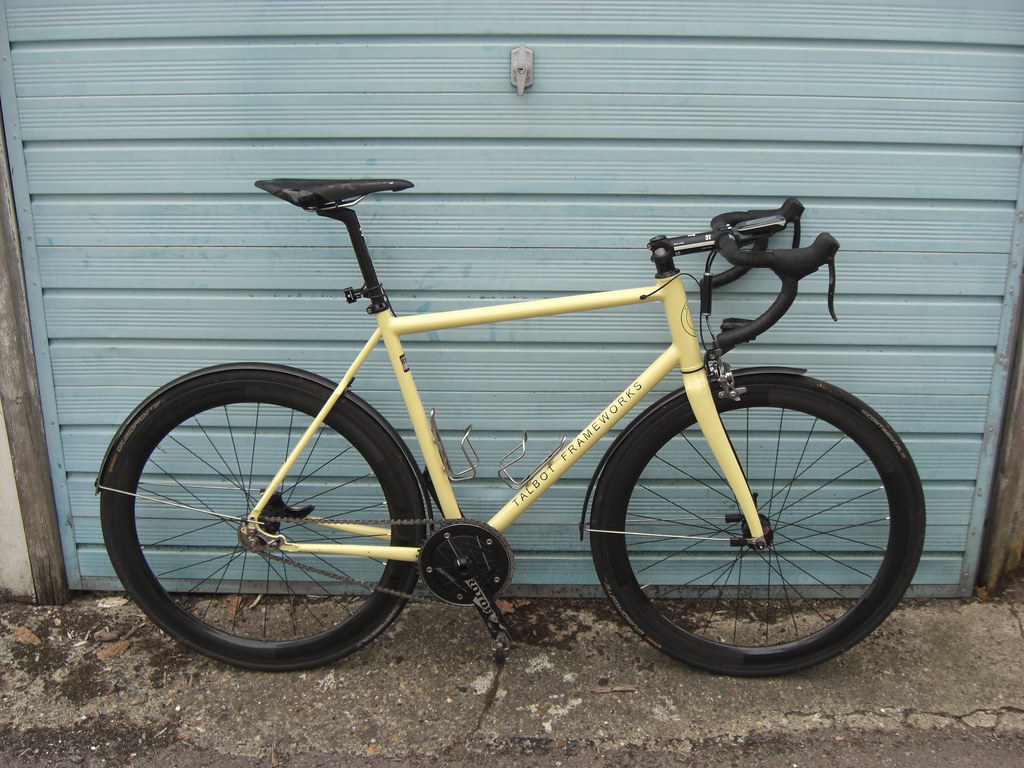
Next I wanted a fixed training bike that would be used mainly for commuting - so simplicity, strength and speed were the key criteria:
Having pretty thoroughly covered off the training requirement meant that I needed something to race on.
Di2 was a given, however this had to be UCI compliant so caliper brakes were required, as well as lightness and an immensely stiff bottom bracket assembly for power transfer twinned with compliant seat stays for comfort:
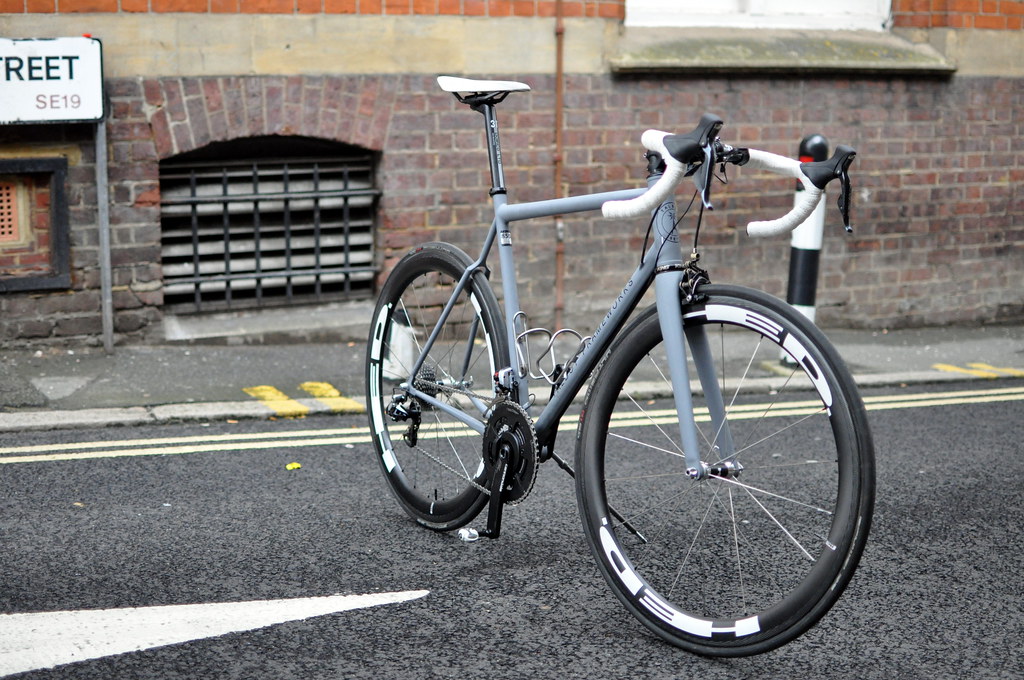
Which did the job it was designed for very well:
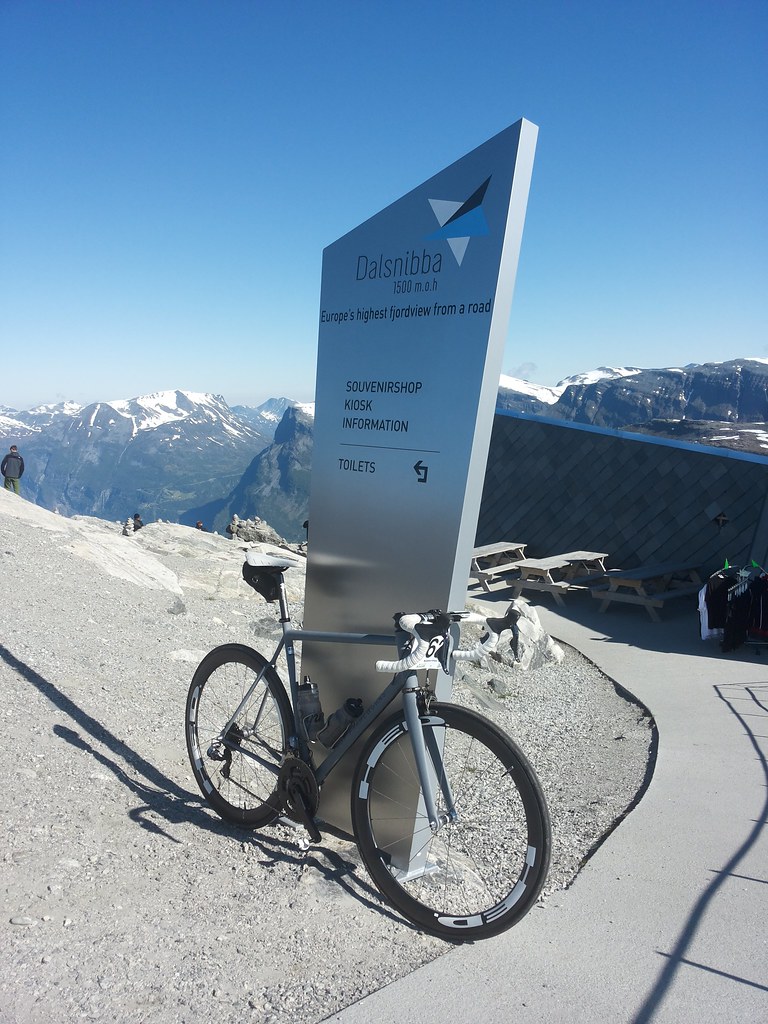
Right now I'm building a cyclo-cross bike (great timing on that one...):

Which has an OD2 tapered steerer, front thru-axle and rear QR, and a carbon fibre ISP.
I'm also making Path Racer #2 which will move to a much higher volume tyre and a disc brake on the front wheel for improved all-weather use.
Each bike had a very tight brief, the design came from that brief as did the component choice.
I can update all of these (within reason), but in all likelihood I'd sell one and build again if I wanted to change (say) steerer size.
The other thing to bear in mind is that you yourself are a dynamic system - you'll gain and lose flexibility, and the type of riding you will most enjoy is likely to change as you get older.
Don't try to force one bike to do everything and last for ever- be specific, be bold, and be prepared to accept change and move on.
You'll get the most out of a bike (especially if going the custom route) if you start out with a really clear idea of what you want to do with it.
Once you've got that nailed down then the design will come from that.
As a for instance, a couple of years ago I wanted a training bike that had mudguards, disc brakes, Di2 and the same geometry as a Cannondale SuperSix Evo - this was before disc braked road bikes were available.
So I went to Ryan at Oak Cycles and he made me a frame that fulfilled all of these requirements and my all-weather training bike was the result:
Next I wanted a fixed training bike that would be used mainly for commuting - so simplicity, strength and speed were the key criteria:
Having pretty thoroughly covered off the training requirement meant that I needed something to race on.
Di2 was a given, however this had to be UCI compliant so caliper brakes were required, as well as lightness and an immensely stiff bottom bracket assembly for power transfer twinned with compliant seat stays for comfort:
Which did the job it was designed for very well:
Right now I'm building a cyclo-cross bike (great timing on that one...):
Which has an OD2 tapered steerer, front thru-axle and rear QR, and a carbon fibre ISP.
I'm also making Path Racer #2 which will move to a much higher volume tyre and a disc brake on the front wheel for improved all-weather use.
Each bike had a very tight brief, the design came from that brief as did the component choice.
I can update all of these (within reason), but in all likelihood I'd sell one and build again if I wanted to change (say) steerer size.
The other thing to bear in mind is that you yourself are a dynamic system - you'll gain and lose flexibility, and the type of riding you will most enjoy is likely to change as you get older.
Don't try to force one bike to do everything and last for ever- be specific, be bold, and be prepared to accept change and move on.

Gassing Station | Pedal Powered | Top of Page | What's New | My Stuff