
Climbing help for a newbie
Discussion


OK, so I'm a new convert to cycling and whilst I can run a half marathon with little trouble, I can't ride a bike.
I can generally keep up on the flat, but any sign of an incline and I'm falling backwards like I'm towing a parachute and rasping like an asthmatic.
Any tips on how to improve / climb better? I guess it's a lot of MTFU and keep at it?
I can generally keep up on the flat, but any sign of an incline and I'm falling backwards like I'm towing a parachute and rasping like an asthmatic.
Any tips on how to improve / climb better? I guess it's a lot of MTFU and keep at it?
Nutter99 said:
OK, so I'm a new convert to cycling and whilst I can run a half marathon with little trouble, I can't ride a bike.
I can generally keep up on the flat, but any sign of an incline and I'm falling backwards like I'm towing a parachute and rasping like an asthmatic.
Any tips on how to improve / climb better? I guess it's a lot of MTFU and keep at it?
Mostly, yes. There's also an element of technique/intelligence behind it, too: cadance, seated/standing etc. Are you grinding up them at 50rpm? Selecting the right gear at the right time?I can generally keep up on the flat, but any sign of an incline and I'm falling backwards like I'm towing a parachute and rasping like an asthmatic.
Any tips on how to improve / climb better? I guess it's a lot of MTFU and keep at it?
The only way to get better at it is to do more of it! Sounds a little glib but seriously, the more hours you spend climbing the better you will get.
What sort of hills are you climbing? Assuming you are not living in the Peak district or Valleys of Wales find a hill local to you that is a mile or two long, do a 'benchmark' ride then experiment with technique.
Keeping your cadence as high as possible will help, but you need to find the point at which you can sustain cadence and be outputting enough power to keep moving forward! Also, keeping seated, keeping your shoulders level and elbows in will really help - I see a lot of climbers in the Chilterns out of the saddle, throwing their bike from side to side and expending tonnes of energy that could be transmitted through the bike if they were a little more controlled and elegant in their ascent.
Other things that have helped me improve my climbing are to focus on your breathing, never look further than about 10 ft ahead of you, don't think about the climb - think about your pedal stroke, keep your heals down, move your ankles in circles - don't try to stamp on the pedals on every down stroke, and don't stop trying until you are over the top of the hill - I always think of the 'finish line' as about 100ft the other side of the crest of a hill.
Good climbing technique really does come down to a combination of all of the above, I am no climbing god but listening to others, watching more accomplished riders climb made me focus on all of the above, and it has worked for me - so far! Also helps that I am sub 70 kgs.......
What sort of hills are you climbing? Assuming you are not living in the Peak district or Valleys of Wales find a hill local to you that is a mile or two long, do a 'benchmark' ride then experiment with technique.
Keeping your cadence as high as possible will help, but you need to find the point at which you can sustain cadence and be outputting enough power to keep moving forward! Also, keeping seated, keeping your shoulders level and elbows in will really help - I see a lot of climbers in the Chilterns out of the saddle, throwing their bike from side to side and expending tonnes of energy that could be transmitted through the bike if they were a little more controlled and elegant in their ascent.
Other things that have helped me improve my climbing are to focus on your breathing, never look further than about 10 ft ahead of you, don't think about the climb - think about your pedal stroke, keep your heals down, move your ankles in circles - don't try to stamp on the pedals on every down stroke, and don't stop trying until you are over the top of the hill - I always think of the 'finish line' as about 100ft the other side of the crest of a hill.
Good climbing technique really does come down to a combination of all of the above, I am no climbing god but listening to others, watching more accomplished riders climb made me focus on all of the above, and it has worked for me - so far! Also helps that I am sub 70 kgs.......
Trying too hard, too early will put you 'in the red zone', this is a level of effort that you cannot sustain and need a recovery period from, needing a recovery period when you're half way up a climb is obviously not ideal, this is when you will be saying to yourself 'stop and get off' or 'I can't do this'.
Find a rhythm you can sustain, rein yourself in a little if necessary, try and keep your upper body relaxed, let your legs do the work. I find sitting on the nose of the saddle lets me keep a half way house between seated and standing.
Knowing the hill helps a great deal; going up an unfamiliar climb, giving it some gas thinking you're near the top and finding there's a final ramp around the corner is a killer.
Attacking short sharp climbs where you know you have a recovery after really help too.
Find a rhythm you can sustain, rein yourself in a little if necessary, try and keep your upper body relaxed, let your legs do the work. I find sitting on the nose of the saddle lets me keep a half way house between seated and standing.
Knowing the hill helps a great deal; going up an unfamiliar climb, giving it some gas thinking you're near the top and finding there's a final ramp around the corner is a killer.
Attacking short sharp climbs where you know you have a recovery after really help too.
Technique certainly helps, high cadence especially if the climb is more than a few minutes long is more efficient than mashing a high gear. But really it's all down to power:weight ratio. Increase your power by riding your bike more (putting in sustained efforts even on the flat) and losing any excess weight.
As others have said, the answer is to bike up more hills. When I started cycling just over 3 months ago, I couldn't get more than a few hundred meters up the hill on my way home before having to get off, gasping and spluttering, and walk for a while. Now I can get all the way up in one go and still have plenty left in the tank.
What's really helped is doing some weekend rides up longer, bigger hills than on my daily commute.
Learn to love them
What's really helped is doing some weekend rides up longer, bigger hills than on my daily commute.
Learn to love them
Gear down, spin and focus on breathing, the rest is just in your head.
When I got back into cycling I needed 5 stops to get up a local big hill, can now spin to the top and sprint when I get there.
Long term loosing weight does help but more than anything just ride up more hills, if you can find a suitable local one as a benchmark and repeatedly time yourself up it that can be good motivation.
When I got back into cycling I needed 5 stops to get up a local big hill, can now spin to the top and sprint when I get there.
Long term loosing weight does help but more than anything just ride up more hills, if you can find a suitable local one as a benchmark and repeatedly time yourself up it that can be good motivation.
Yeah - don't think there is a magic technique that will send you flying up an Alp after a week of riding (although as others have said, technique will help ensure your energy is going into climbing rather than being wasted by throwing the bike around unnecessarily).
I'd like to think that I am 'OK' as an amateur rider when it comes to climbing and fitness, but I'm terrible at running - get puffed out far too quickly, so I think it's just down to practice.
If you are 'OK' as a runner, you can't necessarily expect to be 'OK' as a rider without a bit of practice. It'll obviously help that you already have a good level of fitness and after a couple of months you'll be racing up the hills!
I'd like to think that I am 'OK' as an amateur rider when it comes to climbing and fitness, but I'm terrible at running - get puffed out far too quickly, so I think it's just down to practice.
If you are 'OK' as a runner, you can't necessarily expect to be 'OK' as a rider without a bit of practice. It'll obviously help that you already have a good level of fitness and after a couple of months you'll be racing up the hills!
Hills are all about the head for me. Seeing it all laid out in front of you I find demoralising. What I try to do is fix on a point 10m or so ahead (e.g. drain cover) and focus on reeling it in. Rinse and repeat to the summit.
That said there is a reason why the polka dot jersey doesn't come in sizes larger than a medium.
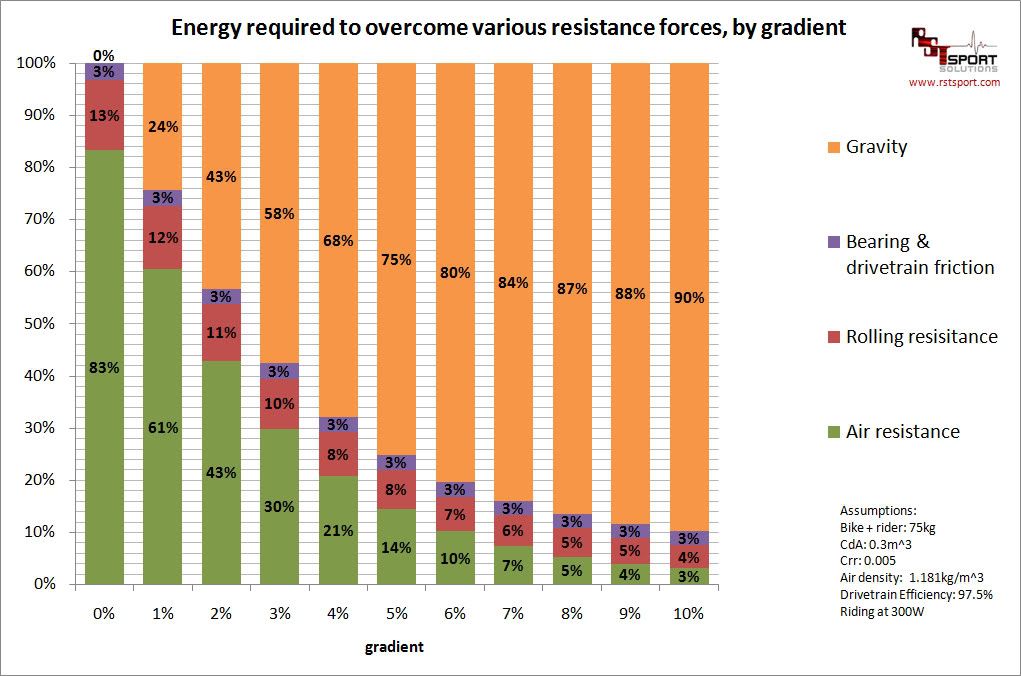
That said there is a reason why the polka dot jersey doesn't come in sizes larger than a medium.

OP what you're describing is the classic multi-sport dilemma. Being a good runner means you have a good starting point - cardio-v system - but your legs are trained for running and will take time to adapt. Essentially your legs aren't 'strong' enough in relation to the output of your CV system. Your CV system will easily provide the oxygen needed but your legs won't be adapted sufficiently to make best use of it.
Spinning - high cadence - up a climb will play to your strengths but you do probably need to work on your leg strength, which is lower cadence, shorter duration climbs.
Having said all that, it's more fun just getting out and pedalling a hilly route - rinse and repeat. Getting too scientific/analytical is a great way to put yourself off a sport unless you want to compete. I've always found MTB'ing the best way to improve your climbing as the hills tend to be steeper and generally more technical meaning you switch between aerobic and anaerobic more often.
Spinning - high cadence - up a climb will play to your strengths but you do probably need to work on your leg strength, which is lower cadence, shorter duration climbs.
Having said all that, it's more fun just getting out and pedalling a hilly route - rinse and repeat. Getting too scientific/analytical is a great way to put yourself off a sport unless you want to compete. I've always found MTB'ing the best way to improve your climbing as the hills tend to be steeper and generally more technical meaning you switch between aerobic and anaerobic more often.
rhinochopig said:
OP what you're describing is the classic multi-sport dilemma. Being a good runner means you have a good starting point - cardio-v system - but your legs are trained for running and will take time to adapt. Essentially your legs aren't 'strong' enough in relation to the output of your CV system. Your CV system will easily provide the oxygen needed but your legs won't be adapted sufficiently to make best use of it.
Spinning - high cadence - up a climb will play to your strengths but you do probably need to work on your leg strength, which is lower cadence, shorter duration climbs.
Having said all that, it's more fun just getting out and pedalling a hilly route - rinse and repeat. Getting too scientific/analytical is a great way to put yourself off a sport unless you want to compete. I've always found MTB'ing the best way to improve your climbing as the hills tend to be steeper and generally more technical meaning you switch between aerobic and anaerobic more often.
Okgo will be along in a minute to tell you there is NO leg strength required for cycling! Spinning - high cadence - up a climb will play to your strengths but you do probably need to work on your leg strength, which is lower cadence, shorter duration climbs.
Having said all that, it's more fun just getting out and pedalling a hilly route - rinse and repeat. Getting too scientific/analytical is a great way to put yourself off a sport unless you want to compete. I've always found MTB'ing the best way to improve your climbing as the hills tend to be steeper and generally more technical meaning you switch between aerobic and anaerobic more often.
TKF said:
Hills are all about the head for me. Seeing it all laid out in front of you I find demoralising. What I try to do is fix on a point 10m or so ahead (e.g. drain cover) and focus on reeling it in. Rinse and repeat to the summit.
That said there is a reason why the polka dot jersey doesn't come in sizes larger than a medium.
I'd hate to see the version for 'Bike + rider = 100kg'.That said there is a reason why the polka dot jersey doesn't come in sizes larger than a medium.
IroningMan said:
I'd hate to see the version for 'Bike + rider = 100kg'.
Given the population here of "powerfully built company director types" I guess you should request the next table up from that as well :-)A "well built" friend of mine asked if I thought it was worth him buying some lighter bike parts, I said he should worry about weight when his bike exceeds 10% of his... he still has his 9.5kilo road bike and he still has along way to go.
(FWIW I can poke fun because I'm still "not thin" but have lost 2 stone cycling and dieting in the last year)
Grandfondo said:
Okgo will be along in a minute to tell you there is NO leg strength required for cycling!
OP - gearing is important, but at some point you do have to keep going and you will just slowly adapt, your legs will be able to make use of the oxygen they're being sent and lactic will take longer to build up, i.e. you will increase your threshold (note they will not get stronger, you will not be able to leg press more in 6 months than you can now no matter what people on here will tell you)and be better adapted to the requirement of cycling.The same thing applies to running for a cyclist, I am fairly fit yet could not hope to go and run a 18 min 5k based on my cycling fitness, if you listened to the people on here that would be because my legs are not strong enough? Or they're too strong from cycling? God knows what b
 ks would come out, but the bottom line is your body needs to adapt to what you're asking of it, luckily you will have an easier journey of it than someone who has no CV conditioning at all.
Gassing Station | Pedal Powered | Top of Page | What's New | My Stuff