
Discussion


So the D90 plus 18-105 purchased in Oct has now been joined by a 50mm 1.8, remote shutter release and tripod.
Trying to play with some shots of the sea in setting sun a week or so ago made me think that a/some ND filter would be a logical next step.
Is there a 'starter' filter kit/package that you would recommend?
Grad ND, should that be included as well?
80% of my shots at the moment seem to be Landscape/Buildings at night, I want to try me hand at more emotive subjects over the next few weeks, people, scenes etc. Not that ND is necessarily needed for those, I'm just musing now.....
Trying to play with some shots of the sea in setting sun a week or so ago made me think that a/some ND filter would be a logical next step.
Is there a 'starter' filter kit/package that you would recommend?
Grad ND, should that be included as well?
80% of my shots at the moment seem to be Landscape/Buildings at night, I want to try me hand at more emotive subjects over the next few weeks, people, scenes etc. Not that ND is necessarily needed for those, I'm just musing now.....
Here you go 1x nd8 and 1x nd4 in bright sunshine

Aston Martin by 01101001 01100001 01101110, on Flickr
Aston Martin by 01101001 01100001 01101110, on Flickr
GetCarter said:
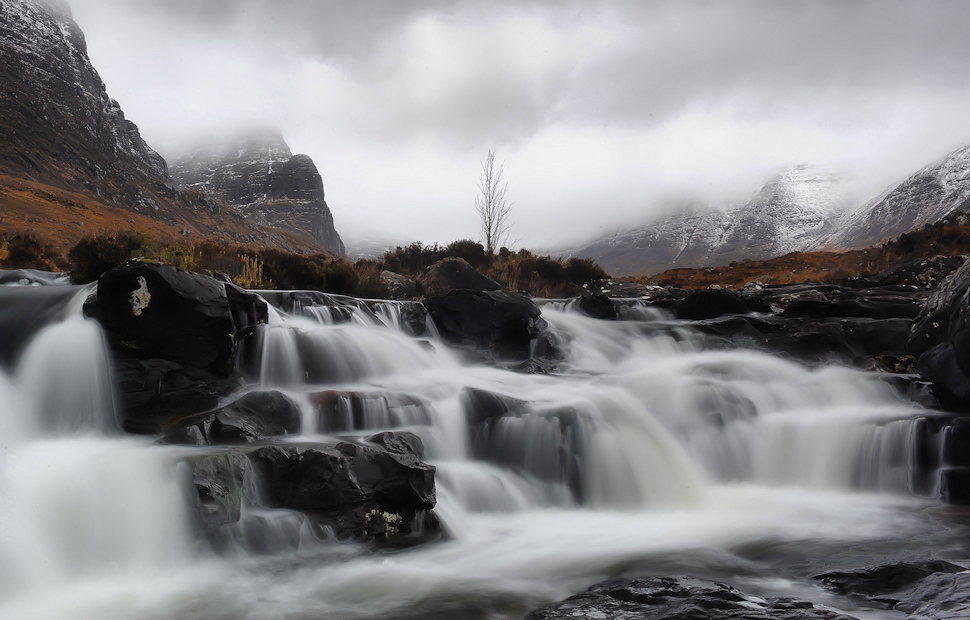
ND grad is more useful than ND IMO. This sky would have bleached completely to white without a grad. (I also used a polariser to 'steal' a stop). Bear in mind, if you slide a grad all the way down over the lens, it ceases to be 'grad', just ND.
Interesting. I would've thought the opposite would hold true in the digital era.Unless I've misunderstood the subject, I can't see what a grad ND can do that a bit of light touch HDR editing can't do? On the flip side, HDR can cope where there isn't a nice, linear differentiation between the different areas of exposure, unlike an ND grad.
A straight ND filter, on the other hand, can of course slow the shutter speed down dramatically for the same exposure, which can't be achieved, beyond a couple of stops at most, with post-processing.
Have I missed or misunderstood something fundamental here?

Kermit power said:
Interesting. I would've thought the opposite would hold true in the digital era.
Unless I've misunderstood the subject, I can't see what a grad ND can do that a bit of light touch HDR editing can't do? On the flip side, HDR can cope where there isn't a nice, linear differentiation between the different areas of exposure, unlike an ND grad.
A straight ND filter, on the other hand, can of course slow the shutter speed down dramatically for the same exposure, which can't be achieved, beyond a couple of stops at most, with post-processing.
Have I missed or misunderstood something fundamental here?
In my experience, if you expose for the sky the land will often be too dark and increasing the brightness of the land by the necessary amount results in poor quality.Unless I've misunderstood the subject, I can't see what a grad ND can do that a bit of light touch HDR editing can't do? On the flip side, HDR can cope where there isn't a nice, linear differentiation between the different areas of exposure, unlike an ND grad.
A straight ND filter, on the other hand, can of course slow the shutter speed down dramatically for the same exposure, which can't be achieved, beyond a couple of stops at most, with post-processing.
Have I missed or misunderstood something fundamental here?
SamHH said:
Kermit power said:
Interesting. I would've thought the opposite would hold true in the digital era.
Unless I've misunderstood the subject, I can't see what a grad ND can do that a bit of light touch HDR editing can't do? On the flip side, HDR can cope where there isn't a nice, linear differentiation between the different areas of exposure, unlike an ND grad.
A straight ND filter, on the other hand, can of course slow the shutter speed down dramatically for the same exposure, which can't be achieved, beyond a couple of stops at most, with post-processing.
Have I missed or misunderstood something fundamental here?
In my experience, if you expose for the sky the land will often be too dark and increasing the brightness of the land by the necessary amount results in poor quality.Unless I've misunderstood the subject, I can't see what a grad ND can do that a bit of light touch HDR editing can't do? On the flip side, HDR can cope where there isn't a nice, linear differentiation between the different areas of exposure, unlike an ND grad.
A straight ND filter, on the other hand, can of course slow the shutter speed down dramatically for the same exposure, which can't be achieved, beyond a couple of stops at most, with post-processing.
Have I missed or misunderstood something fundamental here?
I can see how an ND grad would be easier where there's a flat horizon, but how would an ND grad address a shot like the one below (ruthlessly stolen for illustrative purposes from a complete stranger on Flickr)?
Are shots with running water going to outnumber those where there isn't a nice, straight line on which to sit the grad?

Iceland mountain peak by ystenes, on Flickr
As mentioned... If I walk about with a camera and no tripod (most of the time), an ND grad will mean I don't have to arse about in PP. Also, blown highlights are blown highlights. It matters not what HDR software you use, you can't recover data if there is none. Unless I do a 5 shot composite, I could still end up with 'pure white' somewhere on the image.
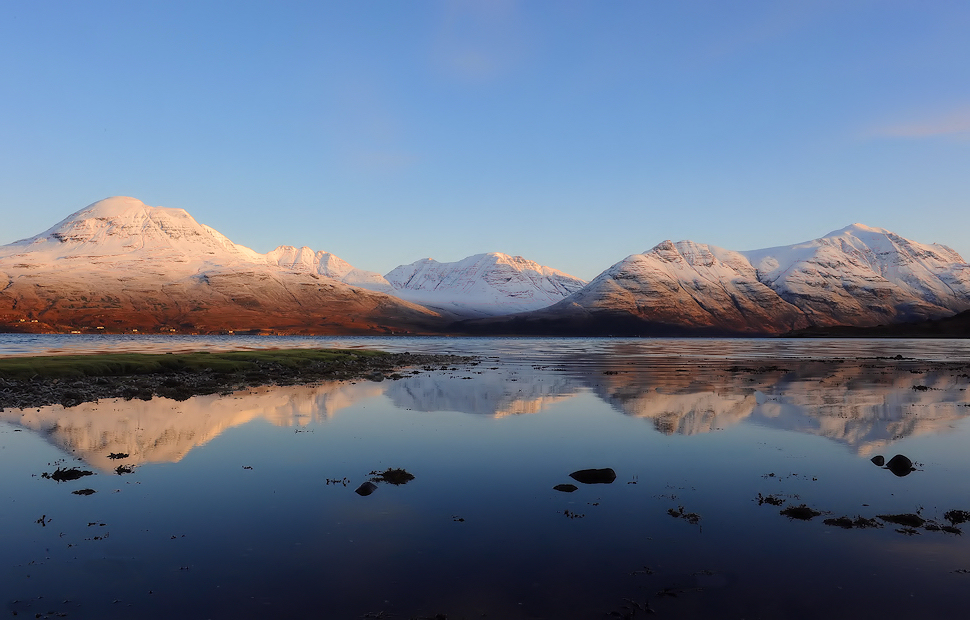
I use a combination of grads, polariser and HDR software. ND grads just make life a lot easier, and my photos (hopefully) a lot better. I'm giving my very stupid camera the best chance of getting the exposure right.
ETA... you don't need straight horizons to use a grad.... you generally don't see the filter over land, just a blue - rather than white sky (or as my pic at the top... grey... hardly a straight horizon!)
I use a combination of grads, polariser and HDR software. ND grads just make life a lot easier, and my photos (hopefully) a lot better. I'm giving my very stupid camera the best chance of getting the exposure right.
ETA... you don't need straight horizons to use a grad.... you generally don't see the filter over land, just a blue - rather than white sky (or as my pic at the top... grey... hardly a straight horizon!)
Edited by GetCarter on Thursday 10th March 14:46
Kermit power said:
Hence using HDR software. You might get a bit of an issue with ghosting in shots where you have running water such as GC's shot above, but other than that, just take a couple of exposures and you're sorted.
I can see how an ND grad would be easier where there's a flat horizon, but how would an ND grad address a shot like the one below (ruthlessly stolen for illustrative purposes from a complete stranger on Flickr)?
Are shots with running water going to outnumber those where there isn't a nice, straight line on which to sit the grad?
Iceland mountain peak by ystenes, on Flickr
Looking at the top of the rocks compared to the lower section, and the considering the exposure balance between foreground and sky, that shot used a grad of some sort IMHO. I can see how an ND grad would be easier where there's a flat horizon, but how would an ND grad address a shot like the one below (ruthlessly stolen for illustrative purposes from a complete stranger on Flickr)?
Are shots with running water going to outnumber those where there isn't a nice, straight line on which to sit the grad?
Iceland mountain peak by ystenes, on Flickr
AndWhyNot said:
Looking at the top of the rocks compared to the lower section, and the considering the exposure balance between foreground and sky, that shot used a grad of some sort IMHO.
You may well be right. I'm looking at it on a crappy laptop screen though, so wouldn't want to comment! 
Popped into a camera shop in the mall this evening, they had a ND4 Hama (grey) at the equiv of about £28 and and the same make grad but a circular one for a little less.
Are circular ones a no go generally or can you adjust them on the thread without light leaks?
My nearly bought the ND just to try it as it was so cheap, my worry was that ND4 (2 stops?) would not be dark enough.
Is a grey an issue colour wise, would have thought a clear one would be betterm would grey mean setting a custom WB?
Are circular ones a no go generally or can you adjust them on the thread without light leaks?
My nearly bought the ND just to try it as it was so cheap, my worry was that ND4 (2 stops?) would not be dark enough.
Is a grey an issue colour wise, would have thought a clear one would be betterm would grey mean setting a custom WB?
dxbtiger said:
Popped into a camera shop in the mall this evening, they had a ND4 Hama (grey) at the equiv of about £28 and and the same make grad but a circular one for a little less.
Are circular ones a no go generally or can you adjust them on the thread without light leaks?
My nearly bought the ND just to try it as it was so cheap, my worry was that ND4 (2 stops?) would not be dark enough.
Is a grey an issue colour wise, would have thought a clear one would be betterm would grey mean setting a custom WB?
Grey is what happens when you add a couple of stops of darkness to a clear filter Are circular ones a no go generally or can you adjust them on the thread without light leaks?
My nearly bought the ND just to try it as it was so cheap, my worry was that ND4 (2 stops?) would not be dark enough.
Is a grey an issue colour wise, would have thought a clear one would be betterm would grey mean setting a custom WB?
Some brands have an impact on WB but not usually outside the realms of custom WB or RAW recovery.
Gassing Station | Photography & Video | Top of Page | What's New | My Stuff