
Discussion


OK, how do you take a decent photo of a sunset?! I'm assuming from my generally appalling attempts last night that it's not just a case of squinting when you frame up 
Last night we had a veritable feast of colour and light displayed over our house, from deep violets and blues to bright red, yet my camera (ahem...ok, I) captured a drab glow of rouge tinted sun
Tried messing about in PS to get some back but the histograms were getting way to gappy before it approached how it looked, print would look rubbish, but this is roughly what it should have looked like...

but that's after much shopping
my composition is crappy I know, I'll worry about that when I can get colours and exposure type problems roughly right

The clouds look grey and drab, they were really vibrant in real life, even the darker ones.
Last night we had a veritable feast of colour and light displayed over our house, from deep violets and blues to bright red, yet my camera (ahem...ok, I) captured a drab glow of rouge tinted sun
Tried messing about in PS to get some back but the histograms were getting way to gappy before it approached how it looked, print would look rubbish, but this is roughly what it should have looked like...
but that's after much shopping
my composition is crappy I know, I'll worry about that when I can get colours and exposure type problems roughly right
The clouds look grey and drab, they were really vibrant in real life, even the darker ones.
Edited by Davi on Tuesday 19th May 14:32
Exposure and colour temperature setting play a big part. You really need to be exposing for the high lights in the sky and set you colour temperature to say 'Flash' or if you have a manual setting for setting your own Kelvins to about 8000˚k
Hope that helps
Hope that helps
Edited by Snapper7 on Tuesday 19th May 14:43
Snapper7 said:
Exposure and colour temperature setting play a big part. You really need to be exposing for the high lights in the sky and set you colour temperature to say 'Flash' or if you have a manual setting for setting your own Kelvins to about 8000˚k
Hope that helps
Thanks Snapper7, Hope that helps
Edited by Snapper7 on Tuesday 19th May 14:43
any hints on exposing for the high lights in the sky... remembering this is my first "proper" camera and only been out a few hours with it so far!
I have no idea if you can set the colour temp manually (it's a D60) but will have a peek tonight, cheers


Here are a dozen or so of mine.
Top tips
Get water involved, Foreground is ESSENTIAL! get in close (450mm if you can), wait until the sun isn't too bright - generally, you'll need clouds.
http://www.stevecarter.com/picaday/sunsets.htm
ETA - oh, and move up here.... where the colours are (to be frank) bizzare.
Top tips
Get water involved, Foreground is ESSENTIAL! get in close (450mm if you can), wait until the sun isn't too bright - generally, you'll need clouds.
http://www.stevecarter.com/picaday/sunsets.htm
ETA - oh, and move up here.... where the colours are (to be frank) bizzare.
Edited by GetCarter on Tuesday 19th May 19:41
Davi said:
CivicMan said:
Stick it on auto - it'll be fine.
Doesn't exactly aid ones learning of the craft though does it now 
I did actually try one on auto to see if it would help work out why I wasn't having any joy, and got bugger all for my efforts.
Edited by Davi on Tuesday 19th May 16:19
GetCarter said:
Here are a dozen or so of mine.
Top tips
Get water involved, Foreground is ESSENTIAL! get in close (450mm if you can), wait until the sun isn't too bright - generally, you'll need clouds.
http://www.stevecarter.com/picaday/sunsets.htm
ETA - oh, and move up here.... where the colours are (to be frank) bizzare.
Cheers! Water is not a problem, only a 5 minute drive from the solent (though admittedly the views are slightly more 'industrial' than yours, so just need to work out how to run the cost of a new lens past TBAC.Top tips
Get water involved, Foreground is ESSENTIAL! get in close (450mm if you can), wait until the sun isn't too bright - generally, you'll need clouds.
http://www.stevecarter.com/picaday/sunsets.htm
ETA - oh, and move up here.... where the colours are (to be frank) bizzare.
Edited by GetCarter on Tuesday 19th May 19:41
GetCarter said:
Here are a dozen or so of mine.
Top tips
Get water involved, Foreground is ESSENTIAL! get in close (450mm if you can), wait until the sun isn't too bright - generally, you'll need clouds.
http://www.stevecarter.com/picaday/sunsets.htm
ETA - oh, and move up here.... where the colours are (to be frank) bizzare.
Ay Carumba these are good ! Top tips
Get water involved, Foreground is ESSENTIAL! get in close (450mm if you can), wait until the sun isn't too bright - generally, you'll need clouds.
http://www.stevecarter.com/picaday/sunsets.htm
ETA - oh, and move up here.... where the colours are (to be frank) bizzare.
Edited by GetCarter on Tuesday 19th May 19:41

What rough area are they taken in ? I know Kintyre well but I guess you're further north ?
Davi said:
CivicMan said:
Stick it on auto - it'll be fine.
Doesn't exactly aid ones learning of the craft though does it now I did actually try one on auto to see if it would help work out why I wasn't having any joy, and got bugger all for my efforts.
Edited by Davi on Tuesday 19th May 16:19
If you are using a current DSLR and got "bugger all" using auto, then it'll be a composition problem I'll warrant. I may occasionally may under or over expose by a stop depending how much sky or land I have in the picture.
Just to compund my auto theory, this image I took using a Fuji F470 compact camera, fully auto.

dibbly_dobbler said:
GetCarter said:
Here are a dozen or so of mine.
Top tips
Get water involved, Foreground is ESSENTIAL! get in close (450mm if you can), wait until the sun isn't too bright - generally, you'll need clouds.
http://www.stevecarter.com/picaday/sunsets.htm
ETA - oh, and move up here.... where the colours are (to be frank) bizzare.
Ay Carumba these are good ! Top tips
Get water involved, Foreground is ESSENTIAL! get in close (450mm if you can), wait until the sun isn't too bright - generally, you'll need clouds.
http://www.stevecarter.com/picaday/sunsets.htm
ETA - oh, and move up here.... where the colours are (to be frank) bizzare.
Edited by GetCarter on Tuesday 19th May 19:41
What rough area are they taken in ? I know Kintyre well but I guess you're further north ?
I use these:

They are Lee Neutral Density (ND) Graduated Filters, however you don't need to fork out for the Lee ones, you can get Cokin and Hitech ones which do exactly the same thing for a faction of the price, lots on Ebay etc. The filters come in different strengths too, 0.3, 0.45, 0.6, 0.9 & 1.3 the stronger the strength the more the filter will have an effect on the image. So for sunsets I might use a 0.9 filter for the sky, and a 0.6 the opersite way round (gradient coming in from the bottom) for the reflection in the sand.
Then all you do once you have the filters and adapter is, attach the adapter to the end of your lens, and line the filters up with the horizon and hopefully you will get something looking like this:

As Getcarter said, foreground and composition are essential, have a look at landscape photography by people like Joe Cornish, Ansel Adams and Mark Denton on examples of this, I find there work always inspiring
Hope that helps, any questions feel free to ask!
They are Lee Neutral Density (ND) Graduated Filters, however you don't need to fork out for the Lee ones, you can get Cokin and Hitech ones which do exactly the same thing for a faction of the price, lots on Ebay etc. The filters come in different strengths too, 0.3, 0.45, 0.6, 0.9 & 1.3 the stronger the strength the more the filter will have an effect on the image. So for sunsets I might use a 0.9 filter for the sky, and a 0.6 the opersite way round (gradient coming in from the bottom) for the reflection in the sand.
Then all you do once you have the filters and adapter is, attach the adapter to the end of your lens, and line the filters up with the horizon and hopefully you will get something looking like this:
As Getcarter said, foreground and composition are essential, have a look at landscape photography by people like Joe Cornish, Ansel Adams and Mark Denton on examples of this, I find there work always inspiring
Hope that helps, any questions feel free to ask!
CivicMan said:
I think one problem with the two images you posted is that there basically are too many trees hiding what could be a spectacular picture. Look at Carters to get an idea of composition.
If you are using a current DSLR and got "bugger all" using auto, then it'll be a composition problem I'll warrant. I may occasionally may under or over expose by a stop depending how much sky or land I have in the picture.
Just to compund my auto theory, this image I took using a Fuji F470 compact camera, fully auto.
That is indeed a problem with the view from our patio - basically it's a woodland on a hill (well, with a golf course in there somewhere...) so not really possible to get a foreground. I do indeed need to work on my composition, for which I obviously need to travel a bit further, I did however want to be able to capture the images I see when I get there before heading out, if that makes sense? The sky's in the above two shots were stunning in their own right and it's the lack of ability to capture that that inspired the post rather than the actual pics themselves IYSWIM.If you are using a current DSLR and got "bugger all" using auto, then it'll be a composition problem I'll warrant. I may occasionally may under or over expose by a stop depending how much sky or land I have in the picture.
Just to compund my auto theory, this image I took using a Fuji F470 compact camera, fully auto.
Unfortunately last night was a very poor show by the sun, it just sort of drabbly plonked behind a bit thin ribbon of cloud on the horizon without so much of a whimper!
Edited by Davi on Wednesday 20th May 13:26
Didmatt said:
As Getcarter said, foreground and composition are essential, have a look at landscape photography by people like Joe Cornish, Ansel Adams and Mark Denton on examples of this, I find there work always inspiring
I don't disagree, but frankly if I got pics as good as half the people on here I'd probably thrown the camera and quit while I was ahead Daft question time though... what effect do those filters have that I couldn't replicate in photoshop after the initial capture?
Edited by Davi on Wednesday 20th May 13:33
If you get a grad grey, you will darken the sky, so the camera will under expose the foreground less. The only other way of doing it is to take multiple shots and HDR or digitally blend.
Why water is so good is that the bright sky is reflected, so the forground doesn't under expose.
ETA - this was taken using a grey grad, as the sky was much brighter than the sea.. but the grey evens it out
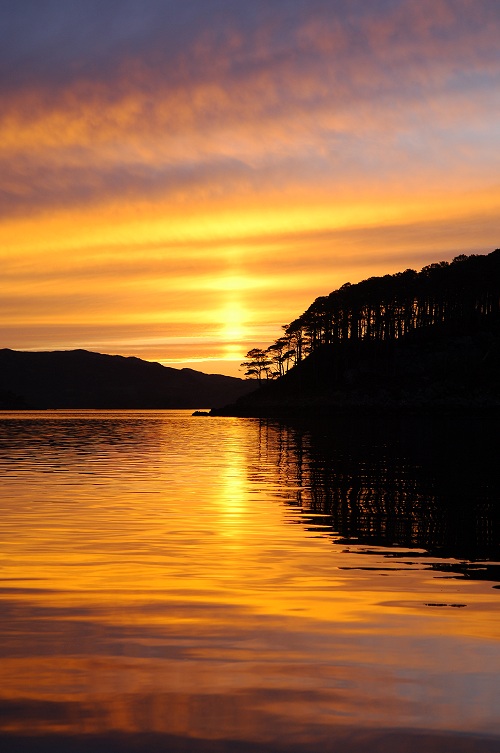
Why water is so good is that the bright sky is reflected, so the forground doesn't under expose.
ETA - this was taken using a grey grad, as the sky was much brighter than the sea.. but the grey evens it out
Edited by GetCarter on Wednesday 20th May 13:44
GetCarter said:
If you get a grad grey, you will darken the sky, so the camera will under expose the foreground less. The only other way of doing it is to take multiple shots and HDR or digitally blend.
Why water is so good is that the bright sky is reflected, so the forground doesn't under expose.
ETA - this was taken using a grey grad, as the sky was much brighter than the sea.. but the grey evens it out
Got ya, cheers Why water is so good is that the bright sky is reflected, so the forground doesn't under expose.
ETA - this was taken using a grey grad, as the sky was much brighter than the sea.. but the grey evens it out

Unfortunately the one thing my camera (D60) is distinctly lacking is bracketing - of course had I had the camera and played with it for a bit I'd have known what a handicap this could be, but I didn't...
Davi said:
GetCarter said:
If you get a grad grey, you will darken the sky, so the camera will under expose the foreground less. The only other way of doing it is to take multiple shots and HDR or digitally blend.
Why water is so good is that the bright sky is reflected, so the forground doesn't under expose.
ETA - this was taken using a grey grad, as the sky was much brighter than the sea.. but the grey evens it out
Got ya, cheers Why water is so good is that the bright sky is reflected, so the forground doesn't under expose.
ETA - this was taken using a grey grad, as the sky was much brighter than the sea.. but the grey evens it out
Unfortunately the one thing my camera (D60) is distinctly lacking is bracketing - of course had I had the camera and played with it for a bit I'd have known what a handicap this could be, but I didn't...
 .
....Mole... said:
Thats suprising the D60 does not have bracketing, the D50 has it. You could always manually bracket the shots as well which is what i used to do until i realised the D50 actually did have bracketting .
Silly question and I know I should read the manual, but how do you use bracketting on the D50 - I assumed it didn't do it as it was obvious on the D70s I also played with?....Mole... said:
Thats suprising the D60 does not have bracketing, the D50 has it. You could always manually bracket the shots as well which is what i used to do until i realised the D50 actually did have bracketting .
I was looking at so many camera's and asking so many people for advice that somewhere along the line before purchase I got it in my head that it did have it, I'm sure it was because one of the camera shops said something along the lines of "even the D50 had bracketing"..I may be missing a trick here, but how do you manually do it quickly enough? I tried but by the time I'd changed settings on the cam and clicked again the clouds were half way across the sky and the scene was pretty much gone
(I fancied a go at this HDR milake)Gassing Station | Photography & Video | Top of Page | What's New | My Stuff