
Moving Water and n d filters
Discussion


Here's the non pro advice: aperture right down, 100 ISO and I've actually realised that you do not need to lower the shutter speed that much, just try a bit at a time. Beside, it's a good exercise to learn to steady your camera for your shot.
Taken this summer, Moustiers (Gorges du Verdon - France) on a sunny day.

And another

Both standing, no tripod, no filter. Of course there were some misses before the right shot.
edited because my engrish is rubbish.
Taken this summer, Moustiers (Gorges du Verdon - France) on a sunny day.
And another
Both standing, no tripod, no filter. Of course there were some misses before the right shot.
edited because my engrish is rubbish.
Edited by JB Rugby on Wednesday 1st October 23:23


CVP said:
Rob, this is lovely.
A question to all shooting digital. How long an exposure do you find you get before noise becomes unacceptable?
Chris
Thanks!A question to all shooting digital. How long an exposure do you find you get before noise becomes unacceptable?
Chris
As to the question, long exposure noise is caused by variences in the amps on each photosite in ambient temperatures.
I think all/most dSLR's have a long exposure noise reduction mode.
What this does is take an identical length shot straight after yours (on my canon it has to be 30seconds or longer) but with the shutter closed. This produces a dark field image, i.e. a picture of the probable noise on the photo.
The camera then subtracts that from the image to give you a much lower noise shot than you would ahve got.
The downside is if you shoot a 5 min shot it needs to then take another 5 min shot of black, which is deleted/never saved, but effectivly doubles your shutter time.

RobDickinson said:
Thanks!
As to the question, long exposure noise is caused by variences in the amps on each photosite in ambient temperatures.
I think all/most dSLR's have a long exposure noise reduction mode.
What this does is take an identical length shot straight after yours (on my canon it has to be 30seconds or longer) but with the shutter closed. This produces a dark field image, i.e. a picture of the probable noise on the photo.
The camera then subtracts that from the image to give you a much lower noise shot than you would ahve got.
The downside is if you shoot a 5 min shot it needs to then take another 5 min shot of black, which is deleted/never saved, but effectivly doubles your shutter time.
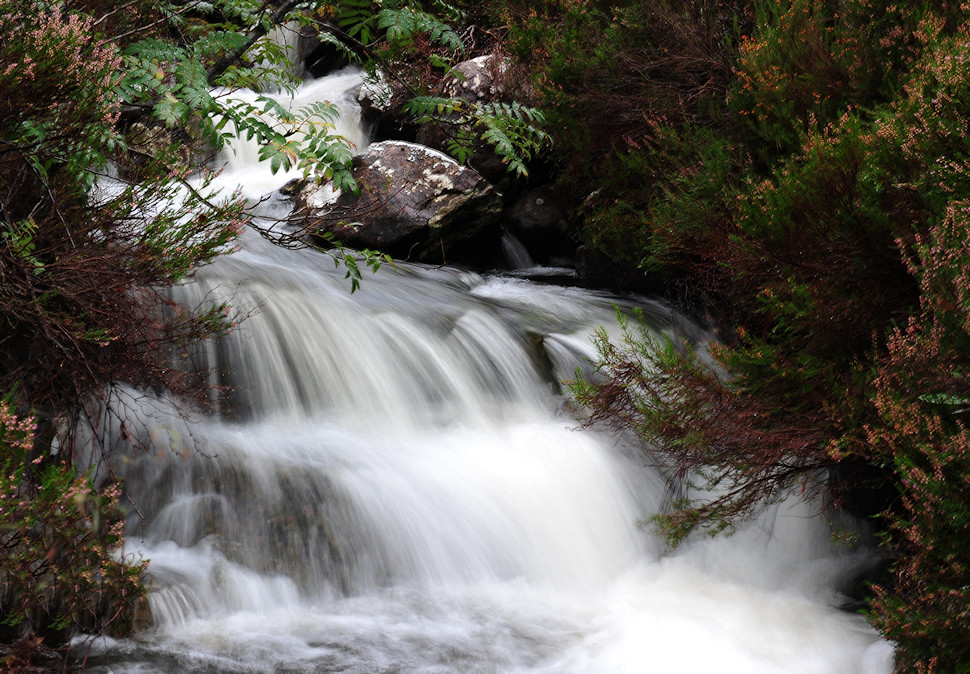
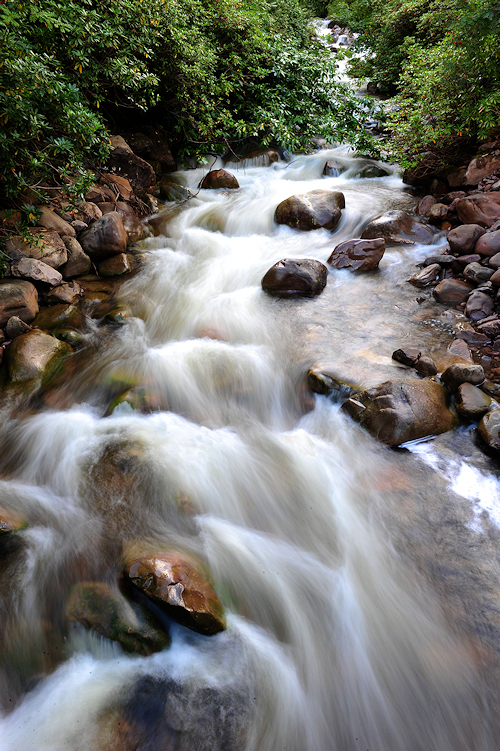
Agreed, but it never seems to work that well for me, I always end up with some noise (usually odd coloured pixels) that need to be cleaned up. I now try and keep these exposures at 5 secs and no noise reduction in camera and that seems to work for me. Downside is 5 secs is not enough to get some of the lovely "milky" water flows we see exhibited here.As to the question, long exposure noise is caused by variences in the amps on each photosite in ambient temperatures.
I think all/most dSLR's have a long exposure noise reduction mode.
What this does is take an identical length shot straight after yours (on my canon it has to be 30seconds or longer) but with the shutter closed. This produces a dark field image, i.e. a picture of the probable noise on the photo.
The camera then subtracts that from the image to give you a much lower noise shot than you would ahve got.
The downside is if you shoot a 5 min shot it needs to then take another 5 min shot of black, which is deleted/never saved, but effectivly doubles your shutter time.
Chris
Gassing Station | Photography & Video | Top of Page | What's New | My Stuff